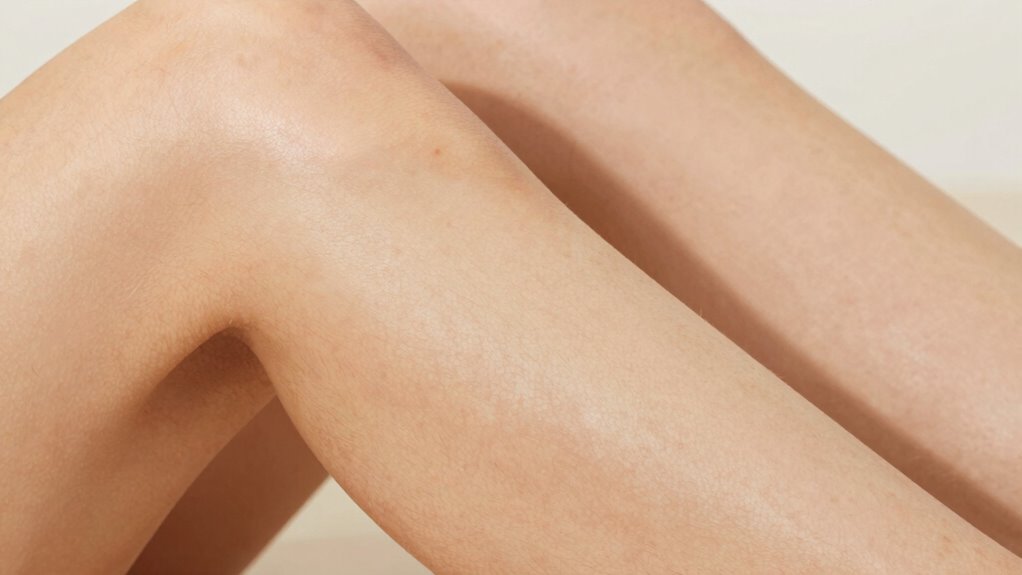

To prevent ingrown hairs on your legs and bikini line, make sure to exfoliate regularly with gentle scrubs or exfoliating gloves to remove dead skin. Always use a sharp, clean razor and shave in the direction of hair growth, applying shaving gel for smoothness. Afterward, soothe your skin with aloe or an alcohol-free toner, and keep it moisturized. Staying consistent with these steps will help you avoid irritation and ingrown hairs—keep going to learn more tips.
Key Takeaways
- Exfoliate regularly using gentle scrubs or exfoliating gloves before hair removal to prevent ingrown hairs.
- Shave in the direction of hair growth with a sharp, clean razor to minimize irritation.
- Moisturize daily with non-comedogenic lotions and use soothing products like aloe vera after hair removal.
- Avoid waxing over inflamed or broken skin and ensure hair length is about a quarter-inch for effective waxing.
- Refrain from squeezing bumps; use targeted treatments like salicylic acid or tea tree oil and maintain proper skin hygiene.
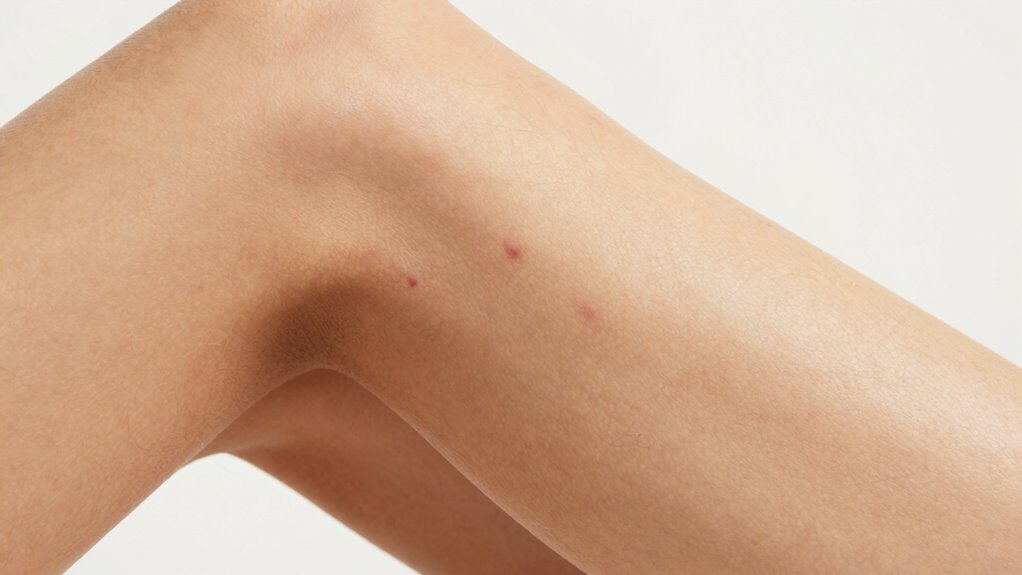
Have you ever noticed tiny, painful bumps on your legs or bikini line after shaving or waxing? These are likely ingrown hairs, a common problem that can turn a simple grooming routine into a source of discomfort. Razor bumps and waxing irritation often cause these ingrown hairs. Razor bumps happen when the shaved hair curls back into the skin, leading to inflammation and bumps. Waxing irritation, on the other hand, can make your skin more sensitive, increasing the chances of hairs growing back into the skin instead of outward. Both issues can lead to redness, swelling, and sometimes even infection if not managed properly.
To prevent ingrown hairs, you need to start with proper preparation. Before shaving or waxing, ensure your skin is clean and exfoliated. Using a gentle scrub or exfoliating glove helps remove dead skin cells that can clog hair follicles and trap hair beneath the surface. When you exfoliate regularly, you reduce the likelihood of hair curling back into the skin because the surface is smooth and free of debris that might block hair from growing outward.
Choosing the right hair removal method matters too. If you prefer shaving, opt for a sharp, clean razor. Dull blades tug at the hair rather than cut it cleanly, increasing the risk of razor bumps and ingrown hairs. Always shave in the direction of hair growth, and avoid pressing too hard, which can irritate the skin and cause hairs to grow inward. Using a shaving gel or cream lubricates the skin, reducing friction and irritation, which are prime contributors to ingrown hairs.
Waxing, while effective, can cause temporary irritation, especially if your skin is sensitive. To minimize waxing irritation, make sure your hair is the right length—about a quarter-inch—so the wax can grip the hair properly. Avoid waxing over inflamed or broken skin, as this can worsen irritation and lead to ingrown hairs. After waxing, soothe your skin with a gentle, alcohol-free toner or aloe vera gel. This helps calm inflammation and reduces the risk of hairs growing inward due to swelling or irritation.
Post-removal care is equally important. Always moisturize your skin daily with a non-comedogenic lotion to keep it hydrated and healthy. Regular exfoliation once or twice a week helps prevent hairs from becoming trapped beneath the skin. If you notice bumps forming, avoid picking or squeezing them, as this can cause infection and scarring. Instead, gently exfoliate and apply a product containing salicylic acid or tea tree oil to reduce inflammation and promote healthy hair growth.
Frequently Asked Questions
Can Ingrown Hairs Cause Permanent Skin Damage?
Yes, ingrown hairs can cause permanent skin damage if untreated. They may lead to skin discoloration, such as dark spots, and damage to hair follicles, which can affect hair growth. Repeated ingrown hairs increase the risk of scarring and lasting skin changes. To prevent this, you should avoid tight clothing, exfoliate regularly, and use proper hair removal techniques. Prompt treatment helps minimize the risk of permanent damage.
Are There Specific Products Recommended for Ingrown Hair Prevention?
Yes, you can use specific products to prevent ingrown hairs. Look for exfoliating scrubs containing salicylic acid or glycolic acid, which help unclog pores and remove dead skin. Additionally, try ingrown hair creams with ingredients like tea tree oil or witch hazel to soothe skin and reduce inflammation. Applying these regularly after shaving or waxing can markedly decrease the chances of ingrown hairs developing on your legs and bikini line.
How Long Does It Typically Take for Ingrown Hairs to Heal?
Ah, the mysterious timeline of ingrown hairs healing—like waiting for a unicorn to appear. Usually, it takes about a week or two, depending on your hair removal methods and skincare routines. If you’re diligent with exfoliation and moisturization, you might speed things up. But patience is key; rushing could turn that tiny annoyance into a stubborn, long-term saga. So, give it time, and don’t pick at those stubborn hairs!
Do Ingrown Hairs Increase the Risk of Infections or Abscesses?
Yes, ingrown hair infections can increase your risk of abscess formation. When bacteria enter through the broken skin caused by ingrown hairs, they can lead to infections. If you notice swelling, redness, or pus, it is crucial to treat it promptly. Ignoring these signs might result in more serious infections or abscesses. To prevent this, keep the area clean, avoid picking at ingrown hairs, and seek medical advice if needed.
Is There a Natural Remedy to Reduce Ingrown Hair Inflammation?
A stitch in time saves nine, so yes, herbal remedies and essential oils can help reduce ingrown hair inflammation naturally. You might try tea tree oil or witch hazel, known for their anti-inflammatory properties, applied gently to affected areas. Some herbal remedies like chamomile or aloe vera can soothe irritated skin. Just remember to do a patch test first to make sure you don’t react badly, and always dilute essential oils before use.
Conclusion
To keep ingrown hairs at bay, stick to proper exfoliation and stay moisturized. Always choose the right hair removal method for your skin, and don’t forget to give your skin a break when needed. Consistency is key—think of it as a marathon, not a sprint. If you take these steps, you’ll be able to enjoy smooth, bump-free skin and avoid the hassle of ingrowns. Stay proactive, and you’ll be ahead of the game!