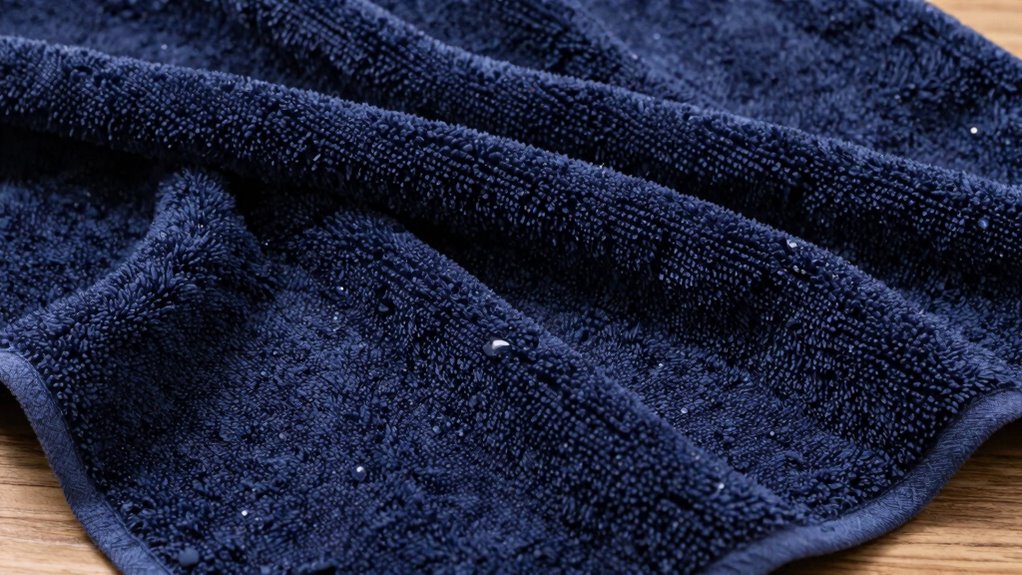

A plush-feeling towel may seem soft and luxurious, but it can trap water within its thick fibers, making it feel moist or heavy without drying you thoroughly. Towels with high pile, like thick cotton or microfiber, increase surface area and water retention, slowing down evaporation. The weave and fiber density influence how well the towel absorbs and releases moisture. If you want to understand how to choose or care for faster-drying towels, keep exploring the details behind their design.
Get ready for Prime Big Deal Days — try Prime free
Exclusive member deals on October 6–7, plus fast free delivery. Cancel anytime.
As an affiliate, we earn on qualifying purchases.
Key Takeaways
- High pile and dense fibers trap water, making towels feel plush but slow to dry.
- Towels made from long-staple cotton prioritize softness over quick moisture absorption.
- Thicker, plush towels hold more water within their fibers, reducing drying efficiency.
- Fiber structure and weave density influence how much water a towel can retain.
- Softness-enhancing treatments may diminish a towel’s ability to dry quickly.

You might notice that some towels feel incredibly plush and soft yet seem to leave you damp rather than dry after a shower. That’s because their plushness often comes from their towel fiber composition, which impacts how well they absorb moisture. Many luxurious towels are made with fibers like cotton, bamboo, or microfiber, each with different properties. Cotton towels, especially those made from long-staple or Egyptian cotton, tend to be soft and plush because of their fiber length and quality. However, the softness doesn’t always mean they excel at moisture absorption. Some towels are engineered more for a velvety feel than for quick drying, which can leave you feeling damp despite their luxurious texture.
Luxurious, plush towels may feel soft but often prioritize comfort over quick moisture absorption.
The moisture absorption rates of a towel are directly linked to its fiber composition. Towels with highly absorbent fibers can draw water from your skin efficiently. For instance, cotton has excellent moisture-wicking properties because its fibers are naturally hydrophilic—meaning they attract water. But not all cotton towels have the same absorption capacity. Thicker, denser towels might feel plush but can trap water within their fibers, slowing the drying process. On the other hand, towels with a looser weave or thinner fibers often dry faster because they allow air to circulate and moisture to evaporate more quickly. Fiber structure plays a crucial role in how well a towel performs. Additionally, proper towel care can help maintain or improve a towel’s absorbency over time.
Another factor to consider is the towel’s pile height, which is the length of the fibers. Plush towels usually have a higher pile, giving them that soft and fluffy feel. But a higher pile also means more surface area for water to cling to, which can prolong drying time. Towels with a lower pile or a tighter weave tend to dry faster, even if they feel less plush. So, when choosing a towel, you need to balance softness with absorbency and drying speed based on your preferences. Additionally, the type of fiber treatment can influence how well a towel maintains its absorbency over time. Being aware of these nuances can help you select towels that meet both your comfort and practical needs.
As an affiliate, we earn on qualifying purchases.
Frequently Asked Questions
Do Plush Towels Lose Their Absorbency Over Time?
Yes, plush towels can lose their absorbency over time. As they age, their fibers may break down, leading to a decline in towel durability and absorption ability. Frequent washing, especially with harsh detergents, can also cause the fibers to weaken, resulting in absorbency decline. To maintain their plushness and absorbency, wash towels properly, avoid fabric softeners, and replace them when they no longer dry effectively.
Can Fabric Softeners Affect Towel Drying Ability?
Using fabric softener can hinder your towel’s drying ability, like a coat of wax that blocks a sponge’s pores. It leaves fabric softener residue that coats towel fibers, reducing absorbency. Over time, this residue can cause towel fiber damage, making your towels feel plush but less effective at drying. To keep your towels fluffy and absorbent, skip fabric softeners and opt for natural alternatives like vinegar.
Are There Specific Materials That Dry Better Than Plush Towels?
Yes, materials like microfiber technology tend to dry better than plush towels made from natural fibers. Microfiber towels are designed with tiny fibers that wick moisture away quickly, making them more efficient at drying. Natural fibers, such as cotton, may feel plush but often retain more water and dry slower. For faster, more effective drying, opt for microfiber towels, especially when you need quick results or are on the go.
How Often Should I Replace My Towels for Optimal Dryness?
You should replace your towels every 2-3 years for maximum dryness. Imagine Sarah, who neglected towel replacement, noticed persistent odors and less absorbency despite proper washing. To keep towels fresh, store them properly in a dry, well-ventilated space, and wash them frequently—at least once a week. Over time, fibers break down, reducing absorbency, so regular replacement guarantees your towels stay plush and effective.
Do Towel Thickness and Weight Impact Drying Performance?
Towel thickness and weight do impact drying performance. Higher-density towels tend to trap more air, making them feel plush but can hinder absorbency retention, causing slower drying. Thicker, heavier towels may seem plush, but if they lack proper fiber structure, they might not absorb water efficiently or dry quickly. To optimize drying, choose towels with a balanced density that offers softness without compromising absorbency and quick-drying ability.
As an affiliate, we earn on qualifying purchases.
Conclusion
So, next time your plush towels leave you feeling damp, remember it’s all about their fiber structure and absorbency. Surprisingly, a study found that even high-quality towels can lose up to 30% of their absorbent capacity over a year due to detergent residue and fabric softeners. By choosing the right towel and caring for it properly, you can enjoy that soft feel without sacrificing dry comfort. After all, a truly effective towel should leave you feeling dry and refreshed.
As an affiliate, we earn on qualifying purchases.
As an affiliate, we earn on qualifying purchases.
Fall yard work Picks
leaf blowers
As an affiliate, we earn on qualifying purchases.