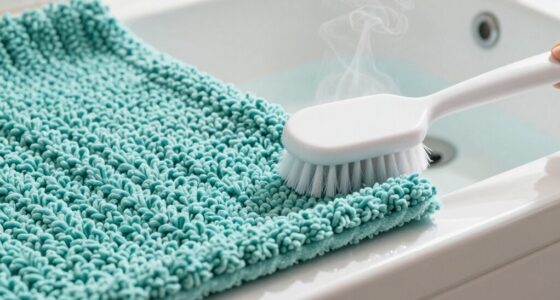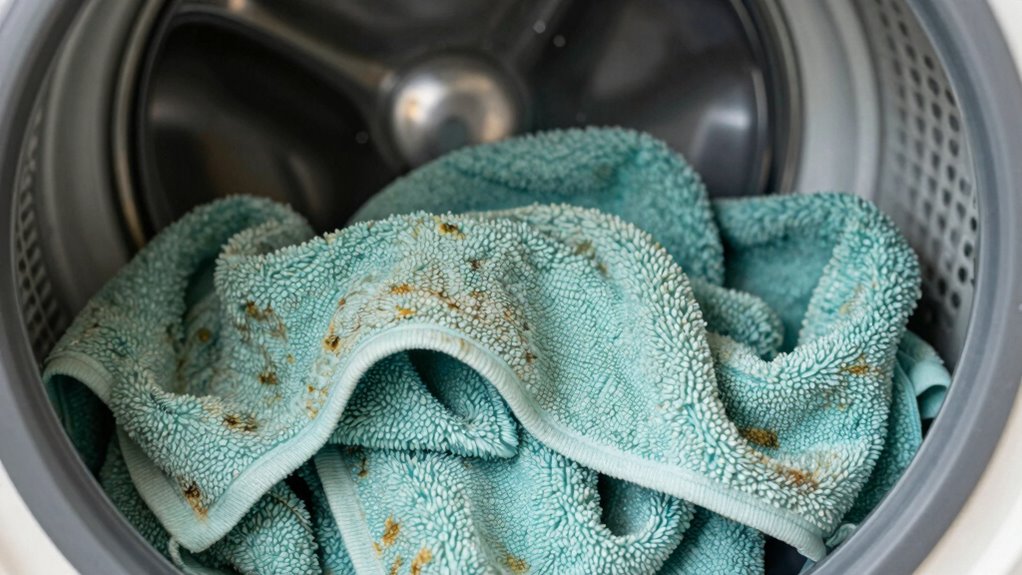

Musty towels happen when moisture stays trapped in the fabric, creating a perfect environment for bacteria and mold to grow. If your towels aren’t completely dry before storage, the dampness encourages mold and the bacteria that cause odors. Using ineffective detergents can leave behind residues that trap moisture and smells. Good air circulation and managing humidity help keep towels fresh, but understanding the true causes can help you prevent that musty smell altogether. Keep exploring to discover how!

Get your next haul delivered free with Prime
- Fast, free delivery on millions of items
- Prime Video, Amazon Music and more included
- Member-only deals all year
Key Takeaways
- Lingering moisture in towels promotes bacterial and mold growth, causing musty odors.
- Residual dampness from incomplete drying creates ideal conditions for mold development.
- Ineffective detergents may leave residues that trap moisture and odors.
- Storing damp or poorly ventilated towels encourages mold and bacterial buildup.
- High indoor humidity levels prevent towels from drying completely, leading to mustiness.
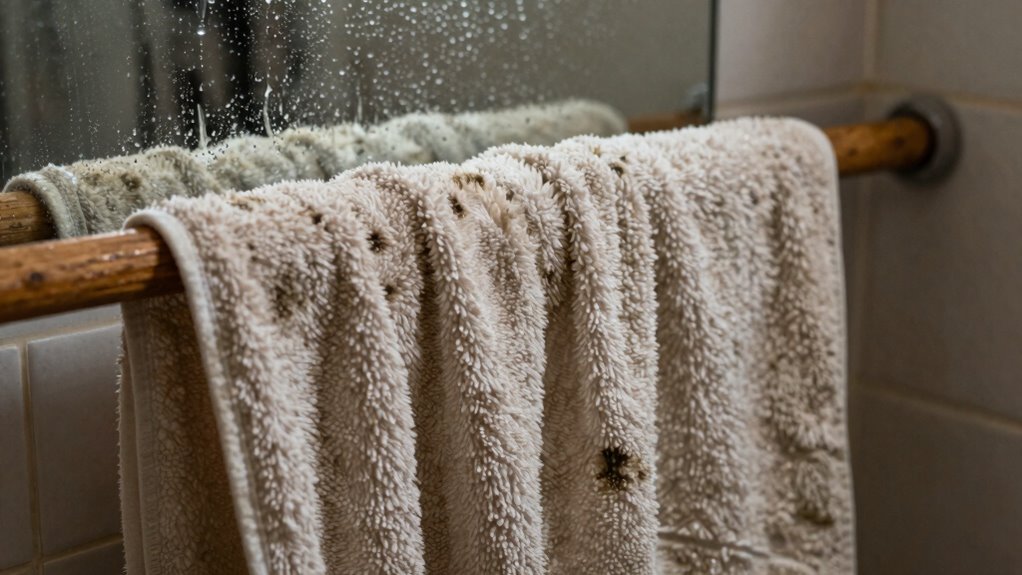
Musty towels are often caused by lingering moisture and bacteria that thrive in damp environments. When you don’t dry your towels thoroughly, residual dampness creates the perfect breeding ground for mold and bacteria, which emit that characteristic musty smell. One common mistake is using laundry detergents that don’t effectively clean or eliminate odors. Some detergents leave behind residues that trap moisture or fail to fully disinfect, allowing bacteria to thrive even after washing. To prevent this, choose a high-quality detergent designed to remove odors and kill bacteria, especially if your towels tend to smell musty despite regular washes.
Musty towels result from residual moisture and ineffective detergents that trap bacteria and odors.
The way you store your towels also plays an essential role. If you fold and stack damp or even slightly damp towels, you trap moisture inside, which encourages mold growth and causes that unpleasant smell. Proper towel storage methods involve ensuring they are completely dry before putting them away. Avoid stuffing towels into a closet or linen cabinet immediately after use; instead, hang them in a well-ventilated area to air out thoroughly. Using open shelving or hooks allows air to circulate and helps towels dry faster. Additionally, it’s wise to wash towels regularly rather than letting them sit for extended periods, especially if they’re used frequently. Ensuring good air circulation around towels can significantly reduce the buildup of moisture and bacteria. Improving ventilation in your laundry or storage area can also help prevent dampness and mold development. Being mindful of humidity levels in your home can further prevent excess moisture that contributes to mustiness. Properly managing moisture levels is crucial in maintaining fresh, clean towels and preventing musty odors.
best odor eliminating laundry detergent for towels
As an affiliate, we earn on qualifying purchases.
As an affiliate, we earn on qualifying purchases.
Frequently Asked Questions
Can Using Fabric Softener Prevent Musty Towels?
Using fabric softener won’t prevent musty towels and can actually worsen the problem due to fabric softener drawbacks like residue buildup, which traps moisture and encourages mold growth. Instead, focus on towel material choices—preferably cotton or microfiber—and make certain of proper drying. Regular washing with hot water and thorough drying help keep towels fresh. Avoid fabric softeners to prevent residue, and your towels will stay fresher longer.
How Long Does It Take for Towels to Develop a Musty Smell?
Towels can develop a musty smell in just a few days if humidity builds up and mold begins to grow. If you leave damp towels in a pile or in a humid environment, mold spores thrive quickly, causing that unpleasant odor to develop. To prevent this, guarantee towels are thoroughly dry before storing and avoid leaving them wet for extended periods. Proper ventilation and quick drying help keep musty smells at bay.
Are There Specific Towel Materials More Prone to Mustiness?
Think of towel material as a sponge—some materials, like cotton, are more absorbent and retain odor longer. Natural fibers tend to trap moisture and odor, making them more prone to mustiness. Microfiber towels, with their tighter weave, resist odor retention better. So, if you want to avoid musty towels, choose materials designed for quick drying and less odor absorption. Your towels will stay fresher longer.
Does Washing With Hot Water Eliminate Musty Odors?
Washing with hot water can help reduce musty odors, but it’s not a guaranteed fix. Hot water loosens dirt and bacteria that cause smells, especially when combined with good laundry detergents. Also, consider your towel texture; thicker, plush towels tend to trap more moisture, making odors worse. For best results, wash towels in hot water with strong detergent, then dry thoroughly to prevent mustiness from returning.
Can Storage Location Affect Towel Odor?
Yes, your storage location can affect towel odor. If you store towels in areas with high storage humidity, moisture gets trapped, leading to mold and mildew growth that cause musty smells. Ventilation issues worsen this problem by preventing proper air circulation, making towels stay damp longer. To keep towels fresh, choose a well-ventilated, dry space for storage and guarantee they’re completely dry before putting them away.
As an affiliate, we earn on qualifying purchases.
Conclusion
So, next time your towels smell less than fresh, remember it’s not just about drying them properly. There’s a hidden culprit lurking in your routine, waiting to turn your cozy linens into musty messes. The real question is—are you truly cleaning away every cause? Or are you unknowingly inviting the problem back? Sometimes, the secret to freshness isn’t what you see, but what you might be missing. The answer might surprise you…
As an affiliate, we earn on qualifying purchases.
mold resistant towel storage solutions
As an affiliate, we earn on qualifying purchases.
As an affiliate, we earn on qualifying purchases.
Halloween Picks
halloween
As an affiliate, we earn on qualifying purchases.