To descale your showerhead, start by unscrewing it from the pipe and inspecting for mineral deposits. Soak the showerhead in vinegar for at least an hour or overnight to dissolve buildup. Use an old toothbrush or pin to clear any remaining blockages in nozzles. Rinse thoroughly, reattach the showerhead, and turn on water to check performance. If you want detailed steps to keep your showerhead flowing smoothly, keep exploring this guide.
Key Takeaways
- Unscrew the showerhead from the pipe using hand or tools with a cloth to prevent scratches.
- Soak the detached showerhead in vinegar for at least 1 hour or overnight to dissolve mineral deposits.
- Scrub the nozzles and surface with a soft brush and clear blocked holes with a pin or needle.
- Rinse the showerhead thoroughly with water to remove loosened deposits and vinegar residue.
- Reattach the showerhead securely, turn on water, and flush to ensure proper spray and no blockages.
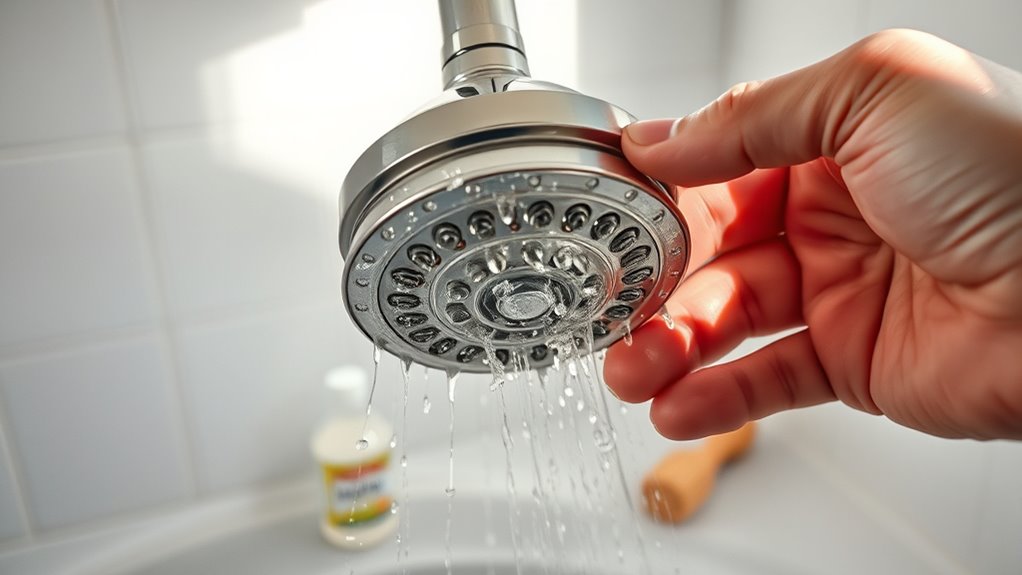
Have you noticed your showerhead losing water pressure or producing a weak spray? This is a common sign that mineral buildup is clogging the tiny holes responsible for creating a strong, even spray. Over time, minerals from hard water—like calcium and magnesium—accumulate inside the showerhead, narrowing the flow of water and reducing overall pressure. The more mineral deposits build up, the more noticeable the decline becomes, making your shower less satisfying and increasing the likelihood of needing a thorough cleaning. Automation in manufacturing and cleaning technology can also help in maintaining equipment efficiency.
The good news is that descaling your showerhead is a straightforward process that can restore its peak performance. First, you’ll want to remove the showerhead from the pipe. Most showerheads are threaded and can be unscrewed by hand, but if it’s stuck, a gentle turn with a wrench or pliers—wrapped in a cloth to prevent scratches—can help loosen it. Once removed, inspect it for visible mineral deposits or blockages in the nozzles. These deposits are often white or crusty and can be easily scraped away with an old toothbrush or a small pin.
Next, prepare a descaling solution. The most common and effective method involves vinegar, which is excellent at dissolving mineral buildup. Fill a bowl or bucket with enough white vinegar to submerge the showerhead completely. If needed, you can dilute with a bit of water, but full-strength vinegar typically works best. Submerge the showerhead in the vinegar and let it soak for at least an hour, or overnight for heavily scaled units. The acidity of vinegar breaks down mineral deposits, loosening them from the metal or plastic surface.
After soaking, use an old toothbrush or soft brush to scrub away loosened deposits from the nozzles and surface. Pay close attention to the tiny holes, ensuring they are free of obstructions. If some minerals remain stubborn, you can insert a pin or needle into each hole to clear out any residual buildup. Once cleaned, rinse the showerhead thoroughly with water to wash away any remaining vinegar and loosened deposits.
Finally, reattach the showerhead to the pipe, hand-tightening it securely. Turn on the water to flush out any remaining debris and ensure the spray pattern is even and strong. If you notice uneven flow or weak spray even after cleaning, repeat the process or consider using a descaling solution designed specifically for mineral removal. Regular maintenance, like cleaning your showerhead every few months, helps prevent excessive mineral buildup and keeps your water pressure high, providing a more enjoyable shower experience.
Frequently Asked Questions
How Often Should I Descale My Showerhead?
You should descale your showerhead every 1 to 3 months, especially if you notice reduced water flow or mineral buildup. Regular descaling helps maintain ideal water pressure and prevents clogging. If you have hard water, you might need to do it more frequently. Keep an eye on any decrease in water flow, and act quickly to remove mineral buildup before it causes more significant issues.
Can Descaling Damage My Showerhead?
Descaling your showerhead won’t damage it if you follow proper maintenance tips. Use gentle solutions like vinegar and avoid harsh chemicals that could harm your fixture. You can try recommended products designed for descaling, which are safe for most showerheads. Always check manufacturer guidelines, and avoid excessive scrubbing or abrasive tools. Proper care ensures your showerhead stays in good condition while preventing buildup and maintaining ideal water flow.
Are There Eco-Friendly Descaling Alternatives?
Like a guardian of nature, you can choose eco-friendly descaling options. Biodegradable solutions and natural cleaning agents are your best allies, dissolving mineral build-up without harming the environment. These alternatives are gentle yet effective, much like a whisper of spring breeze. You’ll preserve your showerhead’s functionality and support sustainability—proving that powerful cleaning and eco-consciousness can go hand in hand. Embrace these greener choices for a cleaner, healthier home.
What Signs Indicate My Showerhead Needs Descaling?
You’ll notice mineral buildup on your showerhead as reduced water pressure or uneven spray patterns. Sometimes, it looks like white or chalky deposits. If you see corrosion or discoloration, it might be time to descale, which helps prevent further corrosion. Regularly cleaning your showerhead removes mineral buildup, ensuring peak water flow and prolonging its lifespan, so you enjoy a consistent, invigorating shower experience.
Can Descaling Improve Water Pressure?
Yes, descaling can improve water pressure by removing mineral buildup that blocks water flow. When mineral deposits accumulate inside your showerhead, they restrict water flow, causing weak pressure. By descaling, you clean out these deposits, allowing water to flow freely again. This process restores ideal water pressure, making your shower more satisfying. Regular descaling prevents future buildup, ensuring consistent water flow and better shower performance.
Conclusion
Now that you know how to descale your showerhead, you’ll enjoy a fresher, more powerful spray. Imagine John, who neglected buildup and faced weak water flow; after following these steps, his shower felt brand new. Regular descaling keeps mineral deposits at bay and extends your showerhead’s lifespan. So, make it a routine—your mornings will thank you for the improved water pressure and cleaner shower experience. Plus, it’s quick, easy, and totally worth it!