
If you’re new to microneedling pens, avoid using deep settings right away. Going too deep can cause skin damage, inflammation, or even scarring, and may increase infection risk if you’re not careful. Always start with lower depths to let your skin adapt, then gradually increase as advised by professionals. Proper technique and device maintenance are essential for safe results. Keep exploring to discover how to optimize your microneedling experience safely and effectively.

Get your next haul delivered free with Prime
- Fast, free delivery on millions of items
- Prime Video, Amazon Music and more included
- Member-only deals all year
Key Takeaways
- Beginners often set needle depth too deep, increasing risk of skin trauma, pain, and infections.
- Starting with lower depths allows the skin to adapt and reduces potential damage.
- Proper technique involves gradual depth adjustments based on skin response and comfort.
- Inadequate device maintenance or using dull needles can worsen skin injury at incorrect depths.
- Educating users on safety features and appropriate settings promotes effective, safe microneedling.

Have you ever wondered how microneedling pens can transform your skincare routine? If you’re new to this device, you might be tempted to crank up the depth setting to see faster results. But that’s where many beginners go wrong. Using too deep a setting can cause more harm than good, especially if you’re not familiar with dermatologist techniques. These professionals understand the significance of starting slow and gradually increasing the depth to allow your skin to adapt. They also emphasize the necessity of proper pen maintenance to guarantee safety and effectiveness. Without proper maintenance, the device might not work correctly, or worse, it could introduce bacteria or cause infections.
When you’re just starting, it’s tempting to push the needle depth to the maximum, thinking it’ll improve your results quickly. However, microneedling is a delicate process, and deeper isn’t always better. Most skin concerns, like fine lines or mild scars, respond well to shallower settings. Going too deep can lead to unnecessary pain, inflammation, and even scarring. It’s best to follow established dermatologist techniques, which recommend starting with lower depths and observing how your skin reacts. This approach minimizes risks and promotes healing, leading to better long-term results. Proper pen maintenance is also essential. Before each use, you should disinfect the device thoroughly, checking that all parts are clean and functioning properly. Replace needle cartridges as recommended, since dull or contaminated needles can cause skin trauma or infections. When you keep your microneedling pen in good condition, it performs more reliably and safely. Device safety features can also help prevent misuse and accidents.
Many beginners overlook the importance of understanding the device’s settings. Instead of blindly increasing the depth, you should educate yourself on what each setting does. This knowledge helps you avoid misuse that could damage your skin or reduce the treatment’s effectiveness. Remember, patience is key. Gradually increasing the needle depth as your skin builds tolerance allows you to benefit from microneedling without risking adverse effects. Additionally, understanding the device’s safety features can help prevent accidents and ensure proper use. Learning about proper technique and how to adjust settings accordingly can also significantly improve your results and safety. Listening to your skin’s response is essential; if you notice excessive redness or discomfort, it’s better to dial back the depth rather than push through the pain. Ultimately, mastering the correct depth setting requires respect for the technology and your skin’s limits. By combining proper dermatologist techniques with diligent pen maintenance, you’ll achieve safer, more effective results and get the most out of your microneedling treatments.
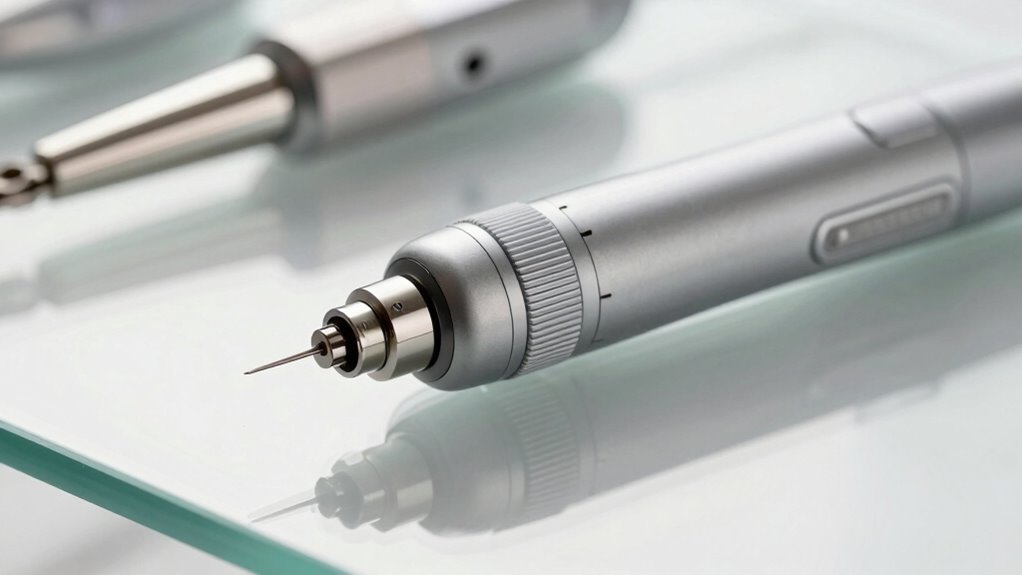
microneedling pen with adjustable depth
As an affiliate, we earn on qualifying purchases.
As an affiliate, we earn on qualifying purchases.
Frequently Asked Questions
Can Microneedling Pens Be Used on All Skin Types Safely?
Yes, you can use microneedling pens on all skin types safely if you consider skin type compatibility and proper pen sterilization. Always assess your skin’s sensitivity and choose appropriate needle depths to avoid irritation. Ensuring the pen is thoroughly sterilized before each use minimizes infection risk. If you’re unsure, consulting a professional helps tailor treatments to your skin type, making microneedling both safe and effective.
How Often Should Beginners Use a Microneedling Pen?
You should start with treatments every 4 to 6 weeks when using a microneedling pen as a beginner. Always guarantee proper device sterilization before each session to prevent infections, and replace needles regularly to maintain safety and effectiveness. Pay attention to your skin’s response, and avoid overusing the device, which can cause irritation or damage. Following these guidelines helps you achieve safe, maximum results while minimizing risks.
Are There Any Side Effects From Incorrect Depth Settings?
Yes, incorrect depth settings can cause side effects like skin irritation, redness, and even scarring. When you don’t calibrate the needle properly, you risk damaging your skin during cosmetic procedures. Using too deep a setting can lead to pain and longer healing times, while too shallow might be ineffective. Always guarantee proper needle calibration and consult professionals to avoid these adverse effects and achieve safe, effective results.
What Is the Ideal Needle Depth for Sensitive Skin?
For sensitive skin, you should set the microneedling pen to a shallow depth, typically between 0.25mm and 0.5mm. This careful depth adjustment minimizes irritation while still providing effective collagen stimulation. Always start with the lowest setting, and adjust based on your skin’s response. Remember, over-penetrating can cause unnecessary discomfort or damage, so prioritize gentle, precise depth adjustment tailored to your skin sensitivity.
Can Improper Depth Settings Cause Long-Term Skin Damage?
Yes, improper depth settings can cause long-term skin damage. When you set the needle depth too high, it can over-stimulate collagen production, leading to scarring or hyperpigmentation. Conversely, too shallow a setting may not effectively promote collagen stimulation or pore minimization. Always follow recommended guidelines and consult a professional to guarantee safe, effective treatments that improve skin texture without risking lasting harm.
disinfectant for microneedling devices
As an affiliate, we earn on qualifying purchases.
As an affiliate, we earn on qualifying purchases.
Conclusion
Understanding how to properly set your microneedling pen is essential, especially if you’re a beginner. Misusing the depth can do more harm than good, so don’t bite off more than you can chew. Take the time to learn and start slow—patience is a virtue here. Remember, Rome wasn’t built in a day, and your skin’s health isn’t something to rush. Tread carefully, and you’ll see the best results without any setbacks.
replacement needle cartridges for microneedling
As an affiliate, we earn on qualifying purchases.
As an affiliate, we earn on qualifying purchases.
dermatologist recommended microneedling pen
As an affiliate, we earn on qualifying purchases.
As an affiliate, we earn on qualifying purchases.
Halloween Picks
halloween
As an affiliate, we earn on qualifying purchases.