

A pillow feels too high if it pushes your head too far up, causing neck strain or misalignment, often because it’s too firm, thick, or doesn’t match your shoulder width. Conversely, it feels too flat if it lacks support, feels overly soft, or is worn out, making your head sink in and disrupting your spine’s alignment. Your sleep posture, body size, and pillow material all play a role. If you want to understand how to find the perfect fit, keep exploring.
Key Takeaways
- Excessive pillow height or firmness can push the head upward, making it feel too high.
- A pillow that is too thin or soft fails to support the neck, causing it to feel flat.
- Incorrect pillow support disrupts spinal alignment, altering perceived height or flatness.
- Material firmness and thickness directly influence whether a pillow feels too high or too flat.
- Body size and shoulder width determine the appropriate pillow height, affecting comfort level.
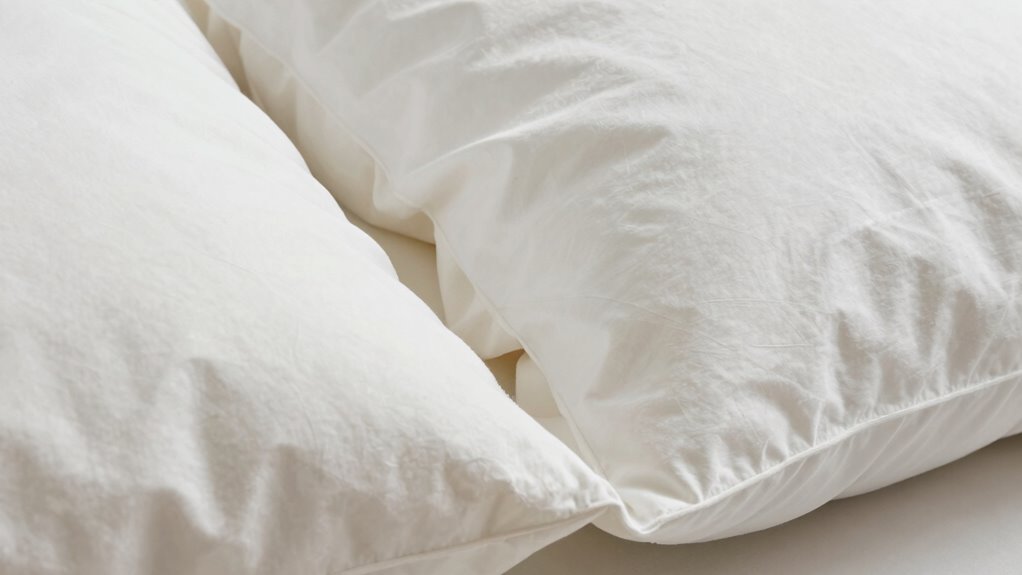
When it comes to choosing the right pillow, feeling that it’s too high or too flat can disrupt your sleep and leave you waking up stiff or sore. The key factor here is pillow firmness, which directly influences how well your pillow supports your head and neck. If your pillow is too soft, it may feel flat and fail to keep your head aligned with your spine, leading to discomfort. Conversely, if it’s too firm, it can push your head up excessively, making it feel too high and causing strain on your neck muscles. Your sleep posture plays a big role in determining what pillow firmness you need. If you sleep on your back, you typically want a pillow with medium firmness that supports the natural curve of your neck without elevating your head too much. If you sleep on your side, a firmer, thicker pillow helps fill the space between your shoulder and head, maintaining proper spinal alignment. Stomach sleepers often prefer a softer, flatter pillow or no pillow at all, as this prevents unnatural neck twisting and keeps their spine in a more neutral position.
Your body size and shoulder width also influence how high or flat your pillow should be. Larger individuals or those with broader shoulders usually need a thicker, firmer pillow to prevent their head from sinking too low, which could cause misalignment. Smaller or narrower-shouldered sleepers might find a flatter pillow more comfortable and supportive. The material of your pillow affects its firmness too. Memory foam and latex tend to offer consistent support, while down or feather pillows are softer and more adjustable. If your pillow lacks enough support and feels too flat, it’s likely because it’s too soft or worn out. On the other hand, a pillow that feels excessively high might be too firm or thick for your sleep posture and body type. Understanding pillow support can help you make more informed choices about your sleep comfort. It’s also helpful to consider how different sleep positions impact your ideal pillow firmness and support needs.
Ultimately, the right pillow strikes a balance between comfort and support, aligning with your sleep posture. Its firmness should support your head and neck in a neutral position, preventing strain or stiffness. If you find yourself waking up sore or feeling like your pillow is wrong, consider adjusting its firmness or thickness to better match your sleep habits. Choosing the right pillow isn’t just about comfort—it’s about maintaining proper spinal alignment so you can wake up refreshed and pain-free every morning.
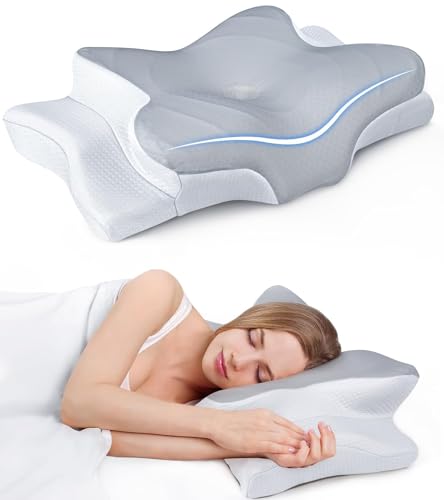
Ultra Pain Relief Cooling Pillow for Neck Support, Adjustable Cervical Pillow Cozy Sleeping, Odorless Ergonomic Contour Memory Foam Pillows, Orthopedic Bed Pillow for Side Back Stomach Sleeper
- Innovative Hollow Concave Design: Cradles head and aligns neck naturally
- Six Contour Zones for Support: Supports neck, shoulders, and arms effectively
- Cooling Pillowcase with Arc-Chill: Reduces skin temperature by 5℃ instantly
As an affiliate, we earn on qualifying purchases.
As an affiliate, we earn on qualifying purchases.
Frequently Asked Questions
How Do Pillow Materials Affect Firmness and Height?
Your pillow’s materials greatly influence its firmness and height. Memory foam molds to your head and neck, providing consistent support, making it feel firmer and maintaining its height over time. Feather fill, on the other hand, offers a softer, more adjustable feel, which can make the pillow seem flatter or more plush depending on how you fluff it. The choice between these materials impacts how high or flat your pillow feels during sleep.
Can Sleeping Position Change the Ideal Pillow Height?
Yes, your sleep posture can change the ideal pillow height. When you sleep on your side, a higher pillow helps maintain neck alignment, preventing strain. Conversely, if you sleep on your back, a medium height supports proper neck and spine alignment. Stomach sleepers often need a flatter pillow to avoid neck discomfort. Modifying your pillow height based on sleep posture guarantees better neck alignment and reduces discomfort.
What Are the Signs of an Unhealthy Pillow?
An unhealthy pillow screams for help with sagging, lumpy feels, or persistent odors that just won’t quit! If your pillow causes pillow allergy concerns, triggers allergy symptoms, or doesn’t work well with your pillow case, it’s time to replace it. A bad pillow also loses support, causing neck pain or headaches, and often harbors dust mites or allergens. Don’t ignore these signs—your sleep and health depend on it!
How Often Should I Replace My Pillow?
You should replace your pillow every 1 to 2 years to maintain good pillow hygiene and reduce allergy risks. Over time, pillows accumulate dust mites, allergens, and bacteria, which can affect your health and sleep quality. Regular replacement guarantees a fresh, clean sleeping surface. If you notice lumps, odors, or persistent allergies, it’s time for a new pillow sooner. Prioritize regular replacement to support your health and restful sleep.
Do Pillow Shapes Influence Comfort and Support?
You’ll find that pillow shapes do influence your comfort and support, whether you’re seeking aesthetic appeal or decorative support. Contoured, rectangular, or wedge pillows mold to your body differently, offering tailored relief and proper alignment. Their shapes enhance pillow aesthetics, making your space inviting, while also providing functional support. Selecting the right shape guarantees you feel cozy and well-supported, transforming your sleep experience into one of comfort and style.

Coop Home Goods Original Adjustable Pillow, Queen Size Bed Pillows for Sleeping, Cross Cut Memory Foam Pillows – Medium Firm Back, Stomach and Side Sleeper Pillow, CertiPUR-US/GREENGUARD Gold
- Fully Adjustable for Custom Comfort: Add or remove foam for desired firmness
- Suitable for All Sleep Positions: Supports back, side, and stomach sleepers
- Premium Soft, Breathable Cover: Lulltra fabric for cozy, breathable sleep
As an affiliate, we earn on qualifying purchases.
As an affiliate, we earn on qualifying purchases.
Conclusion
Choosing the right pillow is like finding a cozy cloud—you want it just right. If it’s too high or flat, your neck and shoulders might protest, causing discomfort or poor sleep. By paying attention to your sleep position and pillow firmness, you can find that perfect support. Remember, a good pillow should cradle you comfortably, not push or pull. Keep experimenting until your sleep feels as peaceful as a calm, cloudless sky.
Ultra Pain Relief Cooling Pillow for Neck Support, Adjustable Cervical Pillow Cozy Sleeping, Odorless Ergonomic Contour Memory Foam Pillows, Orthopedic Bed Pillow for Side Back Stomach Sleeper
- Innovative Hollow Concave Design: Cradles head and aligns neck naturally
- Six Contour Zones for Support: Supports neck, shoulders, and arms effectively
- Cooling Pillowcase with Arc-Chill: Reduces skin temperature by 5℃ instantly
As an affiliate, we earn on qualifying purchases.
As an affiliate, we earn on qualifying purchases.

AIKOFUL Luxury Goose Feathers Down Pillows Queen Size Set of 2, Hotel Quality Fluffy Bed Pillows, Soft Pillows for Sleeping, Cotton Cover(20×28, Pack of 2)
- Ethically Sourced Fill: Certified Responsible Down Standard feathers and down
- Queen Size for Most Sleepers: 20×28 inches, suitable for all seasons
- Comfortable and Supportive: Conforms to head and neck curves
As an affiliate, we earn on qualifying purchases.
As an affiliate, we earn on qualifying purchases.