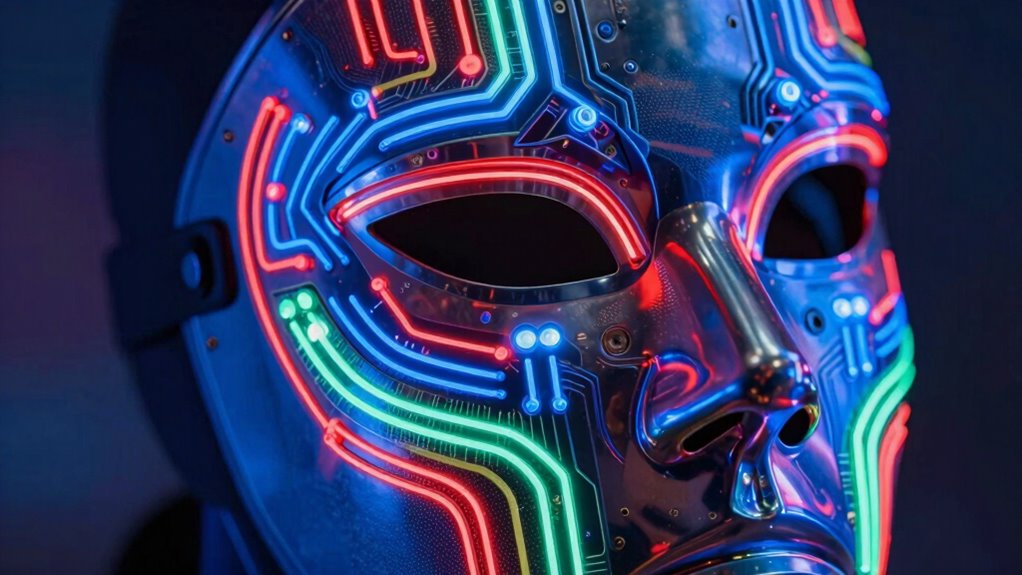

LED masks use different light wavelengths to target specific skin concerns. Red light (620-750 nm) boosts collagen and reduces inflammation for firmer skin. Blue light (450-495 nm) fights acne-causing bacteria and prevents breakouts. Near-infrared (up to ~1100 nm) promotes healing and reduces redness. Understanding these wavelengths helps you personalize your skincare routine safely and effectively. Keep exploring to learn how combining these lights can give you even better results.
Key Takeaways
- Red light (620-750 nm) stimulates collagen production and reduces inflammation for firmer, youthful skin.
- Blue light (450-495 nm) targets acne-causing bacteria, helping to clear and prevent breakouts.
- Near-infrared light (~700-1100 nm) promotes tissue healing, reduces redness, and supports skin repair.
- Different wavelengths address specific skin concerns, allowing personalized and effective LED mask treatments.
- Proper use and understanding of wavelengths enhance safety, maximize benefits, and minimize risks during treatment.
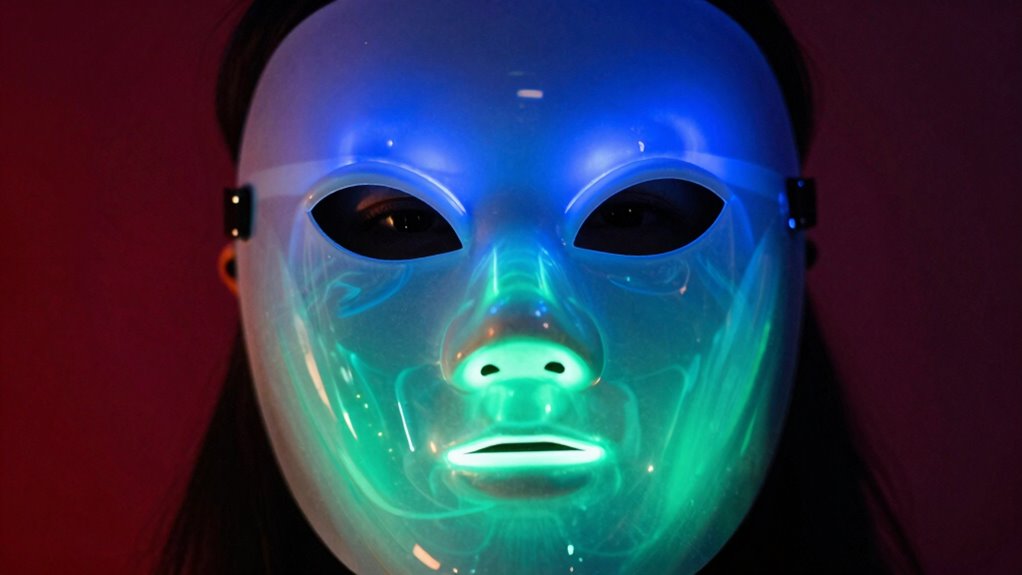
Have you ever wondered how LED masks can transform your skincare routine? These devices use specific wavelengths of light to target various skin issues, offering a non-invasive way to improve your complexion. But before you plunge in, it’s essential to understand the skin benefits and safety considerations associated with different wavelengths. Knowing how each wavelength works can help you make smarter choices and maximize your results.
LED masks primarily work by emitting specific wavelengths of light, such as red, blue, or near-infrared, each offering distinct skin benefits. Red light, typically around 620-750 nanometers, penetrates deep into your skin, stimulating collagen production and reducing inflammation. This can lead to firmer, plumper skin and diminished signs of aging like fine lines. Blue light, usually between 450-495 nanometers, targets the bacteria responsible for acne, helping clear breakouts and prevent future blemishes. Near-infrared light, which extends beyond visible red light up to about 1100 nanometers, promotes healing and tissue repair, making it beneficial for skin recovery and reducing redness. Each wavelength serves a specific purpose, and understanding these differences allows you to tailor your treatments to your skin concerns.
While the benefits are promising, safety considerations shouldn’t be overlooked. LED masks are generally safe when used as directed, but overexposure or improper use can cause side effects. Some people might experience temporary redness, dryness, or sensitivity after treatments. If you have sensitive skin or conditions like eczema or rosacea, consult a dermatologist before starting LED therapy. It’s also important to follow the manufacturer’s instructions carefully, including recommended session durations and frequency. Avoid looking directly into the light during treatment to prevent eye strain or damage, and consider wearing protective goggles if suggested. Although LED therapy is non-invasive, prolonged or excessive exposure could potentially lead to skin irritation or disruption of your natural skin barrier.
LED facial mask red blue near-infrared
As an affiliate, we earn on qualifying purchases.
As an affiliate, we earn on qualifying purchases.
Frequently Asked Questions
Can LED Masks Replace Professional Dermatological Treatments?
LED masks can’t fully replace professional dermatological treatments, but they’re great for home use and skin maintenance. You’ll see improvement with consistent use, yet professionals provide advanced options like laser therapy and chemical peels that target more stubborn issues. Think of LED masks as a complementary tool, not a complete substitute. For serious skin concerns, it’s best to consult a dermatologist for personalized advice and treatments beyond the home use scope.
Are There Any Age Restrictions for Using LED Masks?
Most LED mask users are between 18 and 65, but age restrictions vary by device. Studies show that over 70% of users report positive results within this age range. You should always check suitability guidelines before use, especially if you’re under 18 or over 65. Consult your dermatologist if you’re unsure, as some devices may not be suitable for certain age groups or skin conditions.
How Long Does It Take to See Results With LED Therapy?
You’ll typically see visible improvements within 4 to 6 weeks of consistent LED therapy, depending on your skin concerns. The treatment timeline varies, but many notice smoother, clearer skin after several sessions. To maximize results, follow your routine as recommended, and be patient—regular use yields the best outcomes. Keep in mind that individual responses differ, so some may see faster or slower progress.
Can LED Masks Be Used Alongside Other Skincare Products?
Yes, you can use LED masks alongside other skincare products. Just pay attention to skincare compatibility and product layering; apply lighter, water-based products first, then use the LED mask to enhance absorption. Avoid heavy oils or thick creams that might block light penetration. Always follow your device’s instructions and consult a dermatologist if you’re unsure about combining treatments to ensure safe, effective results.
Are LED Masks Safe for Sensitive or Allergy-Prone Skin?
Yes, LED masks are generally safe for sensitive or allergy-prone skin, but you should always verify for skin sensitivity and allergy concerns first. Start with a patch test and use the lowest energy setting. If you experience redness, itching, or irritation, stop immediately. Consult your dermatologist if you’re unsure, especially if you have known skin sensitivities, to guarantee the mask won’t cause adverse reactions.
home LED light therapy mask for skin
As an affiliate, we earn on qualifying purchases.
As an affiliate, we earn on qualifying purchases.
Conclusion
Now that you understand how different wavelengths target specific skin concerns, are you ready to harness the power of LED masks for your skincare routine? With the right light, you can boost collagen, reduce acne, and improve your skin’s overall health—all from the comfort of your home. Don’t you owe it to yourself to explore these safe, effective options? Embrace the science behind the glow and see what LED therapy can do for you.
collagen boosting LED mask
As an affiliate, we earn on qualifying purchases.
As an affiliate, we earn on qualifying purchases.
acne treatment LED mask
As an affiliate, we earn on qualifying purchases.
As an affiliate, we earn on qualifying purchases.