At-home blue light therapy offers a safe, non-invasive way to combat acne by targeting the bacteria that cause breakouts beneath your skin without using drugs. It’s easy to incorporate into your routine, with sessions lasting 10-20 minutes a few times a week, and many see improvements within weeks. This treatment reduces inflammation, minimizes irritation, and suits sensitive skin. Keep exploring to find out how this innovative approach can help achieve clearer skin.
Key Takeaways
- At-home blue light therapy targets acne-causing bacteria, reducing breakouts without harsh chemicals or invasive procedures.
- Devices are user-friendly, safe, and typically require 10-20 minute sessions several times weekly for best results.
- Consistent use over weeks can improve skin clarity, texture, and overall acne management.
- Blue light therapy is suitable for sensitive skin and can be combined with skincare routines for enhanced effectiveness.
- Following manufacturer instructions and maintaining good skin hygiene optimize safety and treatment outcomes.
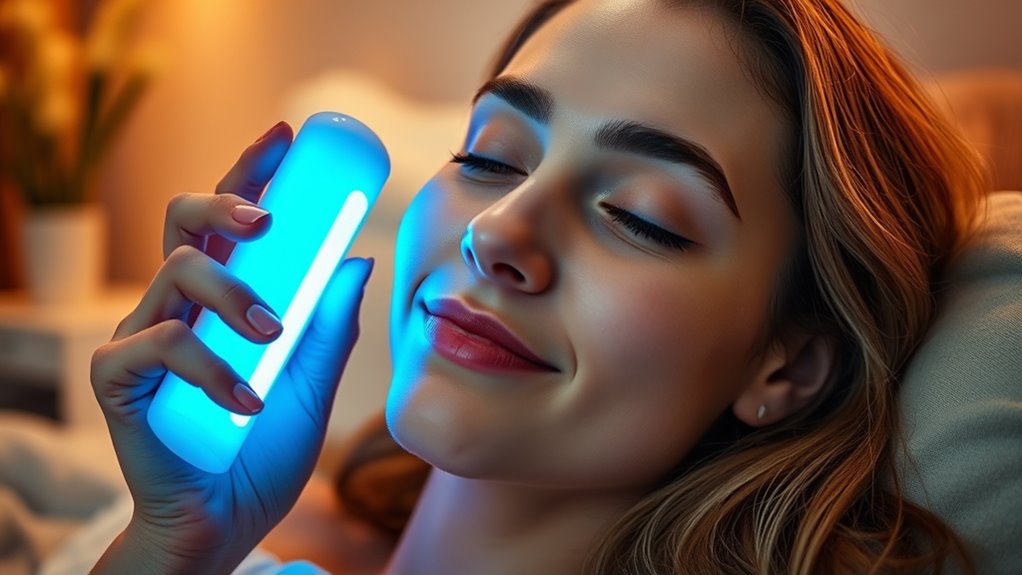
If you’re struggling with acne and seeking a convenient treatment option, at-home blue light therapy might be worth considering. This method uses light therapy to target the root causes of acne, offering a non-invasive and drug-free alternative to traditional treatments. Blue light, in particular, is known for its ability to penetrate the skin and kill *Propionibacterium acnes*, the bacteria responsible for breakouts. By regularly using a blue light device at home, you can potentially reduce inflammation, decrease breakouts, and improve overall skin clarity without frequent visits to a dermatologist.
One of the key benefits of light therapy is its ability to deliver targeted treatment directly to your skin. Unlike topical creams or oral medications, blue light therapy works from within the skin layers, addressing the bacteria that cause acne without harsh chemicals. This makes it a gentle option suitable for sensitive skin types, reducing the risk of irritation or adverse reactions. As you incorporate at-home blue light therapy into your routine, you’ll notice the *skin benefits* more clearly over time—your skin may become smoother, less inflamed, and more balanced. Plus, because it’s a non-invasive procedure, there’s no downtime or recovery period, allowing you to easily fit treatments into your daily schedule.
Using at-home blue light devices is straightforward and cost-effective. Most devices are designed for user-friendly operation, with built-in timers and safety features to prevent overexposure. You simply cleanse your face, activate the device, and let it work for about 10-20 minutes per session, usually a few times a week. Consistency is key to seeing results, and many users report improvements within a few weeks of regular use. Over time, this regular light therapy can help control excess oil production and reduce the bacteria that lead to pimples, enhancing your skin’s overall health.
Another advantage of at-home blue light therapy is that it promotes a sense of control over your acne management. You don’t have to wait for appointments or rely solely on topical treatments — you can actively participate in your skin care routine. While results can vary depending on individual skin types and severity of acne, many users find that this approach complements their existing skincare regimen effectively. Just remember to follow the manufacturer’s instructions carefully, and combine your light therapy sessions with good skin hygiene, moisturization, and sun protection for best results. Overall, blue light therapy offers a promising, accessible way to combat acne and enjoy clearer, healthier skin from the comfort of your home.
Additionally, increased awareness of medical innovations and advancements in light therapy technology continue to improve the efficacy and safety of at-home treatments.
Frequently Asked Questions
Can Blue Light Therapy Be Used on Sensitive Skin?
Yes, blue light therapy can be used on sensitive skin, but you should proceed with caution. Since sensitive skin reacts more easily to light therapy, it’s important to start with a shorter session and monitor your skin’s response. Use gentle, dermatologist-recommended devices and avoid overdoing it. If you notice irritation or discomfort, stop immediately and consult a skincare professional to guarantee safe use tailored to your sensitive skin.
How Long Does It Take to See Results From Blue Light Treatment?
You might notice visible improvements within a few weeks, but the treatment duration varies based on your skin’s response. Consistent use is key, and most people see results after about 4 to 6 weeks of regular blue light therapy. Keep in mind, patience pays off, and ongoing treatments can enhance your chances of clearer skin, making the journey to clearer skin feel like a fortunate coincidence rather than a chore.
Are There Any Side Effects From At-Home Blue Light Use?
You might experience some potential skin irritation, like redness or dryness, after using at-home blue light devices. To protect your eyes, follow safety precautions such as wearing goggles or keeping the device at a safe distance. These precautions help minimize discomfort and reduce risks. While blue light is generally safe, paying attention to your skin’s response and safeguarding your eyes guarantees a comfortable and effective treatment.
How Often Should Blue Light Therapy Be Applied for Best Results?
You should apply blue light therapy about 2 to 3 times weekly for the best results, following the frequency guidelines. Consistency is key, so stick to your routine to see improvements. Once your acne clears, you can reduce the frequency to maintenance routines, like once a week or biweekly, to help prevent breakouts. Always follow your device’s instructions and consult a dermatologist for personalized advice.
Is Blue Light Effective for All Types of Acne?
Blue light therapy is effective for many types of acne, offering treatment versatility, especially for mild to moderate cases. It targets bacteria that cause breakouts and reduces inflammation, but its effectiveness may vary depending on your acne severity. For severe cystic acne, blue light alone might not be enough, so combining it with other treatments could be necessary. Always consult a dermatologist to determine the best approach for your specific skin condition.
Conclusion
Imagine your skin as a clear, tranquil lake, each blue light wave gently calming the ripples of acne. With consistent at-home treatment, you’re guiding tiny, powerful beams to soothe and heal from within, like a quiet ripple spreading across still water. Trust in this gentle, natural approach to reveal a brighter, calmer reflection in the mirror—your skin’s serene surface, shining with renewed confidence and peace, one calming blue glow at a time.