If you want to target signs of aging, AHAs and BHAs offer different benefits you should consider. AHAs work on the skin’s surface, improving dullness, fine lines, and texture, making your skin look brighter and more youthful. BHAs penetrate deeper, clearing clogged pores and reducing inflammation, which is great if you have oily or acne-prone skin. Knowing which one suits your skin type and concerns can help you maximize anti-aging effects—there’s more to discover, so keep exploring.
Key Takeaways
- AHAs mainly exfoliate surface dead skin cells, improving texture and promoting collagen, which helps reduce fine lines for anti-aging.
- BHAs penetrate deeper into pores, clearing debris and reducing inflammation, beneficial for aging skin with congestion or oiliness.
- Combining AHAs and BHAs can provide comprehensive anti-aging benefits by addressing surface renewal and pore health.
- AHAs are suitable for dullness and uneven tone, while BHAs are better for oily, acne-prone, or congested aging skin.
- Both acids increase sun sensitivity; consistent sunscreen use is essential for anti-aging skincare.
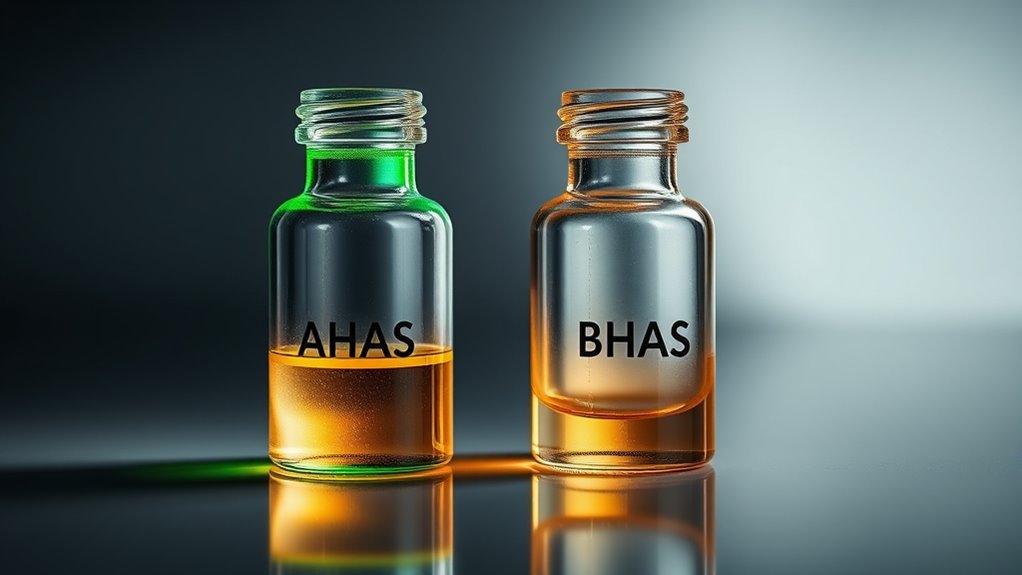
Are AHAs and BHAs truly effective for anti-aging, or is one better suited for your skincare needs? When it comes to skin rejuvenation, both types of acids serve as powerful natural exfoliants, but they work differently and target different skin concerns. Understanding these differences can help you choose the right approach for your anti-aging goals. AHAs, or alpha hydroxy acids, are derived from natural sources like fruit and milk sugars. They primarily target the surface layer of your skin, dissolving dead skin cells that dull your complexion and contribute to fine lines and uneven texture. Regular use of AHAs reveals brighter, smoother skin, making them popular in anti-aging routines. They stimulate collagen production, which is essential for maintaining skin elasticity and reducing the appearance of wrinkles. Because they work on the outermost layer, AHAs are especially effective if your main concerns are dullness, uneven tone, or rough skin texture. Additionally, AHAs promote skin cell turnover, enhancing overall skin renewal.
On the other hand, BHAs, or beta hydroxy acids, are oil-soluble, with salicylic acid being the most common example. They penetrate deeper into pores, dissolving excess sebum and clearing out debris that leads to breakouts and congestion. While they’re often associated with acne-prone skin, BHAs also contribute to skin rejuvenation by improving pore size and reducing inflammation. Their ability to penetrate oily skin makes them suitable for aging skin that struggles with enlarged pores and blackheads, common issues that can make skin look older and tired. BHAs also possess anti-inflammatory properties, calming irritated skin and reducing redness, which can be valuable as your skin ages and becomes more sensitive. Both acids can be integrated into a comprehensive skincare routine to target multiple concerns simultaneously.
Choosing between AHAs and BHAs depends on your specific skin type and concerns. If your primary goal is to enhance skin radiance, smooth rough patches, and diminish fine lines, AHAs are generally more effective. They promote surface renewal and help restore a youthful glow. Conversely, if your skin is oily, prone to blackheads, or shows signs of enlarged pores, BHAs might be the better option, as they offer deeper cleansing and anti-inflammatory benefits. Some skincare regimens incorporate both acids in rotation or combined in formulations to maximize skin rejuvenation. Remember, though, to start slowly and always use sunscreen, as both AHAs and BHAs increase sun sensitivity. Being aware of skin sensitivity and how your skin reacts is crucial for safe and effective use. By understanding how each works, you can tailor your anti-aging routine to your unique skin needs, ensuring better results and healthier, more resilient skin over time.
Top picks for "ahas bhas anti"
Open Amazon search results for this keyword.
As an affiliate, we earn on qualifying purchases.
Frequently Asked Questions
Are AHAS and BHAS Derived From Natural Sources or Synthetic Processes?
You’ll find that AHAs and BHAs are derived from both natural sources and synthetic processes. AHAs, like glycolic acid from sugar cane and lactic acid from milk, come from natural sources. BHAs, such as salicylic acid originally found in willow bark, are often manufactured synthetically for consistency and potency. So, depending on the product, these acids may be naturally sourced or created through synthetic processes to optimize their effectiveness.
What Are the Potential Side Effects of Long-Term Use of AHAS and BHAS?
Think of your skin as a delicate garden; long-term use of AHAs and BHAs can sometimes be like overwatering—leading to skin irritation and photosensitivity. You might notice redness, peeling, or increased vulnerability to sunlight. These side effects happen because acids can weaken your skin’s barrier over time. To protect your garden, always use sunscreen and monitor how your skin reacts, adjusting your routine as needed to keep it healthy.
How Do AHAS and BHAS Compare in Terms of Cost and Accessibility?
You’ll find AHAs generally more affordable and widely accessible than BHAs, thanks to their popularity in skincare products like creams and masks. When comparing price, AHAs tend to be less expensive because they’re common ingredients. Accessibility factors also favor AHAs, as you can easily find them in drugstores and online. BHAs, often used for more targeted treatments, might be pricier and less readily available, especially in weaker formulations.
Can AHAS and BHAS Be Combined With Other Anti-Aging Treatments?
Yes, you can combine AHAs and BHAs with other anti-aging treatments, and many skincare experts believe this creates powerful combination therapy with synergistic effects. Combining exfoliants with retinoids, antioxidants, or moisturizers can enhance skin renewal and improve results. Just be cautious; overlapping treatments may cause irritation. Always patch-test and consult a dermatologist to tailor a regimen that maximizes benefits while minimizing potential side effects.
Are There Specific Age Groups That Benefit More From AHAS or BHAS?
You’ll find that younger individuals, typically in their 20s and 30s, benefit from AHAs’ gentle exfoliation to maintain skin glow and smoothness. As your skin matures, especially in your 40s and beyond, BHAs can better address aging concerns like enlarged pores and uneven texture. Age-specific benefits depend on skin maturity considerations, so choose treatments tailored to your skin’s needs, and always listen to how your skin responds.
Conclusion
Ultimately, choosing between AHAS and BHAS is like selecting the brushstrokes for your aging masterpiece. Both serve as potent artisans, sculpting youthful energy from the canvas of time. Whether you opt for the subtle whisper of AHAS or the bold declaration of BHAS, remember that your skin’s story is uniquely yours. Embrace these compounds as your trusted allies, and let your aging process unfold like a finely crafted symphony—timeless, elegant, and uniquely yours.