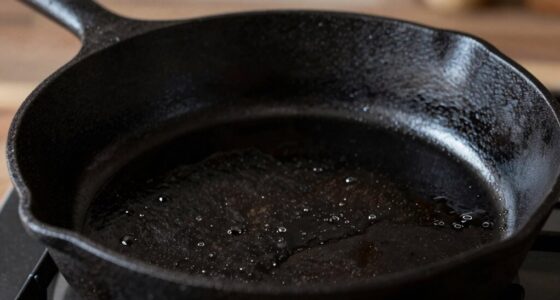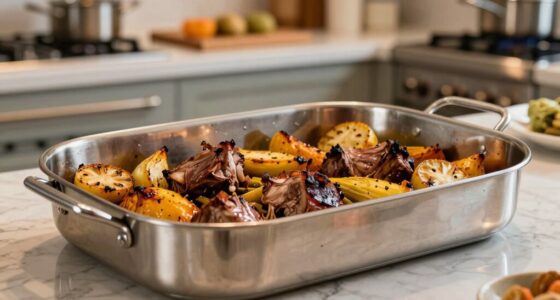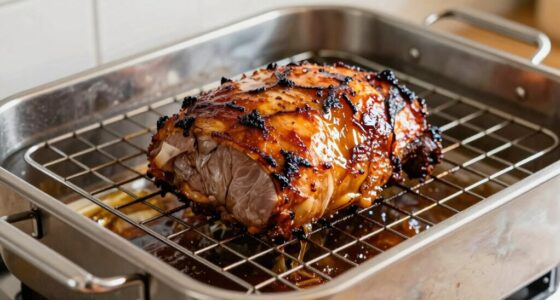
For Thanksgiving, the roasting pan has to hold a large bird, collect drippings, and fit the way you cook before and after the meal. The practical choice is often between a stainless steel pan and a nonstick pan. Stainless steel is usually better for browning the turkey and building gravy from browned bits; nonstick makes food release and cleanup easier, especially when the pan is crowded with sticky glaze or dried-on drippings.

Get your next haul delivered free with Prime
- Fast, free delivery on millions of items
- Prime Video, Amazon Music and more included
- Member-only deals all year

Cuisinart Chef’s Classic 16-In Roasting Pan with Rack
- ✔ Material: Stainless steel with aluminum-encapsulated base
- ✔ Finish: Mirror-finish stainless steel, uncoated
- ✔ Dimensions: 20.7 × 12 × 4.9 inches

Glad Roasting Pan Nonstick 11×15 with Rack
- ✔ Material: Carbon steel
- ✔ Finish: Nonstick; listed as PFOA-free and PTFE-free
- ✔ Pan dimensions: 15 × 10.3 × 2.8 inches, excluding handles

EWFEN Nonstick Turkey Roasting Pan with U-Shaped Rack, 17 × 13 Inch
- ✔ Material: Carbon steel
- ✔ Finish: Nonstick; described as free of PTFE, PFOA, cadmium and lead
- ✔ Dimensions in title: 17 × 13 inches
The gap matters most if you plan to make gravy in the roasting pan or want cookware that can serve for years. A well-made stainless pan is the better all-around investment for those cooks. If quick cleanup is the priority and you are comfortable treating the coating gently, nonstick can make the holiday less labor-intensive. Check the pan’s dimensions, oven rating, weight, and whether it includes a sturdy rack before choosing either type.
At a Glance
| Criteria | Stainless steel roasting pan | Nonstick roasting pan | Winner |
|---|---|---|---|
| Turkey browning | Strong browning and fond when used with suitable heat | Can brown well, but coating and heat guidance may limit technique | A |
| Pan gravy | Excellent surface for deglazing browned bits | Less suited to scraping up fond; coating can be damaged by aggressive tools | A |
| Food release | Food can stick without enough fat or careful technique | Typically releases food more readily | B |
| Cleanup | May need soaking and scrubbing | Usually easier to wash by hand | B |
| Durability | Often lasts for many years with sound construction | Coating can wear or scratch, shortening useful life | A |
| Care and utensil limits | Generally more tolerant of metal utensils; follow maker’s guidance | Usually calls for nonmetal utensils and gentle cleaning | A |
| Value over time | Higher initial cost can pay off through longevity and versatility | Worth paying for if easier release and cleanup matter more than longevity | Depends |
Cuisinart Chef’s Classic 16-In Roasting Pan with Rack
For a Thanksgiving host who wants one pan to cover a large turkey and other roasts through the year, the Cuisinart Chef’s Classic has the most balanced feature set here. Its listed 20.7 × 12 × 4.9-inch dimensions give it substantial room, while the aluminum-encapsulated base is designed to distribute heat evenly. The removable rack raises the bird so hot air can circulate and drippings can collect below, a useful setup for roasting and gravy preparation.Compared with Glad and EWFEN, Cuisinart trades a nonstick surface for uncoated stainless steel. That means it avoids the careful utensil restrictions attached to the coated pans, and its stated 500°F limit is the highest of the three. It is also induction compatible, which makes it the most flexible choice if you want to use compatible cookware on the stovetop. The compromises are weight and handling: at seven pounds before adding food, it is heavier than the Glad, and its metal handles become hot. Although it is dishwasher safe, hand washing is recommended to protect the finish. Choose it for capacity and versatility; skip it if your first priority is effortless release from a nonstick coating.
Pros:
- Large listed dimensions suit whole turkeys and substantial roasts.
- Aluminum-encapsulated base is designed for uniform heat distribution.
- Removable rack lifts food above drippings for browning and drainage.
- Uncoated stainless steel, induction compatibility and a 500°F oven limit broaden its uses.
Cons:
- Seven-pound pan is heavier than the Glad option, before adding a turkey.
- Handles become hot during cooking, and hand washing is recommended despite dishwasher-safe labeling.
Best for: Thanksgiving hosts who want a large, uncoated roasting pan for turkey and other roasts, plus a stated 500°F limit and induction compatibility.
Not ideal for: Shoppers who want a lightweight pan, cool-to-touch handles, or nonstick cleanup with minimal attention to food release.
Bottom line: We rank Cuisinart first for its combination of generous dimensions, uncoated construction, removable rack and the highest stated oven limit in this comparison.
“We rank Cuisinart first for its combination of generous dimensions, uncoated construction, removable rack and the highest stated oven limit in this comparison.”
Glad Roasting Pan Nonstick 11×15 with Rack
The Glad Roasting Pan is the clearest fit for cooks who value easy food release and less scrubbing after a big holiday dinner. Its heavy-gauge carbon steel body is paired with a nonstick coating, and the V-shaped rack elevates a turkey, chicken or roast to encourage airflow. The 15-inch length and stated suitability for whole turkeys make it a practical option for a family gathering, while the 3.2-pound weight is notably lighter than the Cuisinart.Against the Cuisinart, Glad makes a simpler cleanup case but gives up versatility: it is rated to 464°F, cannot go under the broiler, and is not for stovetops or open flames. EWFEN also uses a nonstick finish, but its conflicting dimensions complicate planning; Glad’s supplied pan dimensions are clearer. The coating still calls for care. Metal utensils, abrasive tools and soaking are discouraged, even though the pan is described as dishwasher safe. We’d choose Glad when the holiday menu centers on oven roasting and easy release. We’d pass if we want to sear on the stovetop, broil at the end, or use rough utensils without worrying about the finish.
Pros:
- Heavy-gauge carbon steel body is described as warp-resistant and durable.
- Nonstick finish supports easier food release and cleanup.
- V-shaped rack raises food for airflow during roasting.
- Lighter than the Cuisinart at 3.2 pounds, with stated 15-inch pan length.
Cons:
- Not suitable for broiler, stovetop or open-flame cooking.
- Coating requires gentle care: avoid soaking, abrasive cleaners and metal utensils.
Best for: Cooks preparing a large Thanksgiving meal who prioritize nonstick release, a raised V-rack and a lighter pan for oven roasting.
Not ideal for: Anyone needing broiler or stovetop use, or a pan that can be cleaned with abrasive tools or metal utensils.
Bottom line: We recommend Glad when nonstick convenience and a clear large-pan format matter more than broiler access or an uncoated surface.
“We recommend Glad when nonstick convenience and a clear large-pan format matter more than broiler access or an uncoated surface.”
EWFEN Nonstick Turkey Roasting Pan with U-Shaped Rack, 17 × 13 Inch
EWFEN’s distinguishing feature is its U-shaped rack with raised handles, which offers a dedicated grip for lifting a roast out of the pan. For Thanksgiving, that can be helpful when transferring a heavy bird while leaving drippings behind. The product is described as suitable for turkeys up to 22 pounds, and its angled side handles are intended to provide room for maneuvering. Its nonstick coating is described as free of PTFE, PFOA, cadmium and lead.Compared with Glad’s V-shaped rack, EWFEN emphasizes lifting access; Glad, by contrast, has clearer supplied pan dimensions and a slightly higher stated oven limit of 464°F versus EWFEN’s 450°F. Cuisinart remains the more versatile choice for high-heat roasting and induction use, while EWFEN keeps the convenience of a coated surface. The largest concern is practical: the title says 17 × 13 inches, but the listed item dimensions are 15 × 8 × 3 inches. Those figures suggest very different usable space, so we would confirm the actual measurements before planning around a large turkey. Its stated 22-pound capacity also gives a defined ceiling; cooks with especially large birds should consider another option.
Pros:
- U-shaped rack lifts food above the drippings and includes raised handles.
- Angled side handles are designed to help with maneuvering.
- Coating is described as free of PTFE, PFOA, cadmium and lead.
- Product description states suitability for turkeys up to 22 pounds.
Cons:
- Pan dimensions conflict: title states 17 × 13 inches, while listed item dimensions are 15 × 8 × 3 inches.
- 450°F limit is lower than Glad’s and Cuisinart’s stated limits.
- Claimed capacity may not suit birds larger than 22 pounds.
Best for: Roasters who value a U-shaped rack with lifting handles and want a coated pan for a turkey within the stated 22-pound capacity.
Not ideal for: Buyers who need dependable dimensions before fitting a large bird, or who want a higher heat limit or stovetop versatility.
Bottom line: We see EWFEN as a useful rack-focused option, but its dimension mismatch keeps it behind the more straightforward Glad and more versatile Cuisinart picks.
“We see EWFEN as a useful rack-focused option, but its dimension mismatch keeps it behind the more straightforward Glad and more versatile Cuisinart picks.”
As an Amazon Associate we earn from qualifying purchases.
Key Differences
The biggest cooking difference appears after the turkey comes out. Stainless steel encourages browned bits to form on the pan, which can be loosened with liquid and turned into a more developed gravy. Nonstick reduces sticking, but that same release-friendly surface generally produces less fond. For cooks who make gravy from the drippings, stainless steel has a meaningful advantage; for cooks who transfer drippings to a separate saucepan or use another gravy method, the gap matters less.
Cleanup reverses the result. Nonstick often needs less soaking and scrubbing, while stainless may require more effort if drippings bake onto the surface. Over time, though, stainless is generally the more durable and versatile option. Nonstick is a sensible convenience purchase when its care requirements suit your kitchen and you accept that the coating may eventually need replacing. The best value depends on whether you prize years of use and browning performance or reduced cleanup after a big meal.
Detailed Comparison
Turkey browning (Stainless steel roasting pan wins — moderate)
Stainless steel wins by a moderate margin for cooks seeking browned skin and flavorful drippings. It tolerates the browning process well and develops fond that can contribute flavor to gravy. Nonstick can roast turkey successfully, but some coated pans come with more restrictive heat guidance, and the surface is less useful for developing browned bits. Follow the manufacturer’s oven and temperature limits for either pan; a rack and adequate airflow also affect browning.
Pan gravy (Stainless steel roasting pan wins — major)
Stainless steel wins by a major margin if the roasting pan itself is the base for gravy. Browned bits can be loosened with stock, wine, or water, then incorporated into the sauce. Nonstick makes that step less effective because less food tends to adhere, and scraping with metal tools can damage the coating. If you routinely pour drippings into a separate saucepan, this advantage is less important.
Food release (Nonstick roasting pan wins — moderate)
Nonstick wins by a moderate margin. Turkey skin, sticky glaze, and vegetables are generally easier to lift from a coated surface, though a rack still helps prevent sticking and keeps the bird above pooled drippings. Stainless can release food cleanly with the right preparation, but it is less forgiving if food is placed on a hot, dry pan or left to cool in baked-on juices. Use fat and proper technique rather than expecting either surface to solve every sticking problem.
Cleanup (Nonstick roasting pan wins — moderate)
Nonstick wins by a moderate margin for a fast wash after dinner. Food and drippings often come away with less soaking and scrubbing. Stainless can be cleaned thoroughly, but browned residue may take more time to loosen. Avoid abrasive pads and harsh tools on coated pans, and check the maker’s cleaning instructions; preserving the coating is part of the convenience tradeoff.
Durability (Stainless steel roasting pan wins — major)
Stainless steel wins by a major margin for expected service life. A pan without a nonstick coating has no coating layer to scratch or wear away, though its handles, rack, and construction still need care. Nonstick coatings can deteriorate with age, high heat, abrasive cleaning, or metal utensils. That does not make every coated pan short-lived, but it does make replacement more likely than with a sound stainless pan.
Care and utensil limits (Stainless steel roasting pan wins — moderate)
Stainless steel wins by a moderate margin for cooks who want fewer restrictions. Many stainless pans tolerate metal utensils and more vigorous cleaning, subject to the maker’s instructions. Coated pans usually call for nonmetal utensils, gentler washing, and attention to oven-temperature limits. If several people help cook, or you prefer not to manage special handling, stainless is the simpler choice over the long run.
Value over time (moderate difference)
This depends on what you value most. Stainless steel often costs more at the outset, but its durability, gravy performance, and broader use can make it the better long-term buy. Nonstick can be better value for someone who roasts occasionally and places a high price on quick release and washing. Pay more for stainless when you will use the pan often or make gravy in it; pay for nonstick convenience only when easier cleanup offsets the possibility of earlier replacement.
Stainless steel roasting pan: Pros and Cons
Pros:
- Builds flavorful fond for pan gravy
- Generally durable without a coating to wear away
- More tolerant of metal tools and vigorous cleaning
- Useful for roasting beyond Thanksgiving
Cons:
- Food may stick without suitable preparation
- Baked-on residue can take longer to clean
- May cost more initially than a basic coated pan
Nonstick roasting pan: Pros and Cons
Pros:
- Food and drippings often release more easily
- Usually takes less effort to clean
- Can simplify cooking for occasional roasters
Cons:
- Coating can scratch or wear and may need replacement
- Usually requires gentler utensils and cleaning
- Less effective for developing fond for pan gravy
- Temperature limits vary by product and need checking
Who Should Choose What
Choose Stainless steel roasting pan if:
- You make gravy directly in the roasting pan.
- You want a durable pan for repeated holiday and everyday use.
- You prefer cookware that tolerates metal utensils and less delicate care.
- Browning and drippings matter more to you than the fastest cleanup.
Choose Nonstick roasting pan if:
- Easy release is your main concern.
- You roast infrequently and want to reduce post-meal scrubbing.
- You are willing to use gentle utensils and follow coating care instructions.
- You make gravy separately or do not rely on browned bits from the pan.
Skip both if: Skip both styles if neither pan fits your oven, turkey size, or storage space. Measure before buying, and consider a disposable or borrowed pan for a one-time roast if you have no need for reusable cookware.
Value for Money
Stainless steel is usually the better value for a household that roasts regularly, makes gravy in the pan, or wants one pan for many years of cooking. Its higher upfront cost buys durability and a useful browning surface. Nonstick is worth paying for when cleanup and easy release are the main benefits you want, particularly if you roast only occasionally and already have a separate gravy routine. A low price alone is not a reason to choose coated cookware: factor in gentle care and the chance that the pan will need replacing when its surface wears.
Final Verdict
Choose stainless steel for the best Thanksgiving all-rounder. It is the clear choice for cooks who want to brown well, turn the drippings into pan gravy, and keep the same pan in service across many holidays. Choose nonstick when easy release and less cleanup matter more than making fond or maximizing service life, and you are prepared to protect the coating.
The deciding factor is how you use the drippings. If gravy starts in the roasting pan, buy stainless steel. If you move the drippings elsewhere and want the simplest wash, nonstick is a reasonable convenience choice. Whichever you choose, confirm that the pan and rack fit your oven and that the stated capacity suits your bird.
Frequently Asked Questions
Is stainless steel or nonstick better for Thanksgiving turkey?
Stainless steel is better for cooks focused on browning and pan gravy. Nonstick is better when easy food release and cleanup take priority. Both can roast a turkey; pan size, rack design, oven fit, and following the maker’s heat limits also matter.
Can you make gravy in a nonstick roasting pan?
Yes, but a nonstick surface tends to develop less fond, and scraping it with metal tools can damage the coating. Use tools approved by the manufacturer or transfer the drippings to a separate saucepan for gravy.
Does a nonstick roasting pan make cleanup easier?
Usually. Food and baked-on drippings often release with less scrubbing, although the pan still needs careful washing to preserve its coating. Follow the product’s cleaning instructions and avoid tools or cleaners it does not permit.
Is a more expensive roasting pan worth it?
It can be worth the added cost if you roast often, need a sturdy rack, or want stainless steel that can last through years of use. For occasional roasting, a less expensive nonstick pan may offer better value if easier cleanup is your priority and you accept the coating’s care limits.
Veterans Day Picks

Shark Matrix Plus 2-in-1 Robot Vacuum and Mop with 60-Day Self-Emptying Base
As an affiliate, we earn on qualifying purchases.