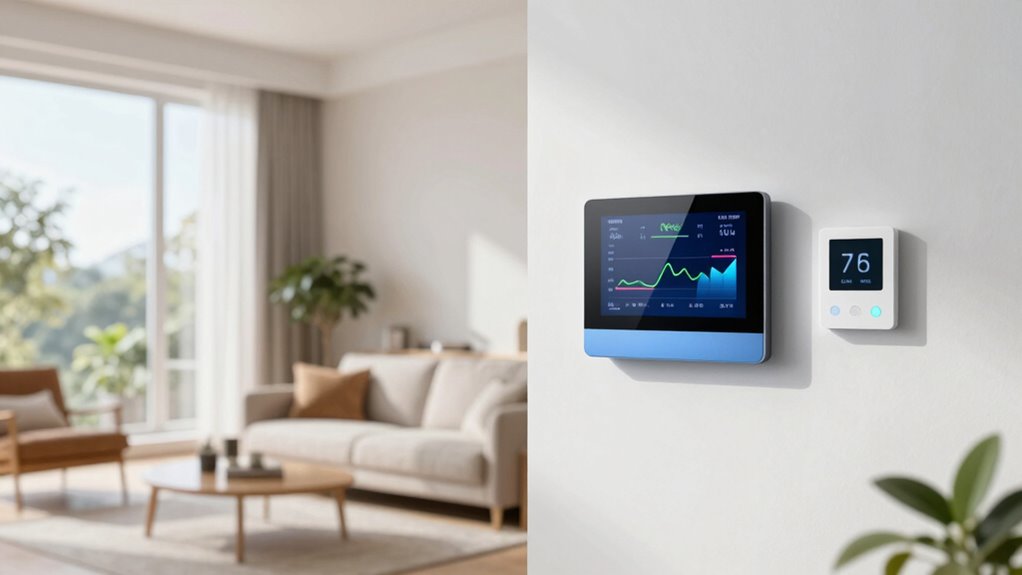

Whole-home energy monitoring helps you see overall energy use and spot big energy hogs like HVAC or refrigerators. It can guide you to optimize device usage and plan upgrades. However, it can’t tell you exactly which devices are causing fluctuations or measure their efficiency directly. External factors like weather also affect the data. To get a clearer picture and uncover specific issues, there’s more to explore beyond basic monitoring.
Key Takeaways
- Whole-home monitoring shows overall energy use but doesn’t specify exact device consumption at specific moments.
- It helps identify energy-consuming appliances but can’t directly measure their efficiency or pinpoint causes of fluctuations.
- External factors like weather influence energy data, requiring contextual understanding for accurate interpretation.
- It promotes energy-saving habits and appliance upgrades but requires additional tools for detailed troubleshooting.
- Overall, it offers valuable insights but isn’t a comprehensive solution for complete home energy efficiency assessment.
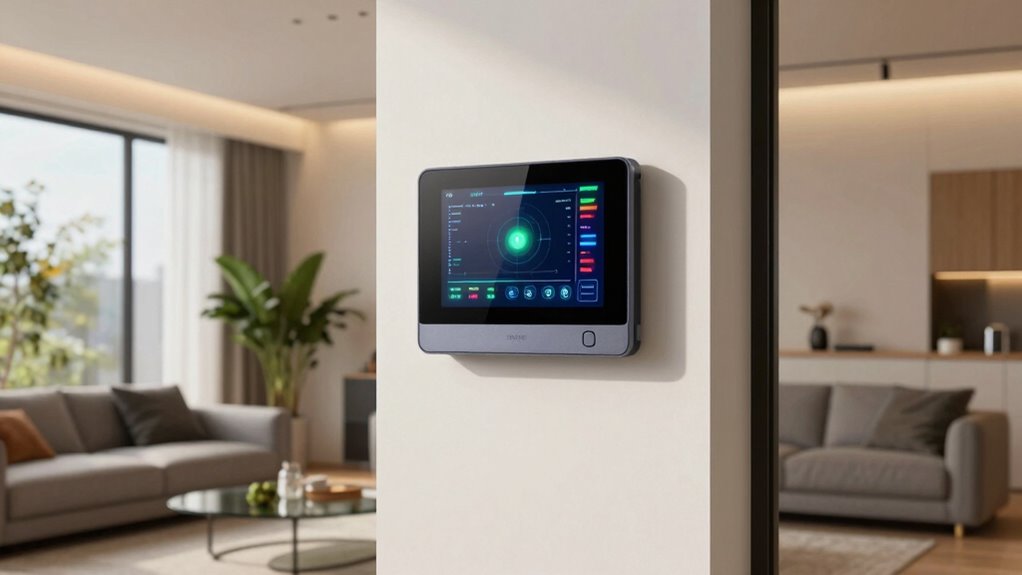
One of the biggest benefits of whole-home monitoring is its ability to improve device efficiency. When you see exactly how much energy each appliance consumes, you can determine which devices are energy hogs and which are more efficient. For example, if your HVAC system or refrigerator is consuming more power than it should, you’ll know to check or upgrade those systems. Over time, this information enables you to optimize your device usage, replace outdated or inefficient appliances, and reduce unnecessary energy waste. As a result, you become more aware of how small changes in your daily routine can lead to significant savings and better energy management. Additionally, understanding energy consumption patterns can help you plan improvements and prioritize upgrades. Gaining insight into energy use trends can further enhance your ability to make strategic adjustments. Recognizing external factors that influence your energy use, like weather, also helps you better interpret the data and plan accordingly.
However, while whole-home energy monitoring provides a wealth of useful information, it does have its limits. These systems typically give you an overall view of energy consumption but don’t usually tell you exactly which device is using what amount of power at a specific moment. You might see that your home is using a lot of energy, but pinpointing the culprit often requires additional, device-specific monitoring. Also, monitoring systems can’t directly measure the energy efficiency of individual appliances; they only report consumption. Understanding device efficiency involves considering factors like age, maintenance, and technology, which the system doesn’t automatically account for. energy efficiency is a multifaceted concept that extends beyond raw consumption data.
Another thing to keep in mind is that these systems can’t tell you why your energy use fluctuates. For example, they won’t identify if a sudden spike is due to a malfunctioning appliance or someone leaving a light on. You’ll need to interpret the data and sometimes do further troubleshooting. The data may also be affected by external factors like weather conditions, which can impact your overall energy consumption in ways that are not directly related to appliance usage. Despite this, whole-home energy monitoring empowers you with valuable insights that can lead to smarter energy choices. It’s a useful tool for gaining awareness and taking control of your energy habits, but it’s not a comprehensive solution for diagnosing every aspect of your home’s energy efficiency.
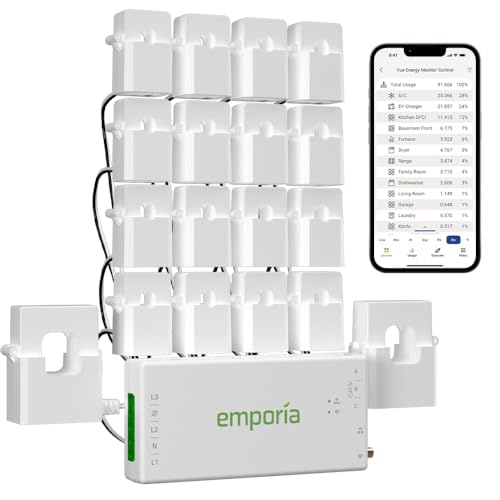
Emporia Vue 3 Home Energy Monitor – Smart Home Automation Module and Real Time Electricity Usage Monitor, Power Consumption Meter, Solar and Net Metering for UL Certified Safe Energy Monitoring
- UL Certified for Safety: Ensures reliable, safe energy monitoring
- Easy Circuit Panel Installation: Supports various home electrical systems
- Real-Time Energy Monitoring: 24/7 control of power consumption
As an affiliate, we earn on qualifying purchases.
As an affiliate, we earn on qualifying purchases.
Frequently Asked Questions
Can Energy Monitors Detect Specific Appliances Automatically?
Energy monitors can’t automatically identify specific appliances for you. They use appliance detection technology, but it’s not always precise. Instead, you’ll often need to manually set up or label devices, especially if you want automatic identification. Some advanced systems can recognize certain appliances based on their energy signatures, but generally, full automatic detection remains limited. So, you’ll likely have to do some manual work for accurate appliance detection.
How Often Do Energy Monitoring Systems Need Calibration?
You should calibrate your energy monitoring system about once a year to maintain sensor accuracy. Calibration frequency depends on your system’s quality and usage; some high-end models might need more frequent adjustments. Regular calibration ensures your readings stay precise, helping you better understand your energy consumption. Keep an eye on manufacturer guidelines, and if you notice unusual data, recalibrate sooner to keep sensor accuracy ideal.
Do All Homes Benefit Equally From Energy Monitoring?
Not all homes benefit equally from energy monitoring. If you have home automation systems, you can optimize energy savings more effectively by identifying waste and adjusting usage patterns. Larger homes or those with inefficient appliances tend to see more noticeable improvements, while smaller or well-maintained homes may experience modest gains. Ultimately, your home’s specific setup and your proactive approach determine how much you gain from energy monitoring.
Can Monitoring Systems Identify Energy Theft or Unauthorized Use?
Imagine a vigilant guard watching your energy flow, catching any suspicious activity. Monitoring systems can indeed help identify energy theft or unauthorized use through fraud detection techniques, alerting you to unusual spikes or patterns. While they enhance security risks management, they aren’t foolproof. You still need to stay alert and regularly review data, as determined intruders may attempt to bypass detection, leaving some thefts hidden behind the scenes.
What Is the Typical Installation Process and Time?
You typically follow a few installation steps for whole-home energy monitoring systems, starting with selecting the right device and turning off power for safety. Then, you connect sensors or meters to your main electrical panel, configure the system via an app or interface, and finally, turn the power back on. Setup duration usually takes a couple of hours, depending on your home’s complexity and experience with electrical work.
Emporia Vue 3 Home Energy Monitor – Smart Home Automation Module and Real Time Electricity Usage Monitor, Power Consumption Meter, Solar and Net Metering for UL Certified Safe Energy Monitoring
- UL Certified for Safety: Ensures reliable, safe energy monitoring
- Easy Circuit Panel Installation: Supports various home electrical systems
- Real-Time Energy Monitoring: 24/7 control of power consumption
As an affiliate, we earn on qualifying purchases.
As an affiliate, we earn on qualifying purchases.
Conclusion
Whole-home energy monitoring gives you valuable insights into your energy use, helping you identify areas to save and make smarter choices. But it’s not a magic fix—some issues remain hidden, and it won’t instantly cut costs. Are you ready to take control of your energy habits? By understanding what these systems can and can’t do, you can make informed decisions and maximize your savings. Isn’t it time you harnessed the power of smart monitoring?
Emporia Vue 3 Home Energy Monitor – Smart Home Automation Module and Real Time Electricity Usage Monitor, Power Consumption Meter, Solar and Net Metering for UL Certified Safe Energy Monitoring
- UL Certified for Safety: Ensures reliable, safe energy monitoring
- Easy Circuit Panel Installation: Supports various home electrical systems
- Real-Time Energy Monitoring: 24/7 control of power consumption
As an affiliate, we earn on qualifying purchases.
As an affiliate, we earn on qualifying purchases.
Emporia Vue 3 Home Energy Monitor – Smart Home Automation Module and Real Time Electricity Usage Monitor, Power Consumption Meter, Solar and Net Metering for UL Certified Safe Energy Monitoring
- UL Certified for Safety: Ensures reliable, safe energy monitoring
- Easy Circuit Panel Installation: Supports various home electrical systems
- Real-Time Energy Monitoring: 24/7 control of power consumption
As an affiliate, we earn on qualifying purchases.
As an affiliate, we earn on qualifying purchases.