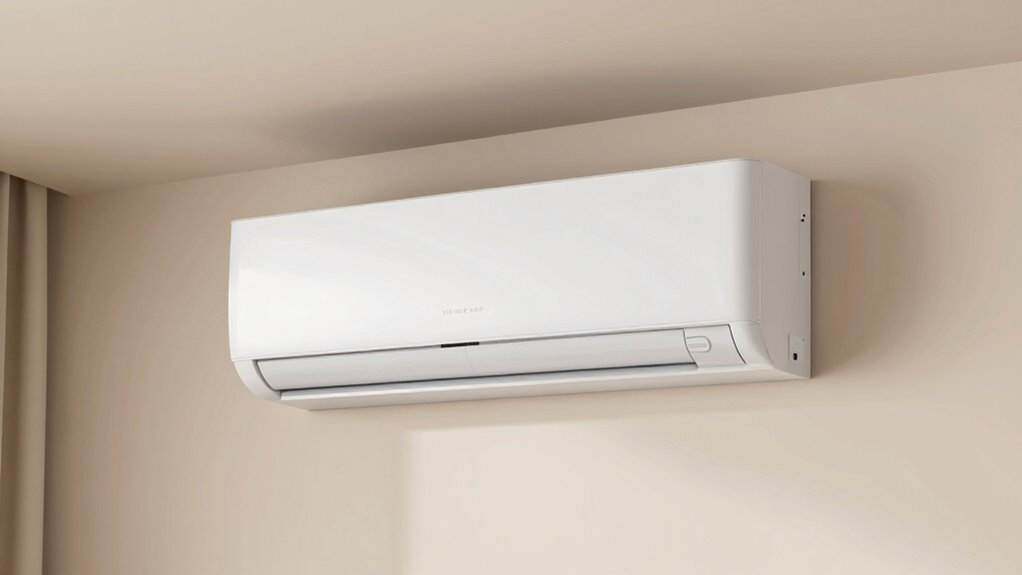

Inverter air conditioners are quieter and more affordable because they adjust their compressor speed to match your cooling needs, which means less noise and energy use. Unlike traditional units that turn on and off repeatedly, inverters run smoothly at variable speeds, reducing wear and tear. This efficient operation saves you money over time and keeps noise levels low. To discover how these tech advantages can benefit you even more, keep exploring the details behind inverter systems.
Key Takeaways
- Inverter ACs operate at variable speeds, resulting in smoother, quieter operation compared to traditional units with constant on/off cycling.
- They modulate compressor output to maintain consistent temperatures, reducing sudden loud noises and enhancing comfort.
- Continuous operation with less wear and tear lowers maintenance costs and extends the unit’s lifespan, decreasing long-term expenses.
- Improved energy efficiency from inverter technology leads to lower electricity bills, making them more cost-effective over time.
- Advancements in inverter technology are making these units more affordable and accessible, providing a smarter, budget-friendly cooling solution.
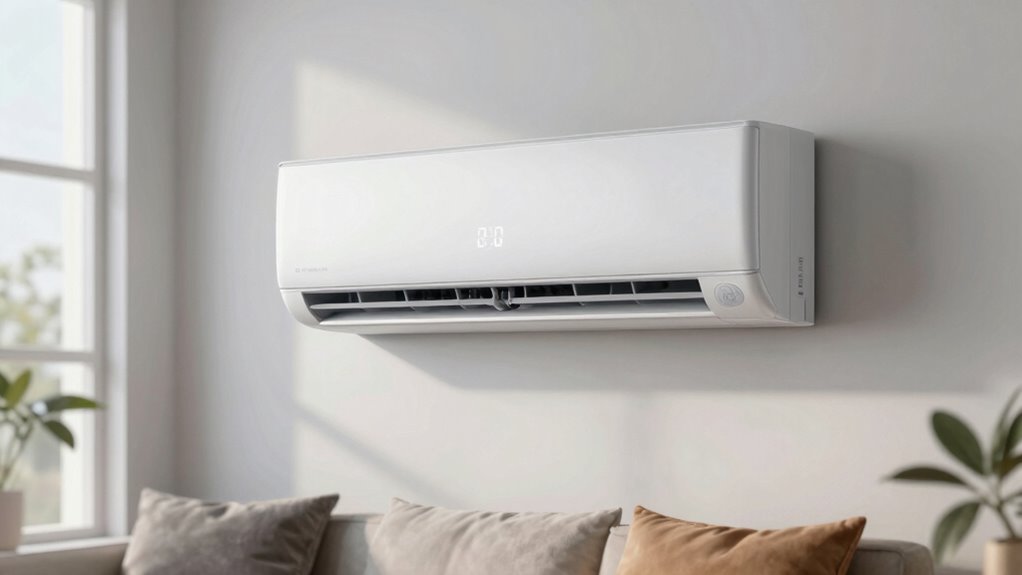
Have you ever wondered how inverter air conditioners provide more efficient and consistent cooling? The secret lies in their advanced technology, which makes them stand out from traditional units. Unlike conventional models that turn on and off at full power, inverter air conditioners adjust their compressor speed based on the room’s temperature. This ability to modulate output means they use less energy, making them considerably more energy efficient. By continuously fine-tuning their cooling capacity, they avoid the energy waste associated with repeatedly starting and stopping. As a result, you save money on your electricity bill while enjoying a steady, comfortable environment.
Inverter air conditioners save energy and maintain steady, comfortable cooling by adjusting compressor speed.
Another key benefit of inverter air conditioners is their noise reduction. Traditional units often produce loud, disruptive sounds when the compressor kicks in or shuts off. In contrast, inverter models operate more smoothly and quietly because their compressor runs at variable speeds. Instead of loud bursts of noise, you get a gentle hum that’s barely noticeable. This quieter operation is especially advantageous if you work from home, have young children, or simply prefer a peaceful atmosphere. You won’t be disturbed by the constant switching or loud compressor noises typical of less sophisticated air conditioning systems. The reduced noise level also means you can keep your windows and doors open without the constant drone of a loud unit, enhancing overall comfort and air quality.
Furthermore, the quieter operation is not just about comfort but also contributes to the longevity of the unit. Because inverter air conditioners don’t have to endure the stress of frequent start-stop cycles, their components experience less wear and tear. This results in fewer breakdowns and lower maintenance costs over time. Additionally, the energy efficiency of these units means they operate with less power, which reduces the strain on your electrical system and minimizes your carbon footprint. It’s a win-win situation: you get a more environmentally friendly cooling solution that’s also easier on your wallet.
In essence, inverter air conditioners excel at providing both energy efficiency and noise reduction. They keep your space comfortably cool while consuming less power and operating more quietly than traditional models. This combination makes them a smart investment for anyone looking to save money, reduce energy consumption, and enjoy a quieter living or working environment. Since technology continues to improve, inverter units are becoming more affordable and accessible, making it easier than ever to upgrade and experience these benefits firsthand. Modern technology advancements have contributed to the increasing affordability and performance improvements of inverter units.

Midea 12,000 BTU U Shaped Smart Inverter Window Air Conditioner – Cools 550 Sq Ft, Ultra Quiet with Open Window Operation – Alexa/Google Assistant Compatible, 37% Energy Savings, Remote (2026 Edition)
ULTRA QUIET – The U-shape design of Midea U Smart Inverter AC uses your window to block noise…
As an affiliate, we earn on qualifying purchases.
As an affiliate, we earn on qualifying purchases.
Frequently Asked Questions
How Long Do Inverter Air Conditioners Typically Last?
Inverter air conditioners typically last 10 to 15 years with proper maintenance. You’ll find that their longer lifespan justifies the higher initial cost, especially compared to traditional units. Keep in mind, installation requirements for inverter systems can be more complex, but this often leads to better efficiency and durability. Regular servicing helps extend their life, ensuring you get the most from your investment while enjoying quieter, cost-effective cooling for years.
Are Inverter ACS Suitable for Small Rooms?
Yes, inverter ACs are suitable for small rooms. They offer energy savings by adjusting compressor speed to maintain your desired temperature efficiently. Plus, their lower noise levels make them ideal for small spaces where quietness matters. You’ll enjoy consistent cooling without the loud compressor noise typical of traditional units. This combination of energy efficiency and quiet operation makes inverter ACs a smart choice for small rooms, ensuring comfort and savings.
Do Inverter ACS Require Special Maintenance?
Like tending a finely tuned instrument, inverter ACs do require some special maintenance, but it’s straightforward. You should stick to regular maintenance schedules, including cleaning filters and checking refrigerant levels, to keep them running efficiently. While the cost considerations are slightly higher upfront, proper upkeep guarantees long-term savings and performance. No need for complicated repairs—just simple care, and your inverter AC will perform at its best for years.
How Energy-Efficient Are Inverter Air Conditioners?
You’ll find that inverter air conditioners are highly energy-efficient, helping you save on energy bills through better control of compressor speed. They adjust their power based on cooling needs, reducing wastage and promoting energy savings. This efficiency also benefits the environment by lowering your carbon footprint. With an inverter AC, you get consistent comfort while making a smart, eco-friendly choice that minimizes environmental impact.
Can Inverter ACS Be Used in Humid Climates?
Yes, inverter ACs can be used in humid climates. They’re designed for climate adaptation and humidity compatibility, allowing you to control moisture levels effectively. The inverter technology helps maintain consistent temperatures, reducing excess humidity buildup. Plus, their energy efficiency means you won’t worry about skyrocketing electricity bills, even in high humidity. Just make certain you select a model suitable for humid conditions, and you’ll enjoy comfortable, dry air year-round.

Midea Inverter Window Air Conditioner with Heat – Quiet Window AC Unit and Heat Combo with Dehumidifier – Cools up to 550 Sq. Ft. – Energy Star Rated, Smart Control, Remote, 12,000 BTU
Multi-Season Comfort – This Midea 12000 BTU air conditioner is more versatile than standard AC units, offering powerful…
As an affiliate, we earn on qualifying purchases.
As an affiliate, we earn on qualifying purchases.
Conclusion
Choosing an inverter air conditioner is like planting a seed for a quieter, more budget-friendly breeze in your home. It quietly hums with the confidence of a seasoned musician, adjusting its tune seamlessly to match your comfort needs. With energy efficiency that glows like a steady lighthouse beam, it guides you toward savings and serenity. Embrace this modern marvel, and watch your living space transform into a calm harbor amid the storm of high energy costs.
Midea 12,000 BTU U Shaped Smart Inverter Window Air Conditioner – Cools 550 Sq Ft, Ultra Quiet with Open Window Operation – Alexa/Google Assistant Compatible, 37% Energy Savings, Remote (2026 Edition)
ULTRA QUIET – The U-shape design of Midea U Smart Inverter AC uses your window to block noise…
As an affiliate, we earn on qualifying purchases.
As an affiliate, we earn on qualifying purchases.

12000 BTU Air Conditioner ,12V Air Conditioner 12 Volt DC for Truck Parking Split Electric AC Unit, Quiet A/C Inverter Cooling Cost-effective for Semi-Truck, Trailer, Camper
【 Fast Cooling 12000BTU 】This air conditioner equips Cooling Function, which meet your needs well in hot summer….
As an affiliate, we earn on qualifying purchases.
As an affiliate, we earn on qualifying purchases.