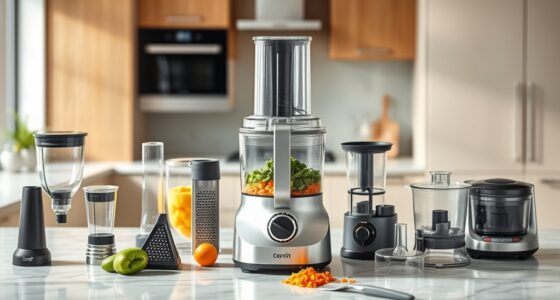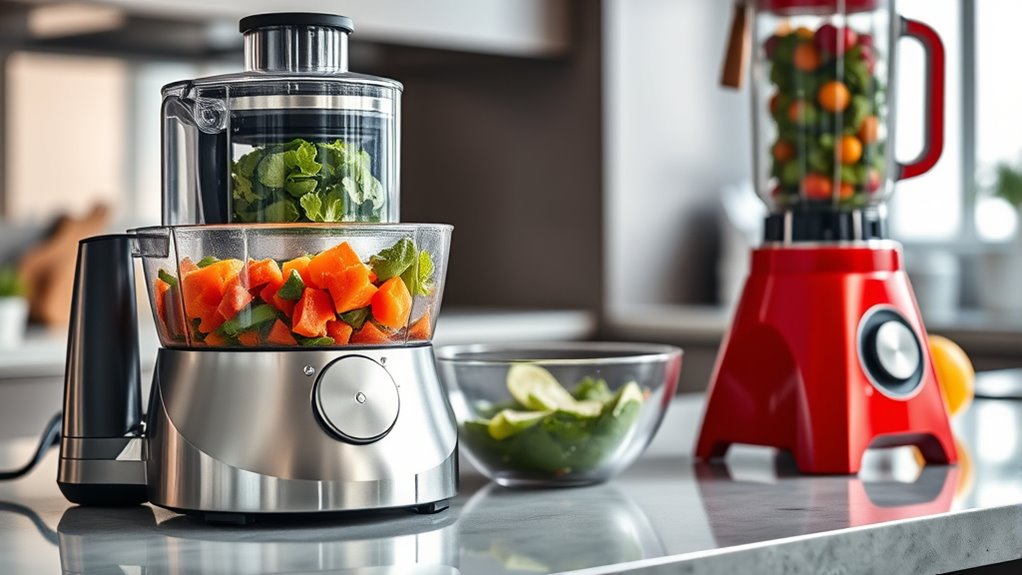
A food processor is great for chopping, slicing, kneading, and mixing ingredients quickly, making it ideal for tasks like dough or chopping vegetables. A blender, on the other hand, is designed for pureeing cooked foods and liquids into smooth textures, perfect for soups or smoothies. While both are versatile, they serve different needs—your choice depends on what culinary tasks you want to accomplish. Keep exploring to see which appliance suits your kitchen better.
Key Takeaways
- Food processors excel at chopping, slicing, kneading, and mixing ingredients for batter, dough, and larger prep tasks.
- Blenders are ideal for creating smooth purees, soups, and liquids with adjustable speeds for fine textures.
- Food processors handle tougher jobs like shredding cheese and slicing vegetables efficiently.
- Blenders are less suited for batter preparation and slicing but excel in pureeing cooked foods and liquids.
- Both appliances are versatile but serve distinct roles based on task requirements and desired textures.
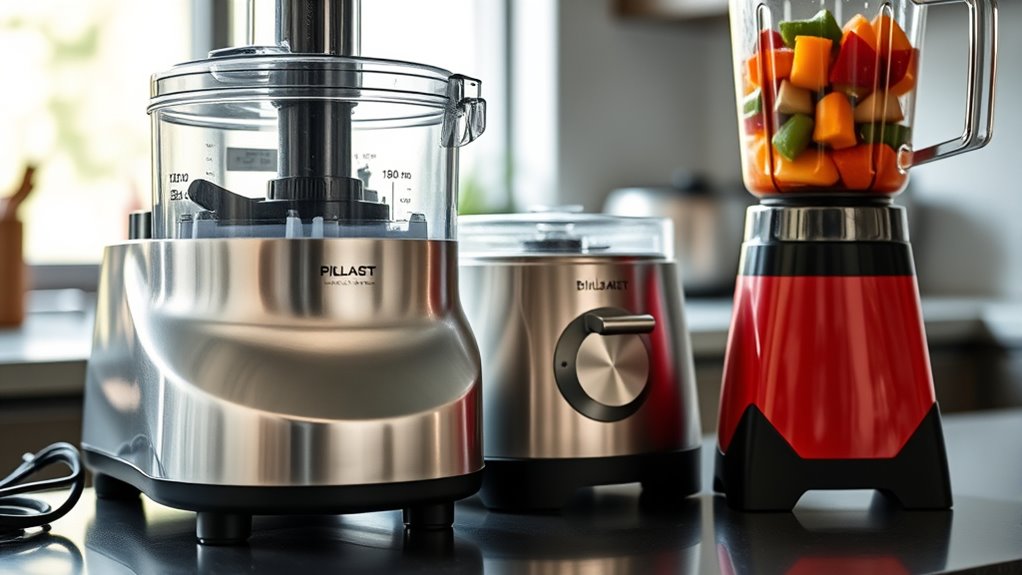
When it comes to preparing a variety of dishes, understanding the differences between a food processor and a blender is essential. Both appliances are versatile, but they serve distinct purposes in your kitchen. If you’re making cake batter, a food processor can help combine ingredients quickly and efficiently, giving you a smooth, lump-free mixture. Unlike a traditional mixer, a food processor’s sharp blades and powerful motor make it easy to incorporate dry and wet ingredients together, saving you time and effort. You simply add your flour, sugar, eggs, and liquids into the bowl, pulse a few times, and watch the batter come together evenly. This is especially handy when you’re short on time or want a more uniform texture without overmixing.
On the other hand, if you’re working on soup pureeing, a blender is your best tool. Its design is ideal for transforming cooked vegetables and broth into a silky, smooth soup. You can blend in batches directly in the pitcher, which often allows for better control over the texture—whether you want it slightly chunky or completely smooth. The high-speed blades in a blender create a vortex that pulls ingredients toward the blades, ensuring thorough pureeing. This makes your soup velvety and well-blended, perfect for serving. Plus, many blenders come with adjustable speed settings, so you can customize the consistency to your liking.
While a food processor might struggle with creating a smooth puree—since it’s designed more for chopping, slicing, and mixing—a blender does a better job for that task. Similarly, when you need to process larger quantities of ingredients or knead dough, a food processor excels because of its powerful motor and bowl capacity. It can handle tougher jobs like shredding cheese, slicing vegetables, or kneading dough for bread or pizza.
Frequently Asked Questions
Can a Blender Replace a Food Processor for Chopping?
A blender isn’t ideal for chopping because it lacks the chopping efficiency and texture control that a food processor offers. Blenders are designed to blend liquids and create smooth textures, so they tend to over-process or produce uneven results when chopping solid ingredients. If you want precise control over texture and consistent chopping, stick with a food processor. A blender simply can’t match its performance for chopping tasks.
Which Appliance Is Better for Kneading Dough: Food Processor or Blender?
This appliance comparison might just save your baking day! For kneading dough, a food processor is your best bet—it’s powerful enough to handle the job without turning your dough into a mess. Blenders aren’t designed for dough kneading, and they can struggle or get damaged. So, if you want perfect, well-kneaded dough, go with the food processor; it’s made for that task.
How Do Cleaning Needs Differ Between a Food Processor and a Blender?
You’ll find that cleaning efficiency differs between a food processor and a blender, with blenders generally easier to clean due to fewer parts and less residue. Food processors often require more maintenance, as they have multiple attachments and crevices that trap food. To keep them in good shape, you should regularly wash all removable parts, paying attention to crevices for thorough maintenance. This guarantees both appliances stay clean and function properly.
Are There Specific Recipes That Require Both Appliances?
You might think you need both appliances for specific recipes, and in some cases, that’s true. For example, making a smooth hummus requires a food processor for blending chickpeas and ingredients, while a blender excels at pureeing soups or smoothies. This showcases their cooking versatility and appliance compatibility, so using both can enhance your culinary options. Combining them allows you to handle a wider range of recipes efficiently.
What Safety Precautions Should I Follow When Using Each Device?
When using your food processor or blender, always unplug the device before cleaning or changing blades to prevent electric shock. Keep hands and utensils away from blades during operation to avoid injury. Confirm the lid is securely in place before turning it on. Regularly check for damaged cords or parts, and replace or repair them promptly. Following these safety tips helps protect you from electric shock and blade accidents.
Conclusion
In brief, choosing between a food processor and a blender depends on your needs. Did you know that 60% of home cooks use a food processor mainly for chopping and slicing, while 70% prefer blenders for smoothies? Both appliances serve unique roles in the kitchen. Understanding their differences helps you make smarter decisions, ensuring your cooking and blending tasks are efficient and enjoyable. Ultimately, having both can elevate your culinary game.