
Choosing a MacBook Pro for 3D modeling and VFX means balancing GPU capability and memory against portability, screen space, and the demands of your specific software. My strongest all-around pick is the 16-inch M5 Pro with 48GB memory: its larger display, 20-core GPU, and roomy memory pool suit longer creative sessions. For a smaller workstation, the 14-inch M5 Pro with 48GB offers substantial memory in a more portable format, while the 14-inch M4 Max is the graphics-focused choice for buyers who want a Max-tier chip.

Get your next haul delivered free with Prime
- Fast, free delivery on millions of items
- Prime Video, Amazon Music and more included
- Member-only deals all year
Those strengths do not make the options interchangeable. The 14-inch M5 with 16GB is a more approachable fit for lighter modeling and compositing, but it has less room for complex scenes. The renewed M4 Max shares the listed memory and core configuration of the new M4 Max model, but condition and warranty details deserve closer attention. I rank these picks by how well their stated chip, GPU, memory, display, and form factor match practical 3D and VFX workloads—not by model year alone. Software compatibility also matters: MacBook Pro may not suit workflows that rely on Windows-only tools or GPU features unavailable on macOS.
Key Takeaways
- The 16-inch M5 Pro leads for desk-based work because its 20-core GPU, 48GB memory, and 16.2-inch screen support a more capable mobile workspace.
- The 14-inch M5 Pro with 48GB memory is the best balance here for creators who need memory for larger projects but travel with their laptop.
- The 14-inch M4 Max offers the strongest listed chip tier for GPU-heavy work, though its 36GB memory is lower than the M5 Pro models’ 48GB.
- The 14-inch M5 with 16GB is better matched to learning, lighter scenes, and compositing than to large simulations or memory-heavy projects.
- The renewed M4 Max has essentially the same listed core configuration as the new M4 Max pick, so its appeal depends on verified condition and warranty terms.


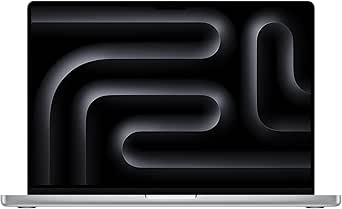


| macbook pro for 3d modeling and vfx | Processor | Memory | Storage | Display |
|---|---|---|---|---|
| Apple 16-inch MacBook Pro with | Apple M5 Pro | 48GB unified memory | 1TB SSD | 16.2-inch Liquid Retina XDR |
| Apple MacBook Pro Laptop with | Apple M5 Pro, 15-core CPU and 16-core GPU | 48GB unified memory | 1TB SSD | 14.2-inch Liquid Retina XDR |
| Apple 2024 MacBook Pro Laptop | M4 Max | 36GB unified memory | 1TB SSD | 14-inch Liquid Retina XDR |
| Apple 2025 MacBook Pro Laptop | Apple M5 chip | 16GB unified memory | 1TB SSD | 14.2-inch Liquid Retina XDR |
| Apple 2024 MacBook Pro with M4 | M4 Max chip | 36GB | 1TB SSD | 14.2-inch Liquid Retina XDR |
More Details on Our Top Picks
Apple 16-inch MacBook Pro with M5 Pro, 48GB Memory, 1TB SSD, Space Black
This is my leading choice for buyers who want one MacBook Pro to cover modeling, compositing, and demanding multitasking without giving up a practical mobile form. Its 18-core CPU, 20-core GPU, and 48GB unified memory make it the most balanced high-capacity setup in this lineup on paper. Compared with the 14-inch M5 Pro, it has a larger display and a higher listed CPU and GPU core count, which makes it better suited to a desk-centered workflow where the laptop screen stays in use.
The 16.2-inch Liquid Retina XDR display gives timelines, node graphs, and reference material more breathing room than the 14-inch models. Its 1TB SSD provides useful local project space, though large footage libraries and caches can fill that quickly. Three Thunderbolt 5 ports, HDMI, and SDXC support make it easier to connect storage, displays, and media without leaning entirely on adapters. The supplied specs list support for up to three external displays, a useful distinction from the 14-inch M4 Max’s stated support for up to four.
The tradeoff is straightforward: this is the largest and least convenient option to carry around, and its M5 Pro is not the M4 Max configuration in the lineup. Buyers focused specifically on a Max-tier chip may prefer the 14-inch M4 Max, while travelers may prefer the 14-inch M5 Pro and accept its smaller screen and lower listed core counts. For my top overall slot, the combination of 48GB memory, 20-core GPU, and generous screen space wins out.
Pros:- 18-core CPU and 20-core GPU are the highest listed core counts in this group.
- 48GB unified memory gives larger projects more headroom than the 16GB option.
- 16.2-inch XDR display offers more room for timelines and modeling panels.
- Three Thunderbolt 5 ports plus HDMI and SDXC support flexible desk setups.
Cons:- The 16-inch form factor is less portable than the 14-inch choices.
- The supplied specs do not list the M4 Max chip found in the graphics-focused alternative.
- A 1TB SSD may be restrictive for extensive local footage, caches, and asset libraries.
Best for: 3D artists and VFX creators who want a substantial built-in workspace, 48GB memory, and strong listed GPU configuration for mixed professional workloads.
Not ideal for: Frequent travelers who prioritize a smaller bag, or buyers whose workflow specifically calls for an M4 Max configuration or a Windows-only application.
- Processor:Apple M5 Pro
- CPU:18-core
- GPU:20-core
- Memory:48GB unified memory
- Storage:1TB SSD
- Display:16.2-inch Liquid Retina XDR
- Ports:Three Thunderbolt 5, MagSafe 3, SDXC, HDMI, headphone jack
- External displays:Up to three displays
Our verdict“I would choose this 16-inch M5 Pro for a capable, screen-friendly mobile workstation when portability is secondary to memory and workspace.”
Apple MacBook Pro Laptop with M5 Pro Chip, 15-core CPU, 16-core GPU, 14.2-inch Liquid Retina XDR Display, 48GB RAM, 1TB SSD, Space Black
For a creator who needs 48GB of unified memory but does not want the 16-inch chassis, this 14-inch M5 Pro is the most compelling compact pick. That memory capacity matches the larger M5 Pro model, giving it a meaningful advantage over the 14-inch M5’s 16GB when scenes, textures, and other applications occupy substantial memory. Its 15-core CPU and 16-core GPU are lower core counts than the 16-inch model’s 18-core CPU and 20-core GPU, so I rank it below that larger configuration for buyers prioritizing the highest listed core counts.
The 14.2-inch XDR screen keeps the laptop easier to carry, though tool panels and long timelines will feel more crowded than on the 16.2-inch model. Three Thunderbolt 5 ports, HDMI, and an SDXC slot make it ready for a multi-device workflow, while Wi-Fi 7 and Bluetooth 6 are listed for wireless connectivity. The 1TB SSD is consistent with the other leading configurations, but it is still worth planning external storage for large VFX libraries or archived projects.
This model makes more sense than the M4 Max for someone who values higher memory capacity and a newer listed M5 Pro platform over the Max label. The M4 Max remains a reasonable alternative for buyers who specifically want that chip tier, and the 16-inch M5 Pro is preferable when display area matters more than carrying weight. My recommendation is deliberately narrow: compact body, 48GB memory, and a capable professional setup, with less listed GPU hardware than the top-ranked model.
Pros:- 48GB unified memory is a strong fit for larger working sets.
- 14.2-inch display is more portable than the 16-inch M5 Pro.
- Three Thunderbolt 5 ports, HDMI, and SDXC aid workstation connectivity.
- Wi-Fi 7 and Bluetooth 6 are listed in the supplied specifications.
Cons:- Its 15-core CPU and 16-core GPU trail the listed core counts of the 16-inch M5 Pro.
- The smaller display offers less room for complex interfaces and timelines.
- The 1TB SSD may need external storage for large media and asset collections.
Best for: Mobile artists who work with memory-intensive scenes or several creative applications and want 48GB memory in a 14-inch laptop.
Not ideal for: Buyers who need the largest laptop screen, the highest listed core counts, or a configuration with a stated M4 Max chip.
- Processor:Apple M5 Pro, 15-core CPU and 16-core GPU
- Memory:48GB unified memory
- Storage:1TB SSD
- Display:14.2-inch Liquid Retina XDR
- Battery:All-day battery life
- Ports:Three Thunderbolt 5, MagSafe 3, SDXC, HDMI, headphone jack
- Wireless:Wi-Fi 7 and Bluetooth 6
- Camera:12MP Center Stage
Our verdict“I recommend this 14-inch M5 Pro when 48GB memory and portability matter more than the larger model’s extra screen area and listed cores.”
Apple 2024 MacBook Pro Laptop with M4 Max, 14-inch, 36GB RAM, 1TB SSD, Silver
This 14-inch M4 Max is my pick for a buyer who specifically wants the M4 Max chip in a compact MacBook Pro. The supplied description positions it for demanding professional work, and the Max designation distinguishes it from both M5 Pro configurations. Its 36GB of unified memory is substantial, but it is still below the 48GB found in the two M5 Pro models. That difference can matter when a scene or a set of applications pushes memory use, so I would not choose this option by chip name alone.
Compared with the 16-inch M5 Pro, this machine gives up screen area and has less listed memory, while the supplied specifications do not provide CPU or GPU core counts for a direct numerical comparison. I therefore treat it as the Max-tier alternative, not a proven winner in every render or VFX task. Its 14-inch XDR display, three Thunderbolt 5 ports, HDMI, SDXC, and MagSafe 3 support a capable portable setup; the description also lists support for up to four external displays with M4 Max.
The main practical drawback is the combination of a smaller screen and 36GB memory, especially for buyers whose projects benefit from more memory headroom. Against the renewed M4 Max listing, this standard listing is the safer choice for shoppers who prefer a non-renewed product, though buyers should still review the seller and warranty terms. I would choose it over the M5 Pro models only when the M4 Max configuration and external-display support align with the intended workflow.
Pros:- M4 Max chip is the distinct draw versus the M5 Pro configurations.
- 36GB unified memory supports more demanding work than the 16GB M5 model.
- Three Thunderbolt 5 ports, HDMI, SDXC, and MagSafe 3 offer broad connectivity.
- The description lists support for up to four external displays with M4 Max.
Cons:- 36GB memory is less than the 48GB offered by both M5 Pro picks.
- The 14-inch screen provides less workspace than the 16-inch model.
- CPU and GPU core counts are not supplied for direct comparison with the M5 Pro systems.
Best for: Creators who want a 14-inch MacBook Pro with an M4 Max chip and plan to connect several external displays.
Not ideal for: Artists who need 48GB memory, a larger built-in canvas, or a confirmed benchmark advantage over the M5 Pro options.
- Processor:M4 Max
- Memory:36GB unified memory
- Storage:1TB SSD
- Display:14-inch Liquid Retina XDR
- Weight:4.73 pounds
- Ports:Three Thunderbolt 5, MagSafe 3, SDXC, HDMI, headphone jack
- Battery:All-day battery life
- External displays:Up to four with M4 Max, according to the product description
Our verdict“I would choose this M4 Max when its chip tier and stated multi-display support take priority over the 48GB memory of the M5 Pro alternatives.”
Apple 2025 MacBook Pro Laptop with M5 Chip, 14.2-inch Liquid Retina XDR Display, 16GB RAM, 1TB SSD, Space Black
This standard M5 configuration is the entry point in the group for buyers learning 3D or doing work that stays within modest scene sizes. Its 10-core CPU and 10-core GPU provide a defined configuration, but its 16GB unified memory is the clearest limit beside the 36GB and 48GB alternatives. For basic modeling, lighter compositing, and general creative work, the configuration may be a sensible fit; complex scenes, heavy simulations, or large multitasking sessions call for more memory headroom.
The 14.2-inch Liquid Retina XDR display resembles the screen size of the other compact picks, and the 1TB SSD gives it the same listed storage capacity as the higher-tier models. It includes Thunderbolt 4 rather than the Thunderbolt 5 listed on the M5 Pro and M4 Max configurations. That distinction may matter in a setup built around fast external storage or newer peripherals, though HDMI, SDXC, MagSafe 3, and a headphone jack remain available for common connections.
Compared with the 14-inch M5 Pro, this model has less memory and a lower listed CPU and GPU core count, making it a less comfortable choice for heavier production work. Its role is not to replace a high-spec workstation; it is to give a student or hobbyist a MacBook Pro screen and port selection for lighter tasks. I would move up to the 48GB M5 Pro if project complexity is likely to grow, especially when rendering and compositing happen on the same machine.
Pros:- 10-core CPU and 10-core GPU are specified for this M5 configuration.
- 14.2-inch XDR display provides a compact creative workspace.
- 1TB SSD offers the same listed capacity as the higher-tier choices.
- Includes HDMI, SDXC, MagSafe 3, and a headphone jack.
Cons:- 16GB unified memory is the lowest capacity in this roundup.
- Thunderbolt 4 is listed instead of Thunderbolt 5 on the higher-tier models.
- The listed core counts are below both M5 Pro configurations.
Best for: Students, hobbyists, and newer 3D artists working on learning projects, moderate models, and lighter compositing.
Not ideal for: Professionals handling large scenes, heavy VFX caches, demanding simulations, or several memory-intensive applications at once.
- Processor:Apple M5 chip
- CPU:10-core
- GPU:10-core
- Memory:16GB unified memory
- Storage:1TB SSD
- Display:14.2-inch Liquid Retina XDR
- Ports:Three Thunderbolt 4, MagSafe 3, SDXC, HDMI, headphone jack
Our verdict“I would pick this M5 for learning and lighter projects, but choose a 48GB M5 Pro for sustained professional 3D or VFX work.”
Apple 2024 MacBook Pro with M4 Max Chip, 14-inch, 36GB RAM, 1TB SSD, Silver (Renewed)
This renewed 14-inch M4 Max has the same central listed configuration as the non-renewed M4 Max pick: M4 Max, 36GB memory, and a 1TB SSD. Its place in the ranking depends less on a hardware distinction and more on the renewed condition. For buyers set on the M4 Max, it may be an alternative to the standard listing, but I would compare the seller’s condition description, return window, and warranty coverage before treating the two as equivalent purchases.
For 3D and VFX use, the configuration offers a 14.2-inch XDR display, three Thunderbolt 5 ports, HDMI, SDXC, and support for up to four external displays as stated in the description. Those features make it a plausible portable workstation for a multi-monitor desk. Against the 14-inch M5 Pro, it has 36GB rather than 48GB of memory; against the 16-inch M5 Pro, it has both less memory and a smaller display. The supplied listing does not include M4 Max CPU or GPU core counts, so I would avoid assuming a specific performance lead from the chip name alone.
The renewed status is the defining compromise. Warranty coverage may be limited, and product condition is a more prominent buying variable than with the standard M4 Max listing. I rank this behind that model because the two share the core hardware described here, while this one asks buyers to pay closer attention to condition and support. It makes sense for a shopper who accepts those checks and wants the same stated M4 Max-class configuration; otherwise, the non-renewed listing is the simpler comparison.
Pros:- M4 Max chip and 36GB memory match the main hardware details of the standard M4 Max pick.
- 14.2-inch XDR display combines a portable size with a high-contrast screen.
- Three Thunderbolt 5 ports, HDMI, SDXC, and MagSafe 3 support a workstation setup.
- The description lists support for up to four external displays with M4 Max.
Cons:- Renewed condition makes warranty and product-condition checks especially important.
- 36GB memory is below the 48GB capacity of the M5 Pro alternatives.
- The listing does not supply CPU or GPU core counts for direct comparisons.
Best for: Buyers specifically seeking the listed 14-inch M4 Max configuration who are comfortable checking renewed condition and warranty details.
Not ideal for: Shoppers who want a new-product listing, 48GB memory, or clear assurance about warranty coverage before purchase.
- Processor:M4 Max chip
- Memory:36GB
- Storage:1TB SSD
- Display:14.2-inch Liquid Retina XDR
- Ports:Three Thunderbolt 5, MagSafe 3, SDXC, HDMI, headphone jack
- Battery:All-day battery life, per product description
- External displays:Up to four with M4 Max, according to the product description
- Condition:Renewed
Our verdict“I would consider this renewed M4 Max only after confirming condition and coverage, since its listed hardware matches the standard M4 Max pick.”

How We Picked
I compared these five MacBook Pro configurations around the needs that most affect 3D modeling and VFX work: processor and GPU configuration, unified memory, screen size, ports, and portability. A chip name alone cannot predict whether a machine suits a particular renderer or effects tool, so I treat the listed specifications as evidence of relative capability rather than a guarantee of performance in every application.
Memory receives particular attention because scenes, textures, caches, and multiple creative applications can compete for the same unified memory pool. That gives the 48GB M5 Pro configurations an advantage for projects with larger working sets over the 16GB M5 model, while the 36GB M4 Max sits between them. I also distinguish the M4 Max’s higher-tier positioning from the M5 Pro models’ newer generation; the supplied information does not establish a direct benchmark comparison, so I do not claim one is faster in every task.
Screen size and connectivity shape day-to-day workflow. The 16-inch model provides more built-in workspace, while the 14-inch options are easier to carry. Thunderbolt 5 and support for multiple displays on selected models can help build a desk setup, but external-monitor details vary by configuration. I give each model a distinct role and weigh its tradeoffs against the others. Before buying, I would also check that the exact 3D, rendering, and compositing applications I depend on support macOS and Apple silicon.
| macbook pro for 3d modeling and vfx | Processor | Ports | External displays | Battery |
|---|---|---|---|---|
| Apple 16-inch MacBook Pro with | Apple M5 Pro | Three Thunderbolt 5, MagSafe 3, SDXC, HDMI, headphone jack | Up to three displays | — |
| Apple MacBook Pro Laptop with | Apple M5 Pro, 15-core CPU and 16-core GPU | Three Thunderbolt 5, MagSafe 3, SDXC, HDMI, headphone jack | — | All-day battery life |
| Apple 2024 MacBook Pro Laptop | M4 Max | Three Thunderbolt 5, MagSafe 3, SDXC, HDMI, headphone jack | Up to four with M4 Max, according to the product description | All-day battery life |
| Apple 2025 MacBook Pro Laptop | Apple M5 chip | Three Thunderbolt 4, MagSafe 3, SDXC, HDMI, headphone jack | — | — |
| Apple 2024 MacBook Pro with M4 | M4 Max chip | Three Thunderbolt 5, MagSafe 3, SDXC, HDMI, headphone jack | Up to four with M4 Max, according to the product description | All-day battery life, per product description |
Factors to Consider When Choosing Macbook Pro For 3d Modeling And Vfx
I would start by matching your actual scene and software demands to memory and GPU needs, then decide how much screen area and portability matter. The model with the biggest chip label is not automatically the best fit for every 3D or VFX workflow.Choose memory for the scenes you build
Unified memory is shared across the system, so models, textures, footage, caches, and open applications draw from the same pool. That makes the distinction between 16GB, 36GB, and 48GB meaningful for a creator whose projects regularly grow. The 16GB M5 suits learning and lighter work better than large scenes or a broad multitasking load. The 36GB M4 Max is a middle ground; the two 48GB M5 Pro configurations offer the most listed memory here. I would prioritize memory capacity when projects routinely consume it, rather than assuming a chip generation alone will solve a memory bottleneck.
Match the chip to your renderer and software
The lineup includes M5, M5 Pro, and M4 Max, but the supplied specifications do not provide like-for-like benchmark results or every CPU and GPU core count. The M4 Max is the chip-tier choice for buyers seeking that configuration, while the 15-core CPU and 16-core GPU 14-inch M5 Pro and 18-core CPU and 20-core GPU 16-inch M5 Pro have stated core details. Before buying, I would check the exact versions of my modeling, rendering, compositing, and simulation tools for macOS and Apple silicon support. Some workflows depend on particular render engines, plugins, or operating-system features; those compatibility needs can matter more than a general performance label.
Decide between 14 inches and 16 inches
The 14-inch models are easier to carry and still include Liquid Retina XDR displays. They suit artists who move between locations or connect to a larger monitor when working at a desk. The 16.2-inch M5 Pro gives more room for timelines, node graphs, and interface panels without an external screen, which can make long sessions more comfortable. That screen space comes with a larger laptop to transport. I would choose the display size around where I do most of my work: travel favors 14 inches, while screen-centered desk work favors 16 inches.
Plan storage and connections around your setup
Every listed configuration has a 1TB SSD, which can hold active projects but may not cover a large VFX library, footage archive, and cache collection indefinitely. Budget space in the workflow for external storage or networked media if your projects are sizable. The M4 Max and M5 Pro listings include Thunderbolt 5, HDMI, and SDXC, while the standard M5 lists Thunderbolt 4 alongside HDMI and SDXC. If you plan to connect several displays, pay attention to the stated support: the M4 Max descriptions list up to four, the 16-inch M5 Pro lists up to three, and the 14-inch M4 Max description specifies support for up to two with M4 Pro and up to four with M4 Max.
Treat a renewed listing as a separate purchase decision
The renewed M4 Max has the same main listed chip, memory, and storage as the standard M4 Max option, but it is not identical as a buying proposition. I would read the condition, return, and warranty terms carefully and confirm which accessories or support are included. The standard listing is the more straightforward choice for shoppers who do not want to weigh renewed-product details. The renewed model belongs on a shortlist only when its stated condition and coverage fit your expectations.
Frequently Asked Questions
Which MacBook Pro configuration is the best fit for 3D modeling and VFX?
I rank the 16-inch M5 Pro with 48GB memory first for a balanced professional setup because it combines the largest screen in this group with the highest listed CPU and GPU core counts. If carrying weight matters more, I would look at the 14-inch M5 Pro with 48GB. The M4 Max is a distinct option for buyers who want that chip tier, while the right choice still depends on software support and project demands.
Is 16GB memory enough for 3D work?
It can suit learning, lighter modeling, and modest compositing projects, but it leaves less headroom than the 36GB and 48GB configurations. Large scenes, high-resolution textures, simulation caches, and several open creative applications can increase memory use. I would choose the 16GB M5 only when the intended workload is modest or when a larger-memory configuration is not necessary for the projects I expect to run.
Should I choose M4 Max or M5 Pro for VFX?
I would choose based on the full configuration and software needs rather than the chip name alone. The M4 Max listings include 36GB memory and state support for up to four external displays; the M5 Pro options include 48GB memory, with the 16-inch version listing an 18-core CPU and 20-core GPU. The supplied details do not establish a direct benchmark winner across every renderer, so checking application compatibility and workload-specific performance is sensible.
Is the 14-inch MacBook Pro suitable for professional creative work?
Yes, a 14-inch model can suit professional work when its memory and chip configuration match the project, and it has the advantage of being more portable than the 16-inch option. The 48GB M5 Pro is the strongest 14-inch fit in this lineup for projects that need more memory. The smaller display can feel constrained when working with complex timelines or interface panels, so some artists may prefer an external monitor or the larger 16-inch model.
What should I check before choosing the renewed M4 Max?
I would verify the item’s condition description, warranty coverage, return terms, and included accessories before comparing it with the standard M4 Max listing. The renewed product shares the listed M4 Max, 36GB memory, and 1TB SSD configuration, but its condition and support terms are a separate part of the decision. If those details are unclear or do not suit your needs, the standard listing is the simpler alternative.
Conclusion
For a desk-based professional who wants the most spacious built-in screen and the highest listed core counts, I would choose the 16-inch M5 Pro with 48GB memory. For a mobile artist handling memory-heavy projects, the 14-inch M5 Pro with 48GB is my better fit. If your priority is a 14-inch M4 Max configuration and broad external-display support, the standard M4 Max is the clearer choice; I would pick its renewed counterpart only after reviewing condition and coverage. Students and hobbyists working on lighter scenes can start with the 16GB M5, but should move up if larger projects or more simultaneous applications are part of the plan. Across all five, I would confirm application compatibility and storage needs before committing, since those can shape the real-world fit as much as the chip.
Halloween Picks
halloween
As an affiliate, we earn on qualifying purchases.