

Shopping for discounted smart home devices usually means one thing: smart plugs, and lots of them. The current sale landscape is dominated by plug multi-packs ranging from budget Amazon Basics and GHome sets to Matter-certified options from Linkind and TP-Link’s Tapo line, plus the frequently discounted Amazon Smart Thermostat. My top pick overall is the Kasa Smart Plug HS103P4 4-pack, which balances app reliability, brand track record, and frequent sale pricing better than anything else on this list. If you live entirely in the Apple ecosystem, the Linkind Matter Smart Plug stands out for native HomeKit support without a bridge, while the Amazon Smart Thermostat is the rare discount that pays for itself in energy savings. The main tradeoff you’ll face is between rock-bottom pricing on no-name plugs and paying a few dollars more for Matter support and dependable apps. Read on for the full breakdown of what’s actually worth buying at a discount.

Get your next haul delivered free — and shop member deals
- Fast, free delivery on millions of items
- Access to Prime Big Deal Days deals on October 6–7
- Prime Video, Amazon Music and more included
Key Takeaways
- Matter certification was the biggest differentiator in this lineup: only the amazon.com/dp/B0C36WXGP1?tag=askthebests.com-20&ascsubtag=dc-1048496″ target=”_blank” rel=”nofollow sponsored noopener”>Linkind, Tapo, and Legrand options support the new standard, which means the cheapest plugs may lose compatibility as smart home platforms evolve.
- Four-packs delivered the lowest per-plug cost across the board, but the spread was wide — Amazon Basics and GHome undercut Kasa and Linkind multi-packs by roughly 25-40% when all are on sale.
- The Kasa HS103P4 earned the top spot because Kasa’s app and connection stability consistently outperform cheaper plugs with near-identical specs on paper.
- The Amazon Smart Thermostat was the only device here that saves money rather than just adding convenience, but the C-wire requirement makes it a skip for older homes without compatible wiring.
- Single-outlet purchases like the Legrand Radiant cost several times more per receptacle than plug-based alternatives — it only makes sense for permanent installations where aesthetics matter.
| Amazon Basics Smart Plug, 4-Pack |  | Best Value Multi-Pack | Compatibility: Alexa | Number of Plugs: 4 | Control: Voice, App, Schedule | VIEW LATEST PRICE | See Our Full Breakdown |
| Legrand Radiant Wi-Fi Matter 15 Amp Smart Outlet |  | Best Built-In Upgrade | Voltage: 120 volts | Amperage: 15 A | Compatibility: Alexa, Google Home, Apple HomeKit, SmartThings (Matter) | VIEW LATEST PRICE | See Our Full Breakdown |
| GHome WiFi Smart Plug | 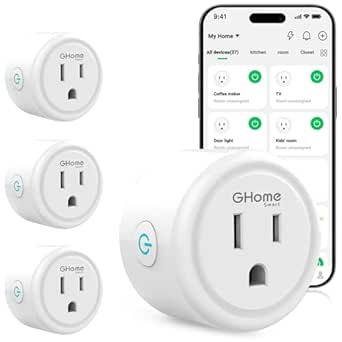 | Best Budget Single Plug | Connectivity: 2.4 GHz Wi-Fi, Bluetooth setup | Voice Assistants: Alexa, Google Assistant | App Support: GHome, Smart Life, Tuya | VIEW LATEST PRICE | See Our Full Breakdown |
| Linkind Matter Smart Plug (Single) | 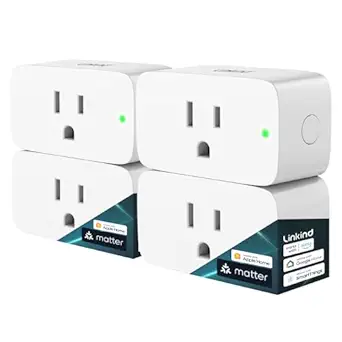 | Best for Multi-Platform Homes | Power Capacity: 1800W / 15A | Wi-Fi: 2.4 GHz only | Compatibility: Apple HomeKit, Alexa, Google Home, SmartThings, AiDot | VIEW LATEST PRICE | See Our Full Breakdown |
| Linkind Matter Smart Plug with Night Light, 4-Pack |  | Best Premium Feature Pick | Number of Plugs: 4 | Power Capacity: 15A / 1800W | Voltage: 120 volts | VIEW LATEST PRICE | See Our Full Breakdown |
| TP-Link Tapo Matter Supported Smart Plug Mini, 15A/1800W, Compact, White (3-Pack) |  | Best Future-Proof Pick | Max Power: 15A / 1800W | Connectivity: 2.4GHz Wi-Fi | Protocol: Matter supported | VIEW LATEST PRICE | See Our Full Breakdown |
| GHome WiFi Smart Plug with Alexa and Google Assistant Compatibility |  | Best Budget Pick | Current Rating: 10A | Wattage: 1200W | Operating Voltage: 120V | VIEW LATEST PRICE | See Our Full Breakdown |
| Amazon Smart Thermostat, Works with Alexa and Ring, C-wire Required |  | Best Energy-Saving Upgrade | Compatibility: Alexa, Ring | C-wire Required: Yes | Energy Savings: Estimated $90 annually | VIEW LATEST PRICE | See Our Full Breakdown |
| Kasa Smart Plug HS103P4, Wi-Fi Outlet, Alexa & Google Compatible, 15 Amp, 4-Pack |  | Best Value Multi-Pack | Current Rating: 15A | Wattage: 1800W | Operating Voltage: 120V | VIEW LATEST PRICE | See Our Full Breakdown |
| discounted smart home device | Compatibility | Connectivity |
|---|---|---|
| Amazon Basics Smart Plug | Alexa | — |
| Legrand Radiant Wi-Fi Matter 1 | Alexa, Google Home, Apple HomeKit, SmartThings (Matter) | — |
| GHome WiFi Smart Plug | — | 2.4 GHz Wi-Fi, Bluetooth setup |
| Linkind Matter Smart Plug | Apple HomeKit, Alexa, Google Home, SmartThings, AiDot | — |
| Linkind Matter Smart Plug with | Apple Home, Alexa, Google Home (Matter) | — |
| TP-Link Tapo Matter Supported | Apple Home, Alexa, Google Home, SmartThings | 2.4GHz Wi-Fi |
| GHome WiFi Smart Plug with Ale | — | 2.4GHz Wi-Fi, Bluetooth |
| Amazon Smart Thermostat | Alexa, Ring | Wi-Fi |
| Kasa Smart Plug HS103P4 | — | 2.4GHz Wi-Fi |
More Details on Our Top Picks
Amazon Basics Smart Plug, 4-Pack
For sheer cost-per-outlet, this Amazon Basics 4-pack is hard to beat when it’s discounted, and it makes the most sense for Alexa households outfitting several rooms at once. Setup is genuinely simple because the plugs pair directly with the Alexa app — no third-party account, no extra hub, no QR-code scavenger hunt. Compared with the GHome WiFi Smart Plug, you give up Google Assistant support and Bluetooth-assisted pairing, but you gain a cleaner out-of-box experience if Echo is your ecosystem. The compact housing leaves the second outlet free, which matters more than it sounds when you’re filling a power strip. The tradeoff is real, though: this is effectively an Alexa-only device, so anyone eyeing a future switch to Apple Home or Google should look at the Linkind Matter options instead.
Pros:- Lowest cost per outlet in this lineup when discounted
- Direct Alexa setup with no third-party app or hub required
- Compact body leaves adjacent outlets usable
- Scheduling and remote control work reliably through the Alexa app
Cons:- Alexa-only compatibility locks you out of other voice assistants
- Limited to 2.4 GHz Wi-Fi networks
Best for: Alexa-centric households that want to automate four or more outlets on a tight budget
Not ideal for: Google Home or Apple Home users — these plugs don’t work outside the Alexa ecosystem
- Compatibility:Alexa
- Number of Plugs:4
- Control:Voice, App, Schedule
- Hub Required:No
- Wi-Fi:2.4 GHz
- Design:Compact, single-outlet footprint
Our verdict“Buy this if you live in an Alexa home and want the cheapest way to smarten multiple outlets; skip it if there’s any chance you’ll switch platforms.”
Legrand Radiant Wi-Fi Matter 15 Amp Smart Outlet
Most discounted smart home gear plugs into the wall — this Legrand Radiant smart outlet replaces the wall itself, and that difference defines who it’s for. Because it installs in place of an existing receptacle, nothing dangles, nothing blocks the second outlet, and the look stays clean, a step up aesthetically from the Linkind Matter Smart Plug or any plug-in option here. Platform support is the broadest in this roundup: Alexa, Google Home, Apple HomeKit, and SmartThings all work through Matter. The catches are practical rather than theoretical — you need a neutral wire in the box (common in newer homes, absent in many older ones), a Matter hub, and comfort with basic electrical work. Also note that only one of the two receptacles is smart; the other stays always-on, which the plug-in alternatives don’t make you accept.
Pros:- Truly built-in look with no plug blocking the outlet
- Works across Alexa, Google Home, Apple HomeKit, and SmartThings
- 15 Amp capacity handles heavier appliances than plug-in mini options
- Replaces an existing outlet with straightforward wiring steps
Cons:- Requires a neutral wire and a Matter-compatible hub
- Only one receptacle is smart — the second is always on
- Not portable or transferable the way plug-in smart plugs are
Best for: Homeowners renovating or updating outlets who want an invisible, multi-platform smart solution
Not ideal for: Renters and owners of older homes without neutral wires — installation won’t be possible without an electrician
- Voltage:120 volts
- Amperage:15 A
- Compatibility:Alexa, Google Home, Apple HomeKit, SmartThings (Matter)
- Installation:Replaces existing outlet, neutral wire required
- Wires:3
- Color:White
- Returns:30-Day Return Guarantee
Our verdict“This is the pick for a permanent, wall-flush smart outlet in a multi-assistant home — provided you have a neutral wire and don’t mind electrical work.”
GHome WiFi Smart Plug
When you only need one smartened outlet — a lamp, a fan, a coffee maker — buying a multi-pack like the Amazon Basics 4-Pack is wasted money, and that’s exactly the gap this GHome plug fills at a lower buy-in. Unlike the Amazon Basics option, it supports both Alexa and Google Assistant, and Bluetooth pairing makes the initial connection less painful than Wi-Fi-only plugs that drop off the network during setup. Group control and device sharing are welcome touches at this price, letting a household manage plugs together. The friction point is the app layer: you’ll register through GHome, Smart Life, or Tuya before linking to your assistant, a longer onboarding path than the plug-and-go Amazon Basics experience. And as with nearly everything here, it’s 2.4 GHz only, with no Matter path to Apple Home.
Pros:- Low single-unit price for trying out smart plugs
- Works with both Alexa and Google Assistant
- Bluetooth pairing simplifies setup
- Group control and family sharing included at no extra cost
Cons:- Requires third-party app registration before assistant integration
- 2.4 GHz Wi-Fi only, no 5 GHz support
- Locked into the Tuya/Smart Life app ecosystem
Best for: First-time smart home dabblers who want one inexpensive plug that works with either Alexa or Google
Not ideal for: Apple Home users or anyone wanting Matter future-proofing — this plug has neither
- Connectivity:2.4 GHz Wi-Fi, Bluetooth setup
- Voice Assistants:Alexa, Google Assistant
- App Support:GHome, Smart Life, Tuya
- Features:Scheduling, Timer, Group Control, Sharing
- Hub Required:No
Our verdict“A sensible low-commitment entry point for Alexa or Google households testing the smart-plug waters — just don’t expect Matter or Apple support.”
Linkind Matter Smart Plug (Single)
This single Linkind Matter plug earns its spot for one reason above all: it’s the least expensive way into a truly platform-agnostic smart plug. Apple Home, Alexa, Google Home, and SmartThings all connect through Matter, which matters if your household mixes an iPhone user with an Echo speaker — a scenario neither the Amazon Basics nor the GHome plug handles. The standout technical feature is offline LAN control: your schedules and voice commands keep working when the internet drops, a resilience most budget plugs can’t claim. Safety features including fire resistance and overload protection round out a well-rounded package. The tradeoffs mirror the ecosystem price: you need a Matter-certified hub for full integration, and it’s 2.4 GHz only. Compared with its own 4-pack sibling below, this single unit makes sense only if you need Matter in one spot, not five.
Pros:- Matter support across Apple Home, Alexa, Google Home, and SmartThings
- Offline LAN control keeps schedules running without internet
- Fire-resistant housing and overload protection
- 1800W / 15A capacity handles most household appliances
Cons:- Requires a Matter-certified hub for full platform integration
- 2.4 GHz Wi-Fi only
- Pricier per unit than the Amazon Basics 4-pack for Alexa-only users
Best for: Mixed-ecosystem households (Apple plus Alexa or Google) that need one or two cross-platform plugs
Not ideal for: Buyers without a Matter hub — full voice assistant integration depends on one
- Power Capacity:1800W / 15A
- Wi-Fi:2.4 GHz only
- Compatibility:Apple HomeKit, Alexa, Google Home, SmartThings, AiDot
- Protocol:Matter with offline LAN control
- Certification:FCC
Our verdict“The smart single-plug choice if your home runs more than one voice assistant and you value Matter future-proofing over rock-bottom price.”
Linkind Matter Smart Plug with Night Light, 4-Pack
This 4-pack sits at the top of the smart-plug heap here because it does something none of the others attempt: each plug doubles as a motion-free guide light with dusk-to-dawn auto-sensing. For hallways, nurseries, and bathrooms, that means one outlet doing two jobs — a genuine space and money saver versus buying smart plugs plus separate night lights. Like the single Linkind Matter plug, it carries full Matter certification across Apple Home, Alexa, and Google Home, plus FCC and ETL safety listings. Compared with the Amazon Basics 4-Pack, you’re paying more per outlet but getting platform freedom and the lighting bonus instead of Alexa lock-in. The honest downsides: you still need a Matter-certified hub, the 2.4 GHz limitation persists, and the night light’s brightness ceiling is modest — enough to navigate by, not to read under.
Pros:- Integrated auto-sensing night light eliminates a separate purchase
- Full Matter support for Apple Home, Alexa, and Google Home
- Four plugs for whole-room or multi-room coverage
- Fire-resistant materials with FCC and ETL certifications
Cons:- Higher per-outlet price than the Amazon Basics 4-pack
- Requires a Matter-certified hub for voice assistant integration
- Night light brightness is limited for larger spaces
Best for: Families outfitting hallways, kids’ rooms, or bedrooms where a combined smart plug and soft night light solves two problems at once
Not ideal for: Bargain hunters who just need dumb-switchable outlets — the night-light premium and hub requirement add cost with no benefit
- Number of Plugs:4
- Power Capacity:15A / 1800W
- Voltage:120 volts
- Compatibility:Apple Home, Alexa, Google Home (Matter)
- Wi-Fi:2.4 GHz
- Special Feature:Dusk-to-dawn auto-sensing night light
- Certification:FCC, ETL
Our verdict“The pick when discounted for multi-platform households that want scheduling plus gentle nighttime lighting from every outlet they automate.”
TP-Link Tapo Matter Supported Smart Plug Mini, 15A/1800W, Compact, White (3-Pack)
Matter support is what separates the Tapo P125M from nearly everything else in this discounted lineup, including the Kasa HS103P4 and the GHome plug, which are locked to Alexa and Google ecosystems. If your household mixes Apple Home with Alexa, or you plan to switch platforms later, this is the plug that won’t strand you. The 15A/1800W rating also means it can handle space heaters and coffee makers that the 10A GHome simply can’t. Onboarding over Bluetooth is smoother than the QR-code dance some competitors require, and local LAN control keeps things responsive even when the cloud hiccups. The tradeoff: a 3-pack costs more per plug than basic models, and you still need a Matter controller to unlock the cross-platform benefits.
Pros:- Matter protocol support works across Apple Home, Alexa, Google Home, and SmartThings
- 15A/1800W handles high-draw appliances like heaters and kettles
- Bluetooth onboarding makes first-time setup faster than QR-code competitors
- Local LAN control keeps plugs responsive without cloud dependency
Cons:- Only three plugs per pack versus four in similarly priced competitors
- 2.4GHz-only Wi-Fi can frustrate modern mesh networks
- Full Matter benefits require a compatible hub or controller
Best for: Multi-platform households, especially anyone using Apple Home alongside Alexa or Google who wants plugs that survive ecosystem changes
Not ideal for: Budget shoppers who only use Alexa and just want the cheapest per-plug price — the Kasa 4-pack delivers that for less
- Max Power:15A / 1800W
- Connectivity:2.4GHz Wi-Fi
- Protocol:Matter supported
- Compatibility:Apple Home, Alexa, Google Home, SmartThings
- Certification:UL Certified
- Design:Compact, flame-retardant housing
- Included:3-pack
Our verdict“Buy this if you want smart plugs that won’t become obsolete when you change smart home platforms; skip it if you’re happily single-ecosystem and price-driven.”
GHome WiFi Smart Plug with Alexa and Google Assistant Compatibility
When the goal is spending as little as possible per outlet, the GHome undercuts the Tapo P125M and the Kasa HS103P4 while still covering the basics: app control, scheduling, timers, and voice commands through Alexa or Google Assistant. Group sharing is a nice touch for households where multiple people want control without sharing login credentials. But the 10A/1200W ceiling is the real limitation — this plug handles lamps, fans, and chargers fine, yet it should never be trusted with a space heater or hair dryer, a job the Tapo and Kasa both handle at 15A. There’s also no Matter support, so platform switchers get no safety net. It works reliably for light-duty automation, which is exactly what most people actually need a cheap plug for.
Pros:- Lowest cost per plug in this lineup
- Scheduling and timer automation works reliably
- Group control and sharing for multi-user households
- Works with both Alexa and Google Assistant
Cons:- 10A/1200W rating rules out heaters and most kitchen appliances
- 2.4GHz-only with no 5GHz support
- Requires app setup before voice assistants will respond
Best for: First-time buyers automating lamps, fans, and phone chargers who want the lowest possible entry price
Not ideal for: Anyone running high-wattage appliances like heaters or coffee makers — the 10A/1200W limit makes that unsafe
- Current Rating:10A
- Wattage:1200W
- Operating Voltage:120V
- Connectivity:2.4GHz Wi-Fi, Bluetooth
- Compatible Devices:Amazon Alexa, Google Assistant
- Control Method:App, remote, touch, voice
- Mounting Type:Wall mount plug-in
Our verdict“The cheapest way to dip a toe into smart home automation, provided you stick to low-power devices.”
Amazon Smart Thermostat, Works with Alexa and Ring, C-wire Required
This is the only device in the roundup that pays for itself — Amazon estimates around $90 in annual energy savings, which no smart plug can match. Compared with plug-style purchases like the Kasa HS103P4, which automate individual devices, the thermostat tackles your biggest energy consumer: heating and cooling. DIY installation with step-by-step app guidance keeps electrician costs off the table, though the C-wire requirement is the catch. Older homes without one face extra wiring work or a power-extender kit, so check your wall before buying. It’s also an Alexa-and-Ring-only product — Google Home users should look elsewhere entirely. For Alexa households with a compatible HVAC system, the price-to-savings ratio here is the strongest in this entire discounted lineup.
Pros:- Estimated $90 annual energy savings offsets the price quickly
- DIY installation with guided app instructions avoids electrician fees
- Deep Alexa and Ring integration including voice control and scheduling
Cons:- C-wire required — many older homes need additional wiring work
- Locked to the Alexa ecosystem with no Google or Apple support
- Wi-Fi outage disables remote control and schedules
Best for: Alexa households in homes with a C-wire who want lower heating and cooling bills without paying Nest or Ecobee prices
Not ideal for: Renters and owners of older homes without a C-wire, plus anyone invested in Google Home or Apple Home
- Compatibility:Alexa, Ring
- C-wire Required:Yes
- Energy Savings:Estimated $90 annually
- Connectivity:Wi-Fi
- Installation:DIY with app guidance
- Control:Voice, app, scheduling
Our verdict“The best value-per-dollar in this roundup if your HVAC has a C-wire and Alexa runs your home; otherwise verify compatibility first.”
Kasa Smart Plug HS103P4, Wi-Fi Outlet, Alexa & Google Compatible, 15 Amp, 4-Pack
Four UL-certified 15A plugs at a discounted price makes the Kasa HS103P4 the best per-outlet deal among name-brand options, beating the Tapo P125M 3-pack on quantity and the GHome on power handling and safety certification. Kasa’s app has been refined over years, so scheduling, timers, and away modes feel more polished than the GHome app’s rougher edges. The catch is no Matter support — unlike the Tapo, these plugs live permanently in the Alexa/Google world, so Apple Home users are out of luck. And like everything budget-tier here, it’s 2.4GHz-only, which can mean fiddling with router settings on newer mesh systems. Still, for outfitting a whole room of lamps and fans on one order, nothing else in this lineup matches the combination of trust and price.
Pros:- Four plugs per pack at the best name-brand per-plug price
- Full 15A/1800W rating safe for high-draw devices
- Mature, reliable Kasa app with scheduling and timers
- UL certified for safety
Cons:- No Matter support locks you into Alexa or Google
- 2.4GHz-only Wi-Fi incompatible with 5GHz-only networks
- Bulkier than the Tapo Mini and can block adjacent outlets
Best for: Shoppers outfitting multiple rooms at once who want a trusted brand, full 15A capacity, and the best cost per plug
Not ideal for: Apple Home or SmartThings users — without Matter support, these plugs won’t join those ecosystems
- Current Rating:15A
- Wattage:1800W
- Operating Voltage:120V
- Connectivity:2.4GHz Wi-Fi
- Compatible Controllers:Amazon Alexa, Google Assistant
- Certification:UL certified
- Included:4-pack
Our verdict“The smart choice for bulk-buying reliable smart plugs in an Alexa or Google home — just don’t expect cross-platform flexibility.”

How We Picked
My ranking logic for these discounted smart home devices came down to four buyer-relevant criteria. First, value per unit: multi-packs were judged on their discounted per-plug price relative to what similar plugs cost standalone, not just the sticker discount. Second, ecosystem compatibility: I weighted products that work across Alexa, Google Home, and Apple Home higher than single-platform devices, and gave bonus credit for Matter certification since it future-proofs the purchase. Third, app and connection reliability: a cheap smart plug that drops off Wi-Fi is worthless, so brand track record for stable apps and consistent firmware support factored heavily.
Fourth, I considered setup friction — whether a hub is required, how painful installation is, and whether the device works out of the box for a first-time buyer. This is why the ranking favors established brands like Kasa and TP-Link over cheaper competitors with similar hardware specs. Discount depth alone didn’t earn a high placement; a 50%-off plug that fails to stay connected is a worse deal than a 20%-off plug that works for years. Where two products tied on reliability, the tiebreaker went to versatility, which is why Matter-capable plugs outrank Wi-Fi-only equivalents at similar prices.
| discounted smart home device | Compatibility |
|---|---|
| Amazon Basics Smart Plug | Alexa |
| Legrand Radiant Wi-Fi Matter 1 | Alexa, Google Home, Apple HomeKit, SmartThings (Matter) |
| GHome WiFi Smart Plug | — |
| Linkind Matter Smart Plug | Apple HomeKit, Alexa, Google Home, SmartThings, AiDot |
| Linkind Matter Smart Plug with | Apple Home, Alexa, Google Home (Matter) |
| TP-Link Tapo Matter Supported | Apple Home, Alexa, Google Home, SmartThings |
| GHome WiFi Smart Plug with Ale | — |
| Amazon Smart Thermostat | Alexa, Ring |
| Kasa Smart Plug HS103P4 | — |
Factors to Consider When Choosing Discounted Smart Home Devices
A discount can mask a lot of problems, or it can surface genuine bargains on last-generation gear that still performs well. Before you add any of these devices to your cart, here are the factors that actually determine whether a discounted smart home device is a smart buy.Matter Support: The Future-Proofing Question
The single biggest mistake discount shoppers make is buying plugs that only speak legacy Wi-Fi protocols. Matter is becoming the default standard across Apple, Google, Amazon, and Samsung ecosystems, and plugs without it may eventually be stranded if a manufacturer abandons its app. That said, paying double for Matter on plugs you’ll only ever use with Alexa is wasted money — the standard matters most for mixed-ecosystem households or anyone planning to switch platforms. If you’re deep in one ecosystem and happy there, a discounted Wi-Fi-only plug from a reputable brand remains a perfectly sound purchase. The risk concentrates with unbranded plugs that depend on a single company’s cloud servers staying online. When a Matter-certified option is within a few dollars of a non-certified one, take the Matter version every time.
Per-Unit Math on Multi-Packs
Discounted smart plug listings are engineered to make price comparison difficult, and the multi-pack listings are the worst offenders. Always divide the sale price by the plug count before comparing — a two-pack at $18 loses to a four-pack at $28 even though the total spend is lower. Watch for retailers who inflate the ‘original’ price before applying a discount, a tactic especially common during major sale events. Another trap: buying more plugs than you have actual use cases for. A four-pack of plugs sitting in a drawer is a 100% waste regardless of the discount. My rule of thumb is to buy the pack size that matches your realistic device count over the next six months, not the best per-unit price. The exception is gifting and stocking-stuffer scenarios, where genuinely cheap four-packs shine.
App Quality and Brand Longevity
Every smart plug on the market is only as good as the app that controls it, and this is where budget brands cut corners that specs can’t reveal. Established players like TP-Link’s Kasa and Tapo apps have years of updates, scheduling features that actually persist, and responsive support when things break. Smaller brands often ship apps riddled with ads, require account creation with aggressive permissions, or stop receiving updates within a year or two. Before buying an unfamiliar brand at a steep discount, check recent app store reviews — a pattern of ‘stopped working after update’ complaints is a red flag no price can overcome. Also verify whether the device requires a cloud connection for basic scheduling, because local control keeps working even when the manufacturer’s servers don’t. This is one area where paying slightly more consistently pays off.
Amperage Ratings and Physical Fit
Most discounted plugs are rated 15 amps, which covers lamps, fans, humidifiers, and coffee makers without issue — but high-draw devices like space heaters, hair dryers, and some power tools need every amp of that rating, and older or off-brand plugs may overstate what they can handle. Check the rating before plugging in anything that generates heat. Physical size matters more than buyers expect: bulky plugs can block the second outlet in a standard duplex receptacle, and a four-pack of chunky plugs becomes a real problem in tight spaces like behind furniture. Compact designs like the Tapo Mini and Amazon Basics solve this, which is why they rank well despite modest feature sets. For permanent installs where you’d rather hide the smart hardware entirely, an in-wall smart outlet like the Legrand Radiant costs more upfront but eliminates the dangling-plug problem permanently.
Thermostat Wiring Compatibility
The Amazon Smart Thermostat’s discount makes it tempting, but thermostats are the one category in this roundup where compatibility failures are common and frustrating. The C-wire requirement is non-negotiable for this model — without it, the thermostat may not power on or may behave erratically. Homes built before the mid-2000s frequently lack a C-wire at the thermostat location, and adding one means either running new wire or buying an adapter, both of which erode the discount. Before ordering, pull your current thermostat off the wall and photograph the wiring; Amazon’s online compatibility checker can verify from that image. Also confirm your HVAC system type — heat pumps, multi-stage systems, and high-voltage baseboard heating all have different requirements. A $60 discounted thermostat that needs an electrician’s visit stops being a bargain quickly.
When a Discount Isn’t a Discount
Smart home devices are among the most frequently ‘discounted’ products online because sale pricing drives impulse purchases in this category. Some patterns are predictable: Amazon’s own devices drop sharpest during Prime Day events and major holiday sales, so if you can wait a few weeks, you often should. Third-party brands like Kasa and GHome run their own promotional calendars, frequently matching or beating Amazon’s pricing outside big sale windows. Be skeptical of deals on discontinued models, which are sometimes cleared out just before firmware support ends — a practice that has burned early adopters before. Finally, compare the current price against a price tracker’s history rather than the listed ‘was’ price, because inflated reference prices are rampant in this niche. The best genuine discounts in this category typically land at 30-45% off, not the 70%+ that some listings advertise.
Frequently Asked Questions
Are cheap smart plugs from lesser-known brands safe to use?
Generally yes, if they carry UL or ETL certification and you stay within their amperage rating, but there are meaningful differences beyond safety. Off-brand plugs are more likely to have unreliable apps, weaker Wi-Fi antennas that drop connections, and shorter software support windows. The failure mode is rarely dangerous — it’s a plug that stops responding and needs to be re-paired repeatedly, which gets old fast. If a plug will control something you check daily, like a lamp or coffee maker, the extra dollar or two for Kasa or TP-Link buys real peace of mind. For low-stakes uses like a holiday decoration, the budget options are fine. Always verify the certification marking on the product listing, and never run heating appliances through a plug that doesn’t clearly state a 15A rating.
Do I need Matter, or is it just marketing?
Matter matters for specific situations and is genuinely skippable in others. If your household mixes ecosystems — say, an iPhone owner and an Android user, or Google speakers alongside an Apple TV — Matter lets one plug serve all of them natively without workarounds. It also means the plug will keep working even if the manufacturer’s app disappears, since control happens through your platform of choice. If you’re a single-ecosystem Alexa household with no plans to change, a well-supported Wi-Fi plug like the Kasa does everything you need for less money. The real risk case is unbranded plugs from companies with no track record, where Matter certification at least guarantees baseline interoperability. My advice: when the Matter and non-Matter versions of similar quality are within 20% of each other on price, choose Matter.
Why is the Amazon Smart Thermostat so much cheaper than Nest or ecobee?
Amazon sells this thermostat near cost to pull households deeper into the Alexa ecosystem, and the hardware reflects that strategy. You get solid basics — scheduling, Alexa voice control, and integration with Ring devices — but you give up premium features like remote temperature sensors, learning algorithms that adapt to your routine, and the polished industrial design of a Nest. For many homes, those omissions don’t matter: a simple schedule captures most of the energy savings a smart thermostat offers. The catch is the C-wire requirement, which is strictly enforced here, and less hand-holding during setup than pricier competitors provide. If your wiring is compatible and you want savings over features, the discount makes it an easy call. If you have a complex multi-stage HVAC system or want room-by-room sensing, the premium brands still earn their price.
Can I mix brands, or should I stick with one ecosystem for all my plugs?
Mixing brands works fine technically — Alexa and Google Home both control plugs from multiple manufacturers simultaneously — but the experience fragments. Schedules live in each brand’s own app, so adjusting routines means juggling two or three different interfaces, and firmware updates behave inconsistently across brands. Voice control smooths this over for basic on/off commands, but grouping devices into scenes works more reliably within a single app. My practical recommendation: standardize on one brand for plugs that need scheduling or automation, and don’t stress about a stray different-brand plug for simple manual uses. Matter plugs reduce this problem over time since they’re managed through your platform’s app rather than the manufacturer’s. If you’re starting from scratch, buying one four-pack beats four different discounted singles even if the singles look cheaper individually.
What’s the difference between a smart plug and an in-wall smart outlet like the Legrand?
A smart plug is portable, installs in seconds, and moves wherever you need it — ideal for renters and anyone experimenting with automation. An in-wall outlet like the Legrand Radiant is permanent, requires electrical work to install, and costs far more per receptacle, but the result is invisible smart home hardware with nothing dangling from the wall. The in-wall option also frees up both receptacle slots and typically offers more robust internal components. For most people starting out, plugs are the right move because you can learn which automations you actually use before committing to permanent installs. The Legrand makes sense when you’ve identified a location — a lamp outlet behind a sofa, say — where you want the smart function permanently and invisibly. Homeowners doing a renovation are the ideal buyers, since an electrician can install several outlets in one visit and amortize the labor cost.
Conclusion
The right discounted smart home device depends less on the discount and more on what you’re plugging into it. For most buyers, the Kasa Smart Plug HS103P4 is the best overall pick — its per-plug price drops into genuine bargain territory during sales, and Kasa’s reliability record justifies choosing it over cheaper lookalikes. Best value goes to the Amazon Basics 4-pack, which wins on raw per-unit cost for Alexa households that don’t need Matter or fancy scheduling. Best for beginners is the Amazon Smart Thermostat if your wiring supports it, since setup is guided and the energy savings make it the only device here that pays you back; just verify that C-wire first.
Best for Apple users is the Linkind Matter Smart Plug, which delivers native HomeKit and Siri support without a bridge at a budget price, with the 4-pack version for whole-room coverage. Best premium pick is the Legrand Radiant Matter outlet for homeowners who want invisible, permanent smart control and are willing to pay for the installation. And for compact-space needs, the TP-Link Tapo Mini keeps both receptacles free while adding Matter support. Whatever you choose, buy the pack size that matches real use cases, check Matter support if your household runs mixed ecosystems, and never let a percentage-off sticker override an app’s review history.
Fall Picks
fall essentials
As an affiliate, we earn on qualifying purchases.