
Holiday season is when smart TVs hit their lowest prices of the year, and the gap between a great deal and a mediocre one comes down to panel type, smart platform, and screen size for your space. My top pick is the Roku Select Series 65-Inch 4K QLED, which pairs quantum-dot color with the simplest streaming interface in this lineup — a rare combination at a mid-range price. For smaller rooms, the Samsung 43-Inch M70H Mini LED delivers the best contrast here, while the Insignia F50 65-Inch maximizes screen real estate per dollar. The main tradeoff you’ll face: budget Fire TV models offer big sizes cheaply but weaker processing, while Samsung and Hisense cost more per inch but hold up better in bright rooms. Keep reading for the full breakdown of all 15 models.

Get your next haul delivered free with Prime
- Fast, free delivery on millions of items
- Prime Video, Amazon Music and more included
- Member-only deals all year
Key Takeaways
- Roku‘s Select Series models won on interface simplicity — the Roku platform skips the ads-heavy home screens that Fire TV models force on you, making them the safest choice for less tech-savvy households.
- QLED and Mini LED panels (Roku Select 65″, amazon.com/dp/B0FHL66FPY?tag=askthebests.com-20&ascsubtag=dc-1092519″ target=”_blank” rel=”nofollow sponsored noopener”>Hisense E6, amazon.com/dp/B0DXN1CFFR?tag=askthebests.com-20&ascsubtag=dc-1092519″ target=”_blank” rel=”nofollow sponsored noopener”>Samsung M70H) clearly outperformed standard LED sets in color and contrast, meaning the holiday budget sweet spot is a mid-priced QLED rather than a larger basic LED.
- Three 40-inch Insignia/Amazon models (F40, FE, Ember 2-Series) overlap heavily — differences come down to remote design and bezel styling, so whichever is cheapest at checkout is the right call.
- The Samsung F6000 is the only 1080p Full HD set from a premium brand here; it makes sense only for secondary rooms, since 43-inch 4K options cost only slightly more during holiday sales.
- 65-inch models (Insignia F50, Roku Select) represent the biggest holiday-discount territory — if you’ve been waiting to upsize, this size class is where deals are deepest.





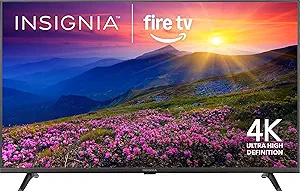


| smart TVs for holiday deal | Screen Size | Resolution | Smart Platform | Audio |
|---|---|---|---|---|
| INSIGNIA 55-inch QF Series QLE | 55 inches | — | Fire TV | Dolby Atmos, 5.1 channels |
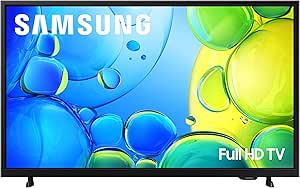
| Samsung 40-Inch Class F6000 Fu | 40 inches | Full HD | Samsung Tizen | Object Tracking Sound Lite |
| Amazon Ember 40" 2-Series Smar | 40 inches (39.5" viewable) | 1920 x 1080 (FHD) | Fire OS | — |
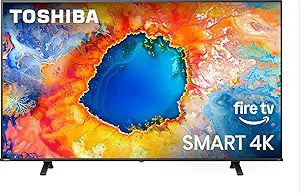
| Toshiba 43-inch C350 Series 4K | 43 inches | 4K UHD | Fire TV | — |
| Insignia F50 Series 65-Inch 4K | 65 inches | 4K UHD (2160p) | Fire TV | DTS Virtual:X |
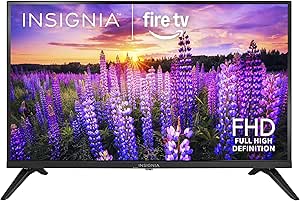
| INSIGNIA 32" Class F20 Series | 32 inches | 720p HD | Fire TV | DTS Virtual-X |
| Insignia 40-Inch F40 Series Fu | 40 inches | 1080p Full HD | Fire TV with Alexa voice control | DTS Virtual:X with HDMI ARC |
| Insignia 40-inch FE Series Ful | 40 inches | 1080p Full HD | — | — |
| Insignia 43-inch F50 Series 4K | 43 inches | 4K UHD (2160p) | — | DTS Virtual:X |
| Hisense 43" E6 Cinema Series H | 43 inches | 4K UHD | — | Dolby Atmos |
| Samsung 43-Inch Crystal UHD U8 | 43 inches | 4K | — | — |
| Amazon Ember 43" 4-Series 4K S | 43 inches | 4K Ultra HD | Fire TV (2026) with Alexa+ | Dolby Audio |
| Roku Select Series 65-Inch 4K | 65 inches | 4K (2160p) | Roku | — |
| Roku Select Series 40-Inch 108 | 40 inches | 1080p Full HD | Roku | — |
| Samsung 43-Inch M70H Series 4K | 43 inches | 4K | — | — |
More Details on Our Top Picks
INSIGNIA 55-inch QF Series QLED 4K UHD Smart Fire TV with Alexa Voice Remote (NS55-UQFL26)
For shoppers who want QLED color performance at a midrange price, this 55-inch INSIGNIA is the easiest call in the lineup. The Quantum Dot panel gives it noticeably richer, more saturated color than the standard LED sets here like the Insignia F50 65-inch, and it pairs that with Dolby Vision HDR and Dolby Atmos — formats usually reserved for pricier models. The bezel-less metal frame also looks a class above the plastic builds on the smaller INSIGNIA options. The tradeoff is motion: at 60Hz with no local dimming zones, fast sports and competitive gaming will look softer than on a 120Hz panel, and dark-room contrast falls short of premium options like the Samsung M70H Mini LED. Compared with the Toshiba C350, it wins on color and design but gives up the gaming-focused ALLM and VRR features.
Pros:- Quantum Dot technology delivers vibrant, saturated color rare at this tier
- Dolby Vision HDR and Dolby Atmos support for both picture and sound
- Bezel-less metal design looks far more premium than typical budget builds
- Fire TV OS with Alexa voice remote covers every major streaming service
Cons:- 60Hz refresh rate and no local dimming limit motion clarity and dark-room contrast
- Fire TV interface pushes Amazon content and ads more aggressively than Roku or Tizen
Best for: Movie and streaming fans who want vivid QLED color and a 55-inch screen without paying premium-brand prices
Not ideal for: Competitive gamers — the 60Hz panel and lack of local dimming limit fast-motion clarity and dark-scene contrast
- Screen Size:55 inches
- Display:QLED, 4K UHD
- Refresh Rate:60Hz
- HDR Support:Dolby Vision, HDR10
- Audio:Dolby Atmos, 5.1 channels
- Smart Platform:Fire TV
- HDMI Ports:3 (one with eARC)
- Connectivity:Wi-Fi, Bluetooth
- VESA Mount:400 x 400 mm
Our verdict“This is the pick for buyers who prioritize picture richness and screen size per dollar over gaming performance.”
Samsung 40-Inch Class F6000 Full HD Smart TV (2025)
Where most small sets in this roundup — like the Amazon Ember 2-Series — lean on Fire TV’s app grid, this Samsung stands out for its Tizen platform and 2,700+ free channels, which make it feel more like a self-contained entertainment box than a bedroom afterthought. PurColor and Mega Contrast give it cleaner, more natural color than the Full HD INSIGNIA F40, and Knox Security is a genuine differentiator if the TV will also serve as a smart-home hub. The catch is resolution: at 1080p it can’t match the 4K sharpness of the Toshiba C350 or Hisense E6, so it’s best kept to smaller rooms where pixel density matters less. Its best audio trick, Q Symphony, also requires a compatible Samsung soundbar sold separately.
Pros:- Tizen OS offers one of the cleanest interfaces plus 2,700+ free channels
- PurColor and Mega Contrast produce richer color than typical 40-inch budget sets
- Knox Security protects data and connected smart-home devices
- Phone screen and sound mirroring works well for casual casting
Cons:- Full HD resolution falls behind the 4K options in this lineup
- Q Symphony audio feature requires a separate compatible Samsung soundbar
Best for: Bedroom, kitchen, or dorm shoppers who want a polished smart platform and free live channels over raw resolution
Not ideal for: Living-room buyers who sit close to a 4K console or stream 4K content — Full HD will look noticeably soft
- Screen Size:40 inches
- Resolution:Full HD
- Smart Platform:Samsung Tizen
- Picture Features:HDR, PurColor, Mega Contrast
- Audio:Object Tracking Sound Lite
- Security:Samsung Knox
- Free Channels:2,700+
Our verdict“The smartest small-room choice here if you value software polish and free content over pixel count.”
Amazon Ember 40″ 2-Series Smart TV with Fire TV and Alexa Voice Remote Enhanced (2026)
Of the 40-inch options in this guide, the Ember 2-Series is the one built around streaming speed rather than picture specs. Wi-Fi 6 and a quad-core processor make app launches and menu navigation feel snappier than the Samsung F6000, and the Alexa Voice Remote Enhanced with preset app buttons cuts down on menu digging for less tech-savvy users. It even includes an HDMI 2.1 port with eARC — a rarity at this tier — plus unusually strong accessibility features like a screen reader, magnifier, and Bluetooth hearing aid support. The compromises are real, though: 1080p resolution, a 60Hz panel, and only two HDMI ports mean it trails the Toshiba C350 on both picture and connectivity flexibility. Extras like Ambient Experience and Luna cloud gaming help it feel more modern than its specs suggest.
Pros:- Wi-Fi 6 and quad-core processor deliver unusually fast app performance for the price
- HDMI 2.1 with eARC is rare at this price tier
- Strong accessibility features including screen reader, magnifier, and hearing aid support
- Ambient Experience and Amazon Luna cloud gaming add modern functionality
Cons:- 1080p resolution and 60Hz refresh rate limit picture quality
- Only two HDMI ports restrict soundbars, consoles, and streaming boxes
Best for: Budget buyers, secondary rooms, and accessibility-focused users who want fast streaming with thoughtful extras
Not ideal for: Home-theater builders or console gamers — 1080p/60Hz and just two HDMI ports will bottleneck a serious setup
- Screen Size:40 inches (39.5″ viewable)
- Resolution:1920 x 1080 (FHD)
- Refresh Rate:60Hz
- HDR Formats:HDR10, HLG
- HDMI Ports:1x HDMI 2.0, 1x HDMI 2.1 with eARC
- Connectivity:Wi-Fi 6, Ethernet, AirPlay
- Smart Platform:Fire OS
- Voice Control:Alexa hands-free and voice remote
Our verdict“A streaming-first budget TV that trades picture specs for speed, voice control, and accessibility — ideal as a second set.”
Toshiba 43-inch C350 Series 4K UHD Smart Fire TV
Among the 43-inch TVs in this roundup, the Toshiba C350 carves out a clear niche: it’s the only budget Fire TV option with ALLM, VRR, and eARC — the trio console and PC gamers actually need. That gaming feature set is something neither the Hisense E6 nor the Insignia F50 43-inch can claim, and it makes this model better suited to a PS5 or Xbox in a small space. The REGZA Engine ZR with AI upscaling also does respectable work sharpening legacy 1080p content toward near-4K clarity, which matters since much casual streaming is still HD. On the flip side, it lacks the QLED color pop of the INSIGNIA QF 55-inch, and its audio hardware is vague enough that buyers wanting home-theater sound should budget for a soundbar.
Pros:- Gaming mode with ALLM, VRR, and eARC is rare at this price
- AI 4K upscaling noticeably improves HD and Full HD source content
- Dolby Vision and Dolby Atmos support for movies and streaming
- Fire TV consolidates apps and live TV on a single home screen
Cons:- Standard LED panel lacks the color richness of QLED rivals in this guide
- Audio hardware is underdocumented and likely needs a soundbar for serious viewing
Best for: Console and PC gamers on a budget who want ALLM and VRR in a compact 4K Fire TV
Not ideal for: Movie-first buyers chasing rich color — a QLED option like the INSIGNIA QF or Hisense Hi-QLED will outclass it visually
- Screen Size:43 inches
- Resolution:4K UHD
- Smart Platform:Fire TV
- Picture Engine:REGZA Engine ZR
- Upscaling:AI 4K upscaler
- HDR and Audio:Dolby Vision, Dolby Atmos
- Gaming Features:ALLM, VRR, eARC
Our verdict“The smart choice for gamers who want console-friendly features at a budget price without needing a giant screen.”
Insignia F50 Series 65-Inch 4K UHD Smart Fire TV
If the goal is simply the largest screen for the least money, this 65-inch Insignia F50 delivers where nothing else in this batch does at that size. The 4K panel with HDR10 handles everyday streaming capably, and DTS Virtual:X gives its built-in speakers a wider soundstage than the Toshiba C350’s underspecified audio. Its connectivity list is surprisingly deep — three HDMI ports with ARC/eARC, Ethernet, optical, composite, even a headphone jack — making it friendlier to older gear than the port-light Amazon Ember 2-Series. But this is a Direct Lit LED panel: expect adequate rather than punchy contrast, with no local dimming and no Dolby Vision, unlike the 55-inch INSIGNIA QF. Buyers who watch mostly in bright rooms will be satisfied; dark-room cinephiles should pay up for QLED or Mini LED.
Pros:- 65-inch 4K screen delivers the biggest picture per dollar in this lineup
- DTS Virtual:X provides a wider built-in soundstage than most budget TVs
- Extensive connectivity including Ethernet, optical, composite AV, and headphone output
- ARC and eARC support plus VESA wall-mount compatibility
Cons:- Direct Lit panel offers limited contrast and no local dimming zones
- HDR10 only — no Dolby Vision, which pricier options in this guide include
Best for: Families who want maximum screen size for group viewing on a tight budget, especially in bright rooms
Not ideal for: Cinephiles who watch in dark rooms — Direct Lit LED contrast is serviceable, not dramatic, and there’s no Dolby Vision
- Screen Size:65 inches
- Resolution:4K UHD (2160p)
- Display Type:Direct Lit LED
- HDR:HDR10
- Smart Platform:Fire TV
- Audio:DTS Virtual:X
- HDMI Ports:3 (ARC and eARC support)
- Connectivity:Wi-Fi, Ethernet, USB, optical, composite AV, coaxial
- VESA Mount:400 x 300 mm
Our verdict“The go-to pick when screen size matters more than picture refinement and the budget is firm.”
INSIGNIA 32″ Class F20 Series LED HD Smart Fire TV with Alexa Voice Remote
This 32-inch F20 makes the list as the cheapest way into a full Fire TV experience, and that’s a real distinction: a buyer gets the same streaming platform, Alexa voice remote, and app library found on pricier sets like the Insignia 43-inch F50, just in a smaller package. The DTS Virtual-X audio is a genuine surprise at this size, and the port selection — including a headphone jack and digital optical output — is more flexible than many entry models offer. The tradeoff is obvious: 720p resolution means softer detail, especially when sitting close, and 2 HDMI ports fills up fast with a console plus soundbar. Compared with the Samsung F6000 40-inch Full HD set, this one sacrifices picture sharpness for smart-platform convenience and a lower barrier to entry.
Pros:- Full Fire TV platform with Alexa voice remote at an entry-level size
- DTS Virtual-X audio punches above its price class
- Unusually versatile ports including headphone jack and optical output
- Wall-mountable with HDMI ARC for soundbar hookup
Cons:- 720p resolution looks soft next to any 1080p or 4K rival
- Only 2 HDMI ports limits console-plus-soundbar setups
- 32-inch screen disappears in medium or large rooms
Best for: Bedroom, kitchen, dorm, or kids’ room setups where streaming apps matter more than picture quality
Not ideal for: Living rooms or anyone who watches sports and movies critically — 720p on a shared main TV will disappoint
- Screen Size:32 inches
- Resolution:720p HD
- Smart Platform:Fire TV
- Voice Control:Alexa Voice Remote
- Audio:DTS Virtual-X
- HDMI Ports:2 (ARC supported)
- Other Connections:Composite AV, USB, optical, headphone jack, coaxial, Wi-Fi
Our verdict“Buy it as a secondary streaming TV for small spaces; skip it if this is your one and only screen.”
Insignia 40-Inch F40 Series Full HD Smart Fire TV
The F40 answers the biggest complaint I’d raise about the INSIGNIA 32-inch F20: resolution. Stepping up to 1080p Full HD at 40 inches delivers visibly sharper detail for streaming and gaming, while keeping the same Fire TV platform and Alexa voice control. It also adds Bluetooth and Ethernet, which the F20 lacks — Ethernet matters for anyone whose Wi-Fi struggles with 4K streams on other household devices. The VESA 200×200 mount and slim 16 kg frame make wall installation easy compared with bulkier 43-inch rivals like the Toshiba C350. The honest tradeoff: this is still a 60 Hz, 1080p panel with only 2 HDMI ports. If 4K content is central to your viewing, the Insignia F50 43-inch is the better stretch; if it isn’t, paying for 4K would be wasted here.
Pros:- 1080p resolution is a clear step up from 720p entry models
- Ethernet and Bluetooth connectivity options beyond basic Wi-Fi
- DTS Virtual:X audio with HDMI ARC for soundbars
- Lightweight chassis with standard VESA wall mounting
Cons:- No 4K or HDR support as 4K streaming becomes the default
- Only 2 HDMI ports for console and soundbar simultaneously
Best for: Apartment dwellers and secondary-room buyers who want sharp 1080p streaming without paying for unused 4K
Not ideal for: Home theater builders or next-gen console owners — no 4K, no HDR, and limited HDMI capacity
- Screen Size:40 inches
- Resolution:1080p Full HD
- Refresh Rate:60 Hz
- Smart Platform:Fire TV with Alexa voice control
- Audio:DTS Virtual:X with HDMI ARC
- HDMI Ports:2
- Connectivity:Wi-Fi, Bluetooth, Ethernet, USB
- VESA Mount:200 x 200 mm
Our verdict“The sensible middle ground for small-room buyers who want sharper picture than the F20 without overspending on 4K.”
Insignia 40-inch FE Series Full HD Smart Fire TV with Alexa Voice Remote (NS40-FEFL26)
The FE Series sits in an interesting spot: same 40-inch, 1080p, 60 Hz formula as the Insignia F40, but with a slimmer 3-inch-deep chassis and a leaner feature set aimed at viewers who mainly stream. Fire TV handles live TV, games, and music alongside the usual apps, and Bluetooth plus Wi-Fi cover the wireless basics. Where it differs from the F40 is what’s missing — no Ethernet port and a modest 200-nit peak brightness, which means this panel handles a dim bedroom far better than a sun-drenched living room. Compared with the Roku Select Series 40-inch, it trades Roku’s cleaner interface for deeper Alexa integration and smart-home control. For a wall-mounted guest-room screen, that slim profile and simple setup make it a quietly practical choice.
Pros:- Slim 3-inch profile suits tight wall-mount spaces
- Full Fire TV access with Alexa voice remote
- Bluetooth and Wi-Fi for flexible audio and streaming
- Simple setup for non-technical households
Cons:- 200-nit brightness washes out in bright rooms
- No Ethernet option for wired connections
- 60 Hz refresh limits fast-motion clarity
Best for: Guest rooms and low-light spaces where a slim, simple, Alexa-friendly streaming TV is all that’s needed
Not ideal for: Bright rooms or hardwired-network households — 200 nits struggles in glare and there’s no Ethernet port
- Screen Size:40 inches
- Resolution:1080p Full HD
- Refresh Rate:60 Hz
- Max Brightness:200 nits
- Operating System:Fire TV
- Connectivity:Bluetooth, Wi-Fi
- HDMI Ports:2
Our verdict“A fit-and-forget streaming TV for dim secondary rooms; look elsewhere for bright spaces or wired networks.”
Insignia 43-inch F50 Series 4K UHD Smart Fire TV
The F50 is the point where this Insignia lineup stops making compromises on resolution. 4K UHD with HDR10 at 43 inches delivers the sharpness the F40 and FE Series can’t, and built-in upscaling means existing 1080p content looks better too. Unlike the smaller sets, it offers 3 HDMI ports including eARC, plus Ethernet — enough for a console, soundbar, and cable box without an external switch. Against the Toshiba C350 43-inch, the F50 holds its own on ports and free ad-supported content via Fire TV. The catch: HDR10-only support and a basic LED panel mean contrast and color stay ordinary, and the Hisense 43E6QF with Dolby Vision and HDR10+ clearly outperforms it on picture quality. This pick makes sense for buyers who want real 4K at the lowest complexity, not for image-quality purists.
Pros:- 4K UHD resolution with HDR10 and upscaling of older content
- 3 HDMI ports including eARC for soundbar and console setups
- Ethernet port for stable wired streaming
- Smart home features and parental controls included
Cons:- HDR10 only — no Dolby Vision or HDR10+ like the Hisense E6
- Ordinary LED contrast compared with QLED rivals
Best for: First-time 4K buyers who want HDR-ready resolution and ample ports without a premium panel
Not ideal for: Movie enthusiasts chasing contrast and color depth — a basic LED panel with HDR10 only won’t satisfy them
- Screen Size:43 inches
- Resolution:4K UHD (2160p)
- HDR Format:HDR10
- Operating System:Fire TV
- Audio:DTS Virtual:X
- HDMI Ports:3, including HDMI eARC
- Other Connections:Composite AV, optical, USB, Ethernet, Wi-Fi, coaxial
Our verdict“The most complete entry point into 4K in this batch — choose it over 1080p models if ports and resolution matter more than peak picture quality.”
Hisense 43″ E6 Cinema Series Hi-QLED 4K UHD Smart Fire TV (43E6QF)
This is the picture-quality standout of the small-screen group. Where the Insignia F50 43-inch stops at HDR10, the Hisense E6 covers Dolby Vision, HDR10+ Adaptive, HDR10, and HLG on a Hi-QLED panel, so it renders whatever format your streaming service actually uses. The AI 4K upscaler and Filmmaker Mode appeal to movie watchers, while Game Mode Plus with VRR and a 120 motion rate give casual gamers smoother play than any Insignia here. The AI light sensor that auto-adjusts brightness is a rare touch at this size. Tradeoffs exist: it’s a 60 Hz native panel relying on MEMC smoothing, which film purists may notice, and the Fire TV homescreen carries ads and sponsored rows. Compared with the Samsung 43-inch U8000H, it trades brand polish for a richer HDR feature list at a compact size.
Pros:- Full HDR format coverage including Dolby Vision and HDR10+ Adaptive
- Game Mode Plus with VRR smooths out console gaming
- AI 4K upscaler improves standard streaming content
- AI light sensor adjusts brightness automatically for comfort and efficiency
Cons:- 60 Hz native panel relies on MEMC interpolation for motion
- Fire TV interface surfaces ads and sponsored content
- 43 inches is undersized for large living rooms
Best for: Movie and gaming fans in smaller rooms who want flagship-style HDR formats without a 55-inch screen
Not ideal for: Competitive 60fps+ gamers wanting a native 120 Hz panel, or viewers who dislike ad-supported smart TV menus
- Screen Size:43 inches
- Resolution:4K UHD
- Display Technology:Hi-QLED
- HDR Support:Dolby Vision, HDR10+ Adaptive, HDR10, HLG
- Audio:Dolby Atmos
- Motion Rate:120 with AI Smooth Motion (MEMC)
- Gaming:Game Mode Plus with VRR
- Connectivity:WiFi 6, Fire TV with Alexa
Our verdict“The best-looking compact TV in this batch — pick it over the Insignia F50 if picture quality drives your decision more than price.”
Samsung 43-Inch Crystal UHD U8000H Series 4K Smart TV (2026 Model)
The 43-inch Crystal UHD U8000H is a sensible holiday pick for a main or secondary room when you want 4K streaming and familiar Samsung smart features without moving up to a large screen. Its Crystal Processor and 4K upscaling can make lower-resolution shows look sharper, which helps when your viewing mix includes older TV and newer streams. Compared with the Amazon Ember 43-inch 4-Series, this model highlights free Samsung TV Plus channels and motion support, while Ember lists HDR10+, Wi-Fi 6, and four HDMI inputs. The tradeoff is a 60Hz ceiling: Motion Xcelerator may smooth sports and games, but this is not the better fit for shoppers seeking a higher refresh rate. Choose it for straightforward everyday viewing; skip it if HDR format support and extensive connection details lead your shortlist.
Pros:- 4K upscaling can sharpen lower-resolution shows.
- Motion Xcelerator supports sports and gaming viewing.
- Samsung TV Plus includes subscription-free channels.
- Built-in Alexa adds voice control.
Cons:- Motion performance is listed at up to 60Hz.
- The supplied details do not specify HDR formats or connection counts.
Best for: Viewers who want a 43-inch 4K Samsung for everyday streaming, mixed-resolution shows, and free ad-supported channels.
Not ideal for: Gamers prioritizing high refresh rates or buyers who want HDR10+ and clearly specified multi-device connections.
- Screen size:43 inches
- Resolution:4K
- Series:Crystal UHD U8000H
- Model:43U8000H
- Model year:2026
- Processor:Crystal Processor
- Refresh performance:Up to 4K 60Hz
- Voice assistant:Alexa built-in
Our verdict“Pick the U8000H for everyday 43-inch 4K viewing and free Samsung channels; choose the Ember 4-Series if HDR10+ and Wi-Fi 6 matter more.”
Amazon Ember 43″ 4-Series 4K Smart TV with Fire TV, Alexa Remote, HDR10+, and Dolby Audio (Newest Model)
The Amazon Ember 4-Series packs a lot of connected-TV convenience into a 43-inch 4K set: Wi-Fi 6, four HDMI inputs, AirPlay, and Alexa+ make it an adaptable hub for streaming and connected devices. HDR10+ adds scene-by-scene contrast support, while Omnisense can wake the display as you enter. Compared with Samsung’s 43-inch Crystal UHD U8000H, Ember lists more connection specifics and HDR10+, while Samsung calls out 4K upscaling and free Samsung TV Plus channels. Ember also offers cloud gaming through Amazon Luna and Xbox Game Pass without a console, though subscription fees may apply. Its main compromise is the Fire TV interface, which can feel ad-heavy and gives Amazon content prominence. It suits households that value hands-free features and device flexibility; shoppers who want a calmer interface may prefer Roku’s platform.
Pros:- HDR10+ provides expanded contrast support.
- Four HDMI inputs accommodate multiple connected devices.
- Wi-Fi 6 and a quad-core processor support responsive streaming.
- Omnisense, Alexa+, AirPlay, and cloud gaming add flexibility.
Cons:- The Fire TV interface is ad-heavy and favors Amazon content.
- Many available content and gaming services may require subscriptions.
Best for: Households that connect several devices, use Apple AirPlay, and want Alexa voice search and sensor-based smart features.
Not ideal for: Viewers who dislike prominent interface advertising or want access to cloud gaming without possible subscriptions.
- Screen size:43 inches
- Resolution:4K Ultra HD
- HDR support:HDR10+
- Audio:Dolby Audio
- Processor:Quad-core
- Connectivity:Wi-Fi 6, four HDMI inputs, AirPlay
- Smart platform:Fire TV (2026) with Alexa+
- Additional features:Ambient Experience, Omnisense sensors, Amazon Luna and Xbox Game Pass cloud gaming
Our verdict“Choose Ember for a feature-rich 43-inch connected setup, especially with multiple devices; pick the Samsung U8000H if free Samsung channels matter more.”
Roku Select Series 65-Inch 4K QLED Smart TV (2026)
For holiday viewing in a larger living room, the 65-inch Roku Select Series makes screen size its clearest advantage while adding 4K QLED color and access to streaming apps and free live TV. That combination suits movie nights and group viewing better than the compact Samsung and Amazon 43-inch models in this batch. Its Roku platform also brings voice control across Roku Voice, Siri, Alexa, and Google Assistant, plus a remote finder that can save time when the remote disappears between cushions. The tradeoff is limited connection detail: the listed features cover Wi-Fi, AirPlay, and Bluetooth Headphone Mode, but do not spell out HDMI counts. HDR support is listed as HDR10, and speaker specifications are absent. Choose this for the larger picture and simple streaming access; skip it if known audio or gaming connection specs are priorities.
Pros:- 65-inch 4K screen suits larger rooms and group viewing.
- QLED display and HDR10 support vivid color and contrast.
- Roku provides streaming apps and free live TV.
- AirPlay, multiple voice assistants, and a remote finder add convenience.
Cons:- Connectivity details do not include a specified HDMI count.
- No speaker specifications are provided.
- HDR support is listed as HDR10.
Best for: Families and movie watchers furnishing a larger room who want a 65-inch 4K screen, QLED color, and Roku streaming.
Not ideal for: Buyers who need documented HDMI details, detailed speaker specifications, or more advanced HDR format support.
- Screen size:65 inches
- Resolution:4K (2160p)
- Display technology:QLED
- HDR format:HDR10
- Smart platform:Roku
- Voice assistants:Roku Voice, Siri, Alexa, Google Assistant
- Connectivity and sharing:Wi-Fi, Apple AirPlay, Bluetooth Headphone Mode
- Remote:Enhanced voice remote with lost remote finder
Our verdict“Choose the Roku 65-inch model when room-filling screen size matters more than detailed connection and audio specifications.”
Roku Select Series 40-Inch 1080p Full HD Smart TV
The Roku Select 40-inch fits a bedroom, small apartment, or secondary room where a compact screen and easy streaming matter more than 4K resolution. Its 1080p Full HD picture keeps the specification straightforward, while Roku’s apps, free live TV, voice control, and Apple AirPlay make everyday viewing accessible. Bluetooth headphone mode is a practical plus for late-night watching without disturbing others. Compared with the 65-inch Roku Select, this one gives up QLED and 4K detail in exchange for a smaller format that suits tighter spaces; compared with Samsung’s 43-inch U8000H, it also steps down from 4K. The Roku experience remains a draw, but buyers planning a large-screen movie setup or wanting sharper 4K detail should look to those alternatives. Audio power and speaker details are not specified.
Pros:- 40-inch size suits compact rooms.
- Roku offers streaming apps and free live TV.
- Supports Apple AirPlay and several voice assistants.
- Bluetooth headphone mode enables quieter listening.
Cons:- 1080p Full HD resolution lacks the detail of the Samsung U8000H’s 4K screen.
- No audio output power or speaker details are provided.
Best for: Bedroom and dorm-room viewers who want a compact smart TV, straightforward Roku access, and Bluetooth headphone listening.
Not ideal for: Movie fans seeking a large 4K screen or shoppers who want documented speaker output and audio hardware.
- Screen size:40 inches
- Resolution:1080p Full HD
- Smart platform:Roku
- Connectivity:Wi-Fi, Bluetooth
- Voice assistants:Roku Voice, Siri, Alexa, Google Assistant
- Casting:Apple AirPlay
- Picture feature:Picture optimization
- Audio feature:Speech-focused sound; Bluetooth headphone mode
Our verdict“Choose this Roku for compact rooms and simple streaming; step up to the Samsung U8000H for 4K viewing or the 65-inch Roku for a larger picture.”
Samsung 43-Inch M70H Series 4K Mini LED Smart TV (2026)
The Samsung M70H Series stands apart from the 43-inch Crystal UHD U8000H through its Mini LED display, which is designed to produce brighter highlights and deeper contrast. That makes it the more picture-focused Samsung pick here for viewers who watch in a bright room or want more visual punch from 4K content. The set also brings Samsung TV Plus channels and a Gaming Hub, so streaming and game discovery sit alongside its picture strengths. There is a key size-specific catch: the listed DLG up to 120Hz applies only to 55-inch-class and larger models, so buyers choosing this 43-inch version should not count on that feature. Samsung also says some smart features need internet access and an account. Compared with the U8000H, it emphasizes display technology over specified motion performance; skip it if you need confirmed high refresh at 43 inches.
Pros:- Mini LED technology is designed for bright highlights and deep contrast.
- 4K resolution and broad color range suit detailed viewing.
- Samsung TV Plus offers free streaming channels.
- Gaming Hub gathers games and recommendations.
Cons:- DLG up to 120Hz is specified only for 55-inch-class and larger models.
- Some smart features require an internet connection and Samsung account.
Best for: Viewers seeking a 43-inch 4K set with Mini LED brightness and contrast for bright rooms, plus Samsung’s free channels and Gaming Hub.
Not ideal for: Gamers who require confirmed 120Hz performance on a 43-inch screen or buyers who avoid account-dependent smart features.
- Screen size:43 inches
- Resolution:4K
- Display technology:Mini LED
- Model year:2026
- Series:M70H
- Refresh rate feature:DLG up to 120Hz, available only on 55-inch-class and larger models
- Smart content:Samsung TV Plus free streaming channels
- Gaming feature:Gaming Hub
Our verdict“Pick the M70H for Mini LED picture advantages at 43 inches, but do not choose it expecting the listed 120Hz feature to apply to this size.”

How We Picked
My ranking logic starts with picture quality relative to price tier: QLED and Mini LED panels rank above standard LED, and within each tier I compared HDR support (HDR10+ availability mattered), processing quality, and brightness for daylight viewing. The second criterion is the smart platform experience, because on a smart TV the software is half the product. Roku’s clean, ad-light interface earned top marks, Fire TV offers deep Alexa integration but heavier home-screen advertising, and Samsung’s Tizen platform sits between the two with the best app polish.
From there, I weighed size-to-value fit — which model gives the most usable screen for its tier — plus build quality, remote design (voice control and quick-access buttons genuinely change daily use), and gaming basics like input lag for console households. Models are ordered so that the top picks balance all criteria, mid-rank picks excel in one area with a known weakness, and the bottom entries are situational choices that only make sense for specific rooms or budgets.
| smart TVs for holiday deal | Smart Platform |
|---|---|
| INSIGNIA 55-inch QF Series QLE | Fire TV |
| Samsung 40-Inch Class F6000 Fu | Samsung Tizen |
| Amazon Ember 40" 2-Series Smar | Fire OS |
| Toshiba 43-inch C350 Series 4K | Fire TV |
| Insignia F50 Series 65-Inch 4K | Fire TV |
| INSIGNIA 32" Class F20 Series | Fire TV |
| Insignia 40-Inch F40 Series Fu | Fire TV with Alexa voice control |
| Insignia 40-inch FE Series Ful | — |
| Insignia 43-inch F50 Series 4K | — |
| Hisense 43" E6 Cinema Series H | — |
| Samsung 43-Inch Crystal UHD U8 | — |
| Amazon Ember 43" 4-Series 4K S | Fire TV (2026) with Alexa+ |
| Roku Select Series 65-Inch 4K | Roku |
| Roku Select Series 40-Inch 108 | Roku |
| Samsung 43-Inch M70H Series 4K | — |
Factors to Consider When Choosing Smart TVs For Holiday Deals
A holiday discount only matters if the TV still fits your life in January. These are the factors I’d weigh before clicking buy on any deal in this roundup.Panel Type Matters More Than Size
The biggest mistake holiday shoppers make is chasing inches at the expense of panel quality. A 65-inch basic LED will look washed out next to a 43-inch QLED in the same showroom, and the difference compounds at home where ambient light and viewing angles punish cheap panels. Mini LED, found on the Samsung M70H here, offers the best contrast because its localized dimming zones keep dark scenes dark. If your budget forces a choice, I’d take a smaller quantum-dot panel over a larger standard one every time — you sit closer to compensate for size, but nothing fixes muddy color.
The Smart Platform Is a Long-Term Commitment
Whatever operating system ships on the TV is the one you’ll live with for years, since smart TV platforms rarely get major updates on budget hardware. Fire TV models integrate tightly with Alexa but push sponsored content onto the home screen; Roku keeps menus fast and simple, which matters if anyone in the house resists learning new interfaces; Samsung’s Tizen has the broadest app support and slickest multitasking. Ask yourself which voice assistant you already use and which family member will be the primary user. A bargain TV with a frustrating interface becomes a daily annoyance no discount can justify.
Match Screen Size to Room Reality
Holiday listings make 65-inch prices tempting, but measure first. The common guidance is to sit roughly 1.2 to 1.5 times the diagonal distance from a 4K screen — meaning a 65-inch set wants about seven to eight feet of viewing distance. In a bedroom or kitchen, a 32- to 43-inch model like the Insignia F20 or Amazon Ember 40″ is the better ergonomic fit and frees budget for other gifts. Also check the stand width: several 65-inch models have feet set near the edges, which can overflow older TV stands and force an unplanned wall-mount purchase.
Resolution Cutoffs in 2026
At holiday prices, 4K is the default — content from every major streaming service is mastered for it, and the price gap to 1080p has collapsed. The exception is small screens: below 40 inches, the resolution difference is barely visible at normal seating distance, so a 32-inch 720p set like the F20 is perfectly sensible for a kitchen or kids’ room. The Samsung F6000’s 1080p panel in a 40-inch size is the awkward middle — acceptable, but only if the discount is steep. Skip any deal that charges a premium for 4K on a screen you’ll view from across a large room.
HDR and Gaming Features to Check
HDR10+ support, present on the Amazon 4-Series and several QLED models here, adapts brightness scene-by-scene and visibly improves streaming content. But HDR is only as good as the panel’s peak brightness, which is why HDR on a basic LED TV often looks identical to SDR. For console gamers, the features that matter are a low-input-lag game mode and auto low latency switching — the Fire TV models and Samsung sets handle both well. Don’t pay extra for 120Hz marketing on budget sets; at this price tier, most panels are 60Hz regardless of the sticker claims.
Timing the Deal Itself
TV pricing during the holidays is genuinely good, but not every listing is at its lowest. Model numbers ending in 26 or marked 2026 are current-year stock, while older SKUs get cleared at steeper cuts — often with identical panels but slower processors. Check whether the discount applies to the size you actually want, since retailers advertise the smallest screen’s price in large type. And factor in the return window: buying early in the season preserves your ability to exchange a panel with dead pixels or backlight bleed, problems that surface within the first weeks of use.
Frequently Asked Questions
Is a Fire TV or Roku smart TV better for holiday gifting?
For gifting to mixed-age households, Roku edges out Fire TV because its home screen is simpler and less cluttered with sponsored rows, so grandparents and kids can find Netflix without a tutorial. Fire TV makes more sense when the recipient already lives in the Alexa ecosystem — voice searches through the included remote are genuinely faster than typing. Both platforms carry every major streaming app, so content coverage isn’t the differentiator. The real distinction is interface philosophy: Roku gets you to your apps quickly, while Fire TV prioritizes discovery and shopping features. If you’re unsure, Roku is the safer default for a gift.
Should I buy a cheap 65-inch now or wait for a better 65-inch at a lower price?
Holiday pricing on 65-inch sets is already close to the annual floor, so waiting typically saves little and risks stockouts on the specific model you want. What does change after the holidays is selection — the steepest markdowns hit outgoing SKUs, which may have slower processors than the 2026 models in this lineup. A budget 65-inch like the Insignia F50 is a good buy if your room is dimly lit and you mostly watch streaming content casually. If you watch sports in a bright living room, spending the same money on a smaller QLED like the Roku Select or Hisense E6 delivers a better daily experience. Decide based on your room, not the calendar.
Are Insignia and Amazon-branded TVs reliable enough for a main living room TV?
For secondary rooms and bedrooms, they’re a sound value — the panels and Fire TV software are proven, and the tradeoff is in processing speed and motion handling rather than outright failure risk. In a main living room, the weaknesses show up with fast-moving content: sports on a basic Insignia LED will show more blur than on the Samsung U8000H or Hisense QLED at a similar size. Sound quality on all budget brands is thin, so budget for a soundbar if it’s your primary set. My rule of thumb: Insignia and Amazon for rooms you watch casually, Samsung or QLED-tier models for the room you watch nightly.
What’s the difference between the several 40-inch budget models in this lineup?
The Insignia F40, Insignia FE, and Amazon Ember 2-Series occupy nearly the same slot: 1080p panels, Fire TV software, and Alexa voice remotes. The FE is the newest chassis with a refreshed remote design, the F40 is the established value option, and the Ember 2-Series benefits from Amazon’s tighter first-party integration and longer software support runway. Picture quality differences between them are minor enough that I’d let the checkout price decide. None of them are the right choice for a primary TV — all three exist for bedrooms, offices, and guest rooms where 1080p at close seating distance looks perfectly sharp.
Is the Samsung M70H Mini LED worth the premium over the other 43-inch options?
If contrast is what you notice most — dark movie scenes, night viewing, moody dramas — then yes, Mini LED is a visible step above every other 43-inch set here, including Samsung’s own U8000H. The localized dimming zones produce blacks that standard LED panels simply can’t match, and it holds up in bright rooms too. The catch is that at 43 inches, many viewers won’t sit close enough to appreciate the difference, and the money could instead buy a 65-inch QLED from Roku or Insignia. Treat the M70H as the pick for a smaller room where you’ll be seated close and watch critically. For casual viewing across a large room, the premium is better spent on screen size.
Conclusion
After comparing all 15 models, the right choice depends less on specs and more on where the TV will live and who will use it. For best overall, the Roku Select Series 65-Inch 4K QLED wins with its combination of quantum-dot picture quality, the friendliest interface in the lineup, and a size that suits most living rooms. The best value pick is the Insignia F50 65-Inch, which delivers the most screen per dollar for households that prioritize size over refinement. On the premium end, the Samsung M70H 43-Inch Mini LED is the pick for movie watchers who value contrast above all else, while the Hisense E6 QLED splits the difference with strong color at a mid-tier price.
For beginners and gift-givers, the Amazon Ember 43″ 4-Series is the safest choice — 4K, HDR10+, and a platform anyone can figure out in minutes. Small-room buyers should match the space: the Insignia F20 32-inch for kitchens and kids’ rooms, the Samsung F6000 40-inch for a bedroom where brand polish matters, and the Roku Select 40-inch when interface simplicity trumps resolution. Whichever direction you take, buy early in the holiday window to keep your exchange options intact.
Halloween Picks
halloween
As an affiliate, we earn on qualifying purchases.