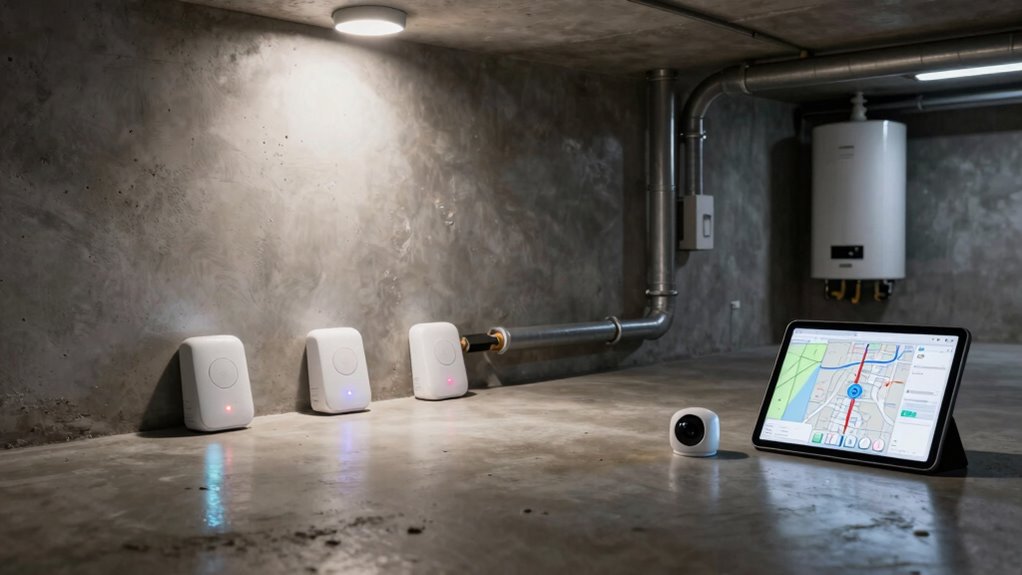

To prevent disasters with smart leak sensors, place them under sinks, near water heaters, and beneath appliances like washing machines or refrigerators with water lines. Position sensors on flat surfaces close to leak-prone areas, avoiding obstructions and environmental hazards. Regular testing and maintenance are key to reliability. Proper placement guarantees quick detection and peace of mind—continue exploring to discover the best spots to protect every vulnerable corner of your home.
Key Takeaways
- Install sensors beneath appliances, pipes, and drain connections prone to leaks for early detection.
- Position sensors on flat, solid surfaces near water sources, avoiding obstructions and stored items.
- Place sensors on the floor or just above it in high-risk zones like water heaters and washing machines.
- Ensure sensors are accessible for testing, battery replacement, and maintenance, avoiding poor drainage areas.
- Integrate sensors with smart home systems for comprehensive leak monitoring and timely alerts.
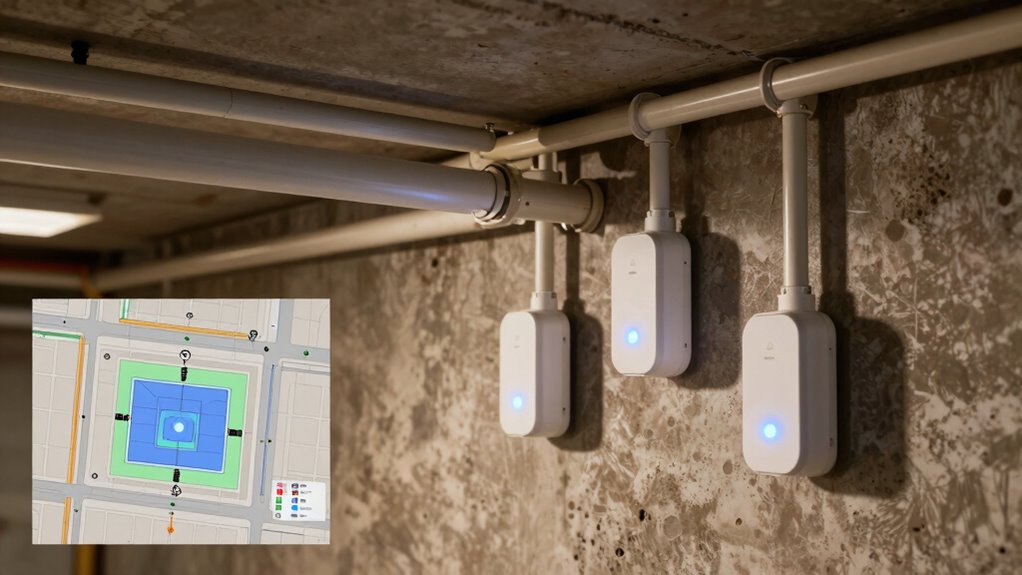
Smart leak sensors are revolutionizing how you protect your home from water damage by providing real-time alerts the moment a leak is detected. When you install these sensors correctly, you gain peace of mind knowing that your home’s vulnerable areas are under constant surveillance. Proper sensor installation is vital because it determines how effectively the sensors can detect even minor leaks before they escalate into costly water damage. You want to place sensors in spots most likely to encounter leaks, such as under sinks, around water heaters, near washing machines, and beneath refrigerators with water lines. These locations are prime because they’re prone to deterioration or accidental leaks, and early detection can prevent extensive damage and mold growth.
The key to successful sensor installation lies in understanding the typical water flow paths and high-risk zones in your home. For instance, installing sensors directly on the floor beneath appliances helps catch leaks right at the source. Make sure sensors are placed on solid, flat surfaces and are close enough to potential leak points but not obstructed by furniture or stored items that could interfere with their operation. If you’re installing sensors under a sink, position them near the pipes and drain connections, where leaks often start. Similarly, placing them around the base of your water heater can alert you to slow drips before they cause structural damage. Additionally, considering smart home integration allows for more comprehensive monitoring and automated responses in case of leaks.
It’s important not to overlook the importance of proper placement height. Sensors should be positioned on the floor or just above it, depending on their design, to ensure they can detect water quickly upon a leak. Avoid installing sensors in areas with poor drainage or where water might pool without reaching the sensor. Also, think about accessibility; you want to be able to check and replace batteries easily if needed.
When it comes to sensor installation, following the manufacturer’s instructions is essential. Proper placement ensures the sensor’s sensitivity isn’t compromised, and the alerts are reliable. Regularly testing your sensors after installation is equally important. Most sensors have a test button or app feature that allows you to verify they’re functioning correctly. Keep in mind that environmental factors like humidity, temperature fluctuations, and dust can affect sensor performance, so choose locations carefully.
Frequently Asked Questions
How Long Do Smart Leak Sensors Typically Last on a Single Battery Charge?
Smart leak sensors typically last between 2 to 5 years on a single battery charge, depending on the model and usage. You’ll notice sensor longevity varies based on factors like the frequency of alerts and sensor type. To maximize battery life, replace batteries as recommended and guarantee the sensors are properly maintained. This way, your system stays reliable, helping you catch leaks early and prevent costly water damage.
Can Smart Leak Sensors Differentiate Between Minor Leaks and Major Floods?
You might worry smart leak sensors can’t tell minor leaks from major floods, but they excel in leak detection accuracy. Advanced sensors use precise calibration to assess water levels and flow rates, enabling them to differentiate between small drips and catastrophic floods. This proactive feature helps you respond appropriately, minimizing damage. Rest assured, these sensors are designed to provide reliable, real-time insights, so you’re always prepared for any water emergency.
Are Smart Leak Sensors Compatible With All Home Automation Systems?
Smart leak sensors are generally compatible with most home automation systems, but you should check their sensor integration options first. Many brands support popular platforms like Alexa, Google Home, or Apple HomeKit. To guarantee seamless operation, verify compatibility before purchasing. You’ll enjoy easy integration and control through your existing home automation setup, allowing you to monitor leaks remotely and receive instant alerts, which helps prevent costly water damage.
What Is the Typical Installation Process for These Sensors?
They say, “A stitch in time saves nine,” and that’s true for installing leak sensors. To do it right, start with the installation steps: choose ideal sensor positioning near potential leak sources. Mount the sensors securely, connect them to your home automation system, and test the setup. Proper sensor placement ensures early detection, so take your time to follow the instructions carefully for peace of mind.
How Often Should the Sensor Placement Map Be Updated or Reviewed?
You should review and update your sensor placement map at least annually as part of your maintenance schedule. Regularly calibrate your sensors to make certain they’re functioning correctly, which may also reveal the need to adjust placements. Keep an eye on any changes in your property, such as renovations or new plumbing, and update the map accordingly. Consistent reviews and calibrations help prevent false alarms and ensure early leak detection.
Conclusion
By strategically placing smart leak sensors, you can reduce water damage risks considerably—studies show up to 90% of leaks go unnoticed until it’s too late. With proper placement, you’re not just preventing disasters; you’re saving money and peace of mind. Take the time to follow a tailored placement map, and you’ll be surprised how much easier it is to catch leaks early. Protect your home today, and enjoy the confidence that comes with smart, proactive prevention.