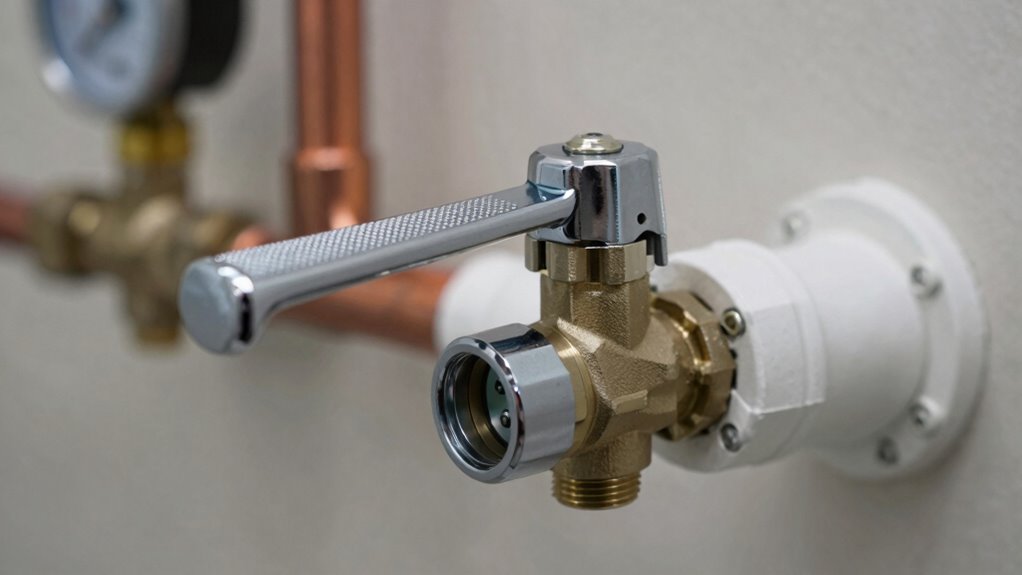

A whole-home water shutoff valve is designed to quickly stop water flow to your entire house when needed. You operate it by turning a handle or lever, which either opens or closes the internal valve. When closed, it blocks water from entering your plumbing system, preventing leaks or allowing repairs. Many models are accessible near your water meter or in utility areas. To learn more about how these valves work, keep exploring below.
Key Takeaways
- Whole-home water shutoff valves control water flow from the main supply to the entire house.
- They operate by turning a handle or lever to stop or restore water flow.
- Installation involves connecting the valve to incoming water lines, often with threaded, soldered, or compression fittings.
- They are typically installed near the water meter or in utility areas for easy access.
- Regular operation and maintenance ensure reliable shutoff during leaks or repairs.
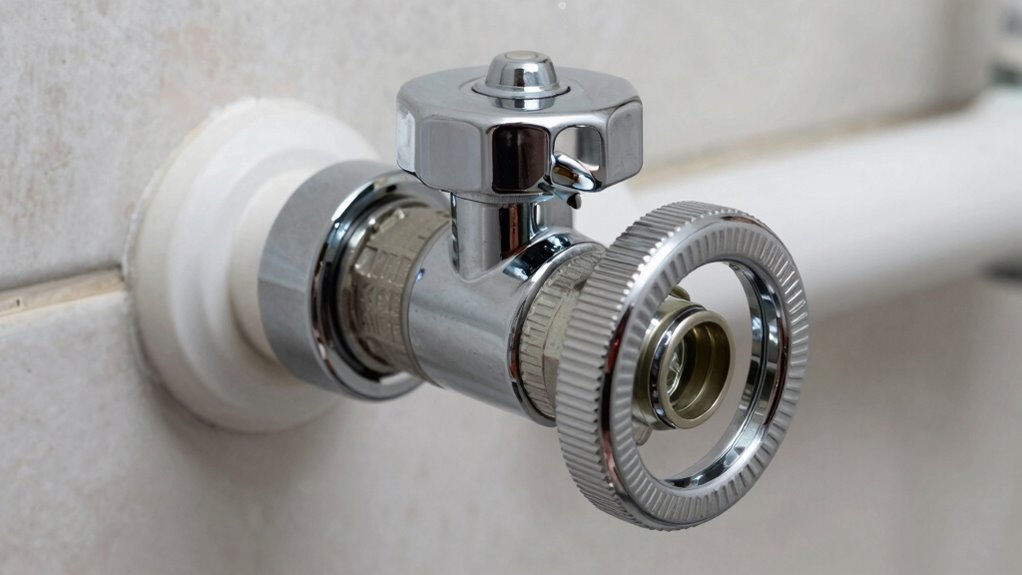
A whole-home water shutoff valve gives you quick control over your household’s water supply, making it easier to prevent damage during leaks or repairs. When you turn this valve off, it stops water flow to your entire house, giving you peace of mind and a simple way to manage plumbing issues. Knowing how these valves work and how they’re installed can help you troubleshoot problems and ensure reliable operation.
The installation process for a whole-home water shutoff valve varies depending on your plumbing setup, but generally, it involves shutting off the main water supply, draining the system, and then removing the existing valve or pipe section where the new valve will go. You’ll need the right tools—like pipe wrenches, cutters, and possibly a soldering kit if you’re working with copper pipes. It’s important to measure correctly and choose the right valve size to match your plumbing. Some valves are designed for threaded connections, while others require soldering or compression fittings. If you’re not comfortable with plumbing work, hiring a professional ensures a proper, leak-free installation.
Once installed, the valve’s operation is straightforward. You turn a handle or lever to shut off or restore water flow. Many valves are designed for quick, easy access, often installed near your main water meter or at an accessible point in your basement or utility closet. This allows you to quickly respond during emergencies or routine maintenance without disrupting the entire household.
Turning the handle or lever quickly shuts off or restores household water flow for easy access and emergency response.
However, despite their simplicity, whole-home water shutoff valves can face common issues over time. One frequent problem is corrosion or mineral buildup, which can cause the valve to seize or become difficult to operate. This is especially common in areas with hard water. Another issue is leakage, which might happen if the valve’s internal components wear out or if it wasn’t installed correctly. Sometimes, the handle or lever becomes stiff or stuck, making it hard to turn the valve on or off. In such cases, you may need to replace the valve or call in a plumber to fix or upgrade it.
Regular maintenance and inspection help mitigate these issues. Check for leaks, corrosion, or any difficulty in turning the handle. If you notice problems early, addressing them promptly can extend the lifespan of your shutoff valve and prevent unexpected water damage. Additionally, understanding the different types of valves and their features can help you choose the most suitable one for your needs. Overall, understanding the installation process and common issues ensures you’re prepared to keep your whole-home water shutoff valve functioning smoothly, providing reliable control whenever you need it most.

LANE LINEN Eco Friendly 100% Organic Cotton Bed Sheets Queen Size, Soft & Comfy Percale Weave, Fully Elasticized Mercerized Naturally Cooling Cotton Sheets Queen Size Set- Navy
Pure Organic Comfort: Experience the luxurious comfort of our Lane Linen sheets sheets cotton queen size bed set,...
As an affiliate, we earn on qualifying purchases.
Frequently Asked Questions
How Often Should I Test My Water Shutoff Valve?
You should test your water shutoff valve at least once a year to make certain it’s working properly. Regular valve maintenance helps prevent leaks and ensures quick shutoff during emergencies. When testing, turn off the water and check if the valve fully stops water flow without resistance. This also gives you a chance to observe if water pressure remains consistent afterward, indicating the valve’s good condition.
Can I Install a Whole-Home Shutoff Valve Myself?
You can attempt a DIY installation of a whole-home shutoff valve if you’re comfortable with plumbing tasks, but professional assistance is recommended to make sure it’s done correctly and safely. Carefully follow manufacturer instructions, shut off your main water supply, and use proper tools. If you’re unsure or encounter complications, hiring a licensed plumber is the best choice to avoid leaks or damage and to guarantee proper functionality.
What Are Signs My Shutoff Valve Needs Replacement?
You’ll want to replace your shutoff valve if you notice valve corrosion or water pressure fluctuations. Corrosion can cause leaks or make the valve difficult to turn, while pressure fluctuations may indicate a valve that’s failing or not sealing properly. Additionally, if the valve is hard to operate or if you see water stains or drips around it, these signs suggest it’s time for a replacement to prevent potential water damage.
Are There Different Types of Shutoff Valves for Specific Homes?
Yes, there are different types of shutoff valves for specific homes based on valve materials and installation locations. You might find ball valves with brass or copper bodies, ideal for durability, or gate valves suited for certain plumbing setups. The installation location, like under sinks or main water lines, influences the choice. Picking the right type guarantees reliable control and long-lasting performance tailored to your home’s plumbing design.
How Does Temperature Affect the Functioning of the Valve?
Did you know that extreme temperatures can reduce a shutoff valve’s durability by up to 30%? Temperature sensitivity affects how well the valve functions; cold weather can cause materials to contract, making the valve harder to operate, while heat may weaken seals. To guarantee longevity, choose valves designed for your climate, and regularly inspect them for signs of temperature-related wear. Proper maintenance helps your valve perform reliably year-round.

EAST OAK 50,000 BTU Patio Heater for Outdoor Use With Round Table Design, Double-Layer Stainless Steel Burner and Wheels, Outdoor Patio Heater for Home and Commercial, Bronze, 31.9" x 31.9" x 86.6"
𝗣𝗼𝘄𝗲𝗿𝗳𝘂𝗹 𝟱𝟬,𝟬𝟬𝟬 𝗕𝗧𝗨 𝗛𝗲𝗮𝘁: Our outdoor patio heater delivers 50,000 BTU of power to spread heat up to...
As an affiliate, we earn on qualifying purchases.
Conclusion
Understanding how whole-home water shutoff valves work helps you protect your property and save water during emergencies. Did you know that a single leak can waste up to 10,000 gallons of water annually? By knowing how these valves operate and how to turn them off quickly, you can prevent costly damage and conserve resources. Stay informed, and you’ll be better prepared to handle unexpected plumbing issues efficiently and confidently.

EAST OAK 48,000 BTU Pyramid Patio Heater, Quartz Glass Tube Propane Outdoor Heater with Wheels, Triple Safety Protection, 2025 Upgrade for Home, Backyard & Commercial Spaces, Bronze
Powerful 48,000 BTU Heat – Rapidly warms patios, balconies, gardens, and pools. Adjustable knob allows precise temperature control....
As an affiliate, we earn on qualifying purchases.

EAST OAK 55,000 BTU Propane Patio Heater with Round Table & Stainless Steel Burner, Outdoor Heater with Wheels, Ideal For Large Patios, Gardens, Outdoor Events, and Commercial Use, Bronze
𝟱𝟱,𝟬𝟬𝟬 𝗕𝗧𝗨 𝗘𝗳𝗳𝗶𝗰𝗶𝗲𝗻𝘁 𝗛𝗲𝗮𝘁𝗶𝗻𝗴: Our patio heater boasts a 55,000 BTU system for powerful, efficient warmth. It maintains...
As an affiliate, we earn on qualifying purchases.