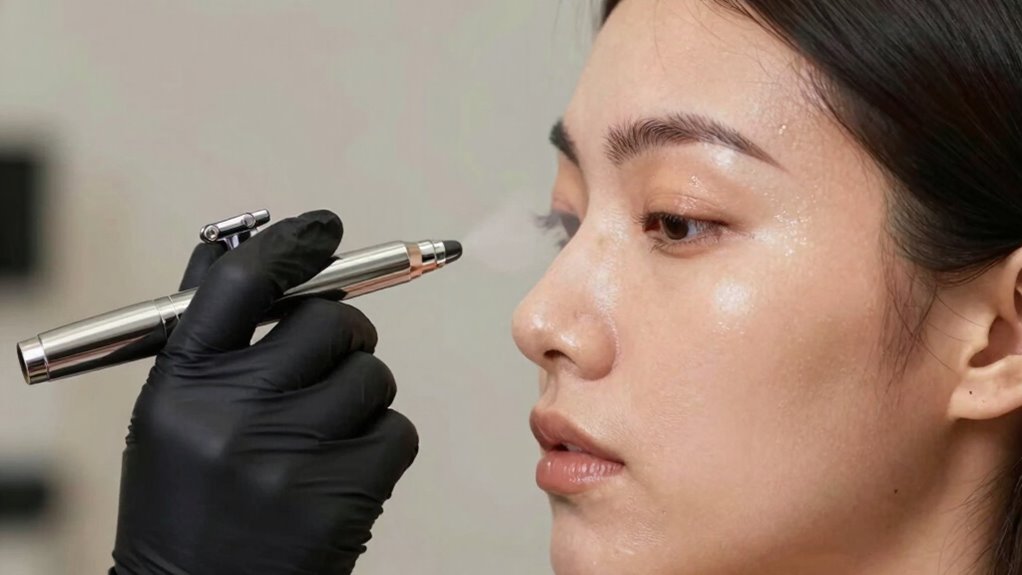
To master airbrush makeup, start with low pressure settings around 10-15 PSI for blush, using smooth, sweeping motions about 6-8 inches from your face for a natural look. For blemishes, increase the pressure to 15-20 PSI and use steady hands with small, controlled strokes. Adjust the pressure based on the product and area to achieve flawless coverage. Keep practicing your technique and pressure control, and you’ll reveal professional results that look seamless and beautiful.
Key Takeaways
- Use low-pressure settings (10-15 PSI) for blush and blending for a natural finish.
- Increase pressure (15-20 PSI) for precise blemish coverage and more pigment.
- Maintain consistent distance (6-8 inches) and steady movements for even application.
- Practice adjusting pressure based on product type and area for optimal results.
- Keep equipment clean and well-maintained to ensure smooth spray and professional outcomes.
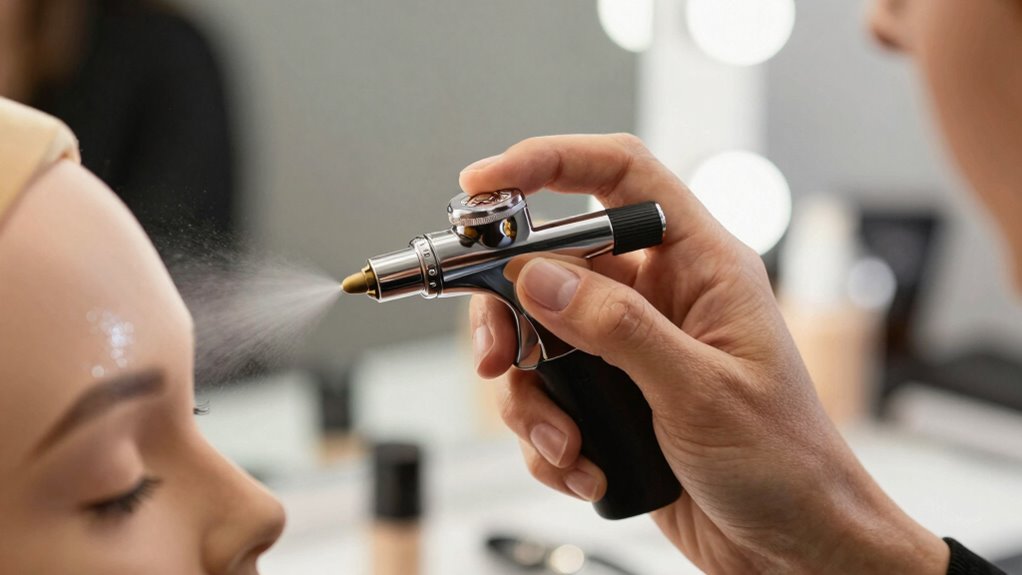
Airbrush makeup has become a popular choice for achieving a flawless, airbrushed finish that looks natural and lasts longer. When you master the right pressure settings and technique, you can create a seamlessly smooth look that enhances your features effortlessly. One of the first things you’ll want to focus on is understanding how to apply blush with an airbrush. Unlike traditional brushes or sponges, airbrush blush application gives you a soft, diffused glow that blends perfectly into your skin. To do this effectively, start with a low-pressure setting, typically around 10-15 PSI, to guarantee the color is light and buildable. Hold the airbrush about 6-8 inches from your face, and use gentle, sweeping motions to direct the blush onto the apples of your cheeks. Keep the movement consistent to avoid uneven spots, and layer in thin coats until you reach your desired flush. This method not only provides a natural look but also allows you to control the intensity, avoiding the risk of over-application that can happen with traditional methods.
When it comes to blemish cover-up, the precision of your pressure setting is vital. You want a slightly higher pressure—around 15-20 PSI—so the pigment atomizes into a fine mist that can target specific imperfections without spreading too much product onto surrounding areas. Use a smaller nozzle or a dedicated detail tip, if available, to get closer to the blemish for maximum coverage. Keep your hand steady and maintain a consistent distance from your skin, moving the airbrush in small, controlled circles or strokes. It’s essential to layer lightly—start with a thin layer, then add more if needed—so the coverage looks natural and not cakey. The key is to blend the edges seamlessly into the surrounding skin, which the airbrush technique excels at, leaving no harsh lines or obvious spots. Additionally, using proper filtration and pump protection can help maintain consistent spray quality and extend your equipment’s lifespan, ensuring your makeup stays flawless each time.
Pressure control is the foundation of all airbrush makeup techniques. Adjust the settings based on the product you’re using and the area you’re working on. Lower pressure is ideal for delicate tasks like blush application and blending, while slightly higher pressure helps in precise blemish cover-up. Practice makes perfect; spend time experimenting with your device to find the ideal spot for each task. Keep your movements smooth, consistent, and deliberate, and you’ll achieve a professional-level finish that enhances your natural beauty. With the right technique and pressure adjustments, airbrush makeup becomes an efficient, customizable tool for a flawless look every time.
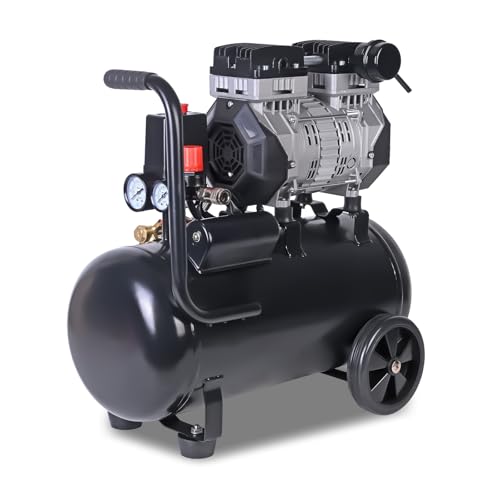
AAIN 6.3 Gallon Air Compressor | 1.5 HP 5.5-6 CFM Displacement Oil-Free Electric Compressor Tank with Max. 116PSI Pressure | 70dB Ultra Quiet for Tire Inflation, Air Blowing, Woodwork Nailing
【High Efficiency & Fast Inflation】A A IN air compressor features a 1.5HP oil-free induction motor and twin-cylinder design,...
As an affiliate, we earn on qualifying purchases.
Frequently Asked Questions
What Types of Airbrush Makeup Are Suitable for Sensitive Skin?
For sensitive skin, you should choose airbrush makeup with hypoallergenic formulas, as they reduce irritation and allergic reactions. These formulas are specially designed to be gentle and suitable for delicate skin types. You’ll want to guarantee a gentle application technique, maintaining a light touch to prevent discomfort. Always patch-test new products first, and opt for brands known for their skin-friendly ingredients to keep your skin comfortable and flawless.
How Long Does Airbrush Makeup Typically Last?
Airbrush makeup typically lasts around 12 to 24 hours, depending on your skin type and application. For ideal makeup longevity, ensure proper prep and setting spray use. Airbrush durability is impressive, providing a lightweight, sweat-resistant finish that stays put throughout your day or night. Keep in mind that oilier skin might need touch-ups, but overall, airbrush makeup offers a long-lasting, flawless look that withstands daily activities.
Can I Customize the Pressure Settings for Different Makeup Effects?
Sure, you can customize the pressure settings for different effects, even if it seems like you’re just turning a knob. Imagine tweaking pressure for a soft, airy glow or a bold, dramatic look—pressure customization allows you to create effect variation effortlessly. With a little practice, you’ll master the art of adjusting your airbrush, making your makeup as versatile as your imagination. Who knew control could be so fun?
What Cleaning Techniques Ensure the Longevity of My Airbrush Equipment?
To guarantee your airbrush equipment lasts, follow proper cleaning procedures after each use. Disassemble the parts and rinse them with a suitable cleaner or water, depending on your makeup type. Use soft brushes for thorough cleaning and avoid harsh chemicals. Regular equipment maintenance, like checking for clogs and lubricating moving parts, keeps your airbrush functioning smoothly and extends its lifespan. Proper care guarantees consistent, flawless makeup application every time.
Are There Specific Tips for Achieving a Natural Finish With Airbrush Makeup?
To achieve a natural finish with airbrush makeup, focus on proper skin preparation and blending techniques. Start by cleansing and moisturizing your skin to create a smooth surface. Use light, even pressure to build coverage gradually, blending seamlessly for a flawless look. Keep the airflow consistent, and avoid over-application in one area. These tips help your makeup look natural, fresh, and effortlessly blended.

California Air Tools 10020C 2.0 HP Ultra Quiet and Oil-Free Air Compressor, 10 Gallon Steel Tank with Wheels, 70 dBA Noise Level
ULTRA QUIET PERFORMANCE: The California Air Tools 2.0 HP Ultra Quiet & Oil-Free Air Compressor operates at only...
As an affiliate, we earn on qualifying purchases.
Conclusion
Now that you understand pressure settings and techniques, you’re ready to perfect your airbrush makeup skills. For example, imagine applying a flawless, natural look for a wedding, blending foundation seamlessly with gentle, controlled sprays. Practice consistently, adjusting your pressure as needed, and you’ll achieve professional results every time. With patience and attention to detail, you’ll turn a simple airbrush into a powerful tool for stunning makeup looks that last all day.

California Air Tools CAT-1P1060S Light & Quiet Portable Air Compressor, Lightweight, Ultra Quiet, Oil-Free, 1 Gallon Steel Tank, .6 HP, 56 dBA Noise Level, Silver
ULTRA QUIET PERFORMANCE: The California Air Tools Light & Quiet Portable Air Compressor operates at only 56 decibels,...
As an affiliate, we earn on qualifying purchases.

Nessxa 8 Gallon Ultra Quiet Air Compressor, 1.5HP 4.52 CFM, Max 115 PSI Oil-Free Air Compressor Tank, 110V/60hz, 70dB Air Compressor for Car Repair, Spray Painting, Woodwork Nailing
8 Gallon Ultra Quiet Air Compressor: This portable air compressor features a lightweight storage tank, handle, and wheels...
As an affiliate, we earn on qualifying purchases.