TL;DR
Speakers at a mining conference in Seville urged Europe to pair its critical-mineral targets with purchase guarantees, public investment and predictable policies. They said permitting changes alone will not build mines or processing capacity, and warned that Europe could remain reliant on foreign processors without broader investment in exploration, technology and skills.
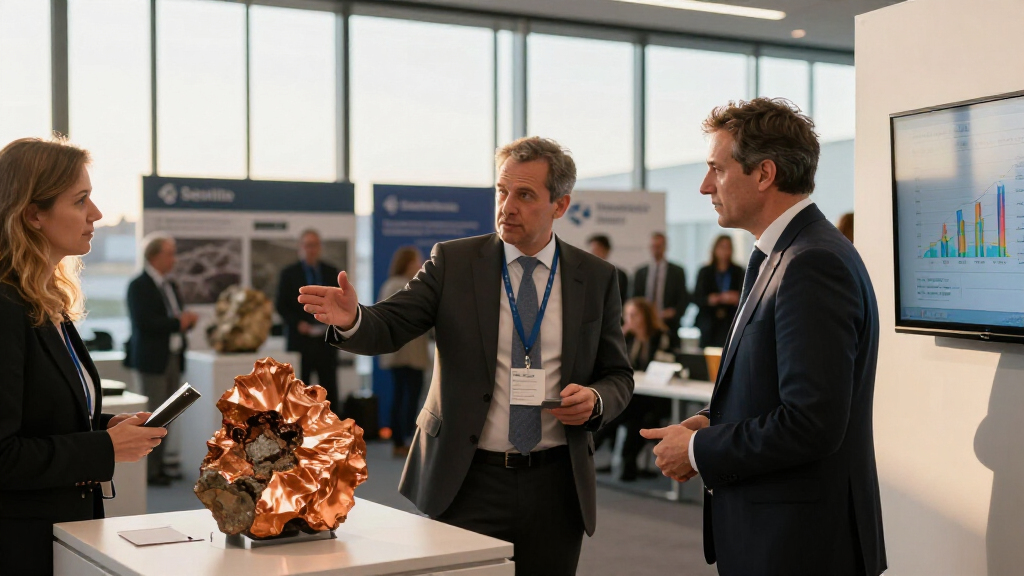
Speakers at the sixth Mining and Minerals Hall in Seville urged European governments on Tuesday to support mining with purchase guarantees, public investment and stable policies, arguing that the measures are needed to turn the European Union’s critical-mineral targets into operating mines and processing plants. Former Spanish foreign minister Ana Palacio said Europe should learn from the United States’ use of tax credits and purchase guarantees to encourage strategic production.
The EU has set 2030 benchmarks to extract the equivalent of at least 10% of its annual consumption of strategic raw materials within the bloc, process 40% and recycle 25%. Conference speakers said meeting those goals will require governments to share investment risks and develop more of the industrial chain, not simply increase extraction. Without processing capacity, more European mining could still leave the region dependent on foreign processors.
Palacio called for longer-term agreements that give companies greater confidence before committing capital. “Mining needs stability, and the problem that we have in Europe is that we don’t guarantee stability,” she said. She pointed to U.S. support tools, including tax credits and purchase guarantees, and argued that Europe should also strengthen its internal market and make its capital markets more attractive to domestic savers.
Mark Rachovides, president emeritus of the European mining association Euromines, said public authorities may need to take on risks that private markets will not. “Sometimes we need to use that dirty word subsidies,” he said, adding that the United States was subsidizing producers for long-term gain. The conference, organized by Spanish metallic mining association Aminer and promoted by Andalusia’s regional government, has 332 exhibitors and about 100 speakers.
Turning EU Targets Into Projects
The policy debate matters because the EU’s targets depend on investment decisions made years before a mine or refinery begins operating. Purchase guarantees and public funding could reduce some commercial risks, while stable rules may help companies judge whether projects can proceed over their long development periods. The speakers’ argument is that targets alone do not provide that certainty.
They also stressed that more extraction will not by itself secure supply chains. If Europe lacks the technology, energy economics and facilities to process minerals, the value and industrial capacity tied to those materials may remain elsewhere. The challenge therefore reaches beyond mining companies to manufacturers, investors and governments seeking more secure access to critical inputs.
As an affiliate, we earn on qualifying purchases.
Europe’s Supply-Chain Measures
The United States has used direct market support in at least one minerals deal cited in the report: MP Materials announced a 10-year price-floor agreement with the U.S. Department of Defense in July 2025 for its neodymium-praseodymium products, alongside an agreement covering magnet purchases from a planned factory. Palacio referred to U.S. policy as a model for European action; the arrangements are not identical to a general European program.
The European Commission’s RESourceEU plan, announced in December, proposed a critical raw materials centre to coordinate investment and secure supplies, as well as joint purchasing and offtake agreements. In Andalusia, regional president Juan Manuel Moreno Bonilla highlighted two projects designated strategic by the Commission: Atlantic Copper’s newly launched CirCular electronics-recycling plant and Cobre Las Cruces’ planned polymetallic development.
Other speakers said the barriers are wider than permit timelines. Spain’s deputy director general for mines, Daniel Torrejón Braojos, noted that projects require years of exploration, engineering and investment. The Commission’s 2023 impact assessment found the EU represented about 2% to 3% of global exploration spending from 2010 to 2022 and identified energy costs as a key influence on where processing and refining occur.
““Sometimes we need to use that dirty word subsidies. That’s what the Americans are doing.””
— Mark Rachovides, president emeritus of Euromines
As an affiliate, we earn on qualifying purchases.
Funding and Delivery Remain Open
The conference statements do not establish that European governments have agreed to adopt the specific subsidies or purchase guarantees advocated by speakers. The Commission’s RESourceEU proposals describe possible tools, but the source material does not provide a timetable, funding commitments or details of which projects would qualify.
It is also unclear how much domestic capacity the proposed measures could deliver or how quickly. Exploration, project engineering and construction take years, while energy costs, processing technology and workforce availability remain constraints cited at the conference. Regional authorities may support research and coordination, but their ability to speed approvals is limited by national and EU rules.
mineral processing plant machinery
As an affiliate, we earn on qualifying purchases.
As an affiliate, we earn on qualifying purchases.
Conference Ends Thursday
The three-day Mining and Minerals Hall continues at Seville’s Fibes conference centre through Thursday. The next test for the proposals raised there will be whether European and national authorities translate existing plans and calls for support into concrete investment, purchasing arrangements and long-term policy commitments. No new funding decision or implementation schedule was announced in the source material.
For project developers, the issues identified by speakers extend from permitting to exploration data, processing capability and access to skilled workers. Whether Europe can build a stronger domestic chain will depend on how those factors are addressed alongside the region’s stated 2030 extraction, processing and recycling benchmarks.
As an affiliate, we earn on qualifying purchases.
Key Questions
What did speakers at the Seville conference call for?
They urged European governments to use purchase guarantees, public investment and stable policies to support mining and processing projects tied to critical minerals.
What are the EU’s 2030 critical-mineral benchmarks?
The EU aims to extract the equivalent of at least 10% of its annual strategic raw-material consumption, process 40% and recycle 25% within the bloc by 2030.
Has Europe adopted the U.S.-style support described by Palacio?
The source reports that the Commission’s RESourceEU plan proposed a critical raw materials centre, joint purchasing and offtake agreements. It does not confirm that Europe has adopted the full set of support measures urged by the speakers.
Why did speakers say faster permits are not enough?
They said projects also need exploration spending, investment, processing technology, competitive energy costs and skilled workers. Mines can take years to mature, so permit changes alone cannot quickly create supply.
When does the Mining and Minerals Hall finish?
The three-day conference in Seville runs through Thursday, according to the report.
Source: rss