
TL;DR

Get your next haul delivered free with Prime
- Fast, free delivery on millions of items
- Prime Video, Amazon Music and more included
- Member-only deals all year
ECB President Christine Lagarde told European Parliament lawmakers that the ECB raised its three key interest rates by 25 basis points earlier in September, citing inflation risks from higher energy prices. She also described AI as a potential source of productivity gains and economic change, while saying its overall macroeconomic effects remain uncertain.
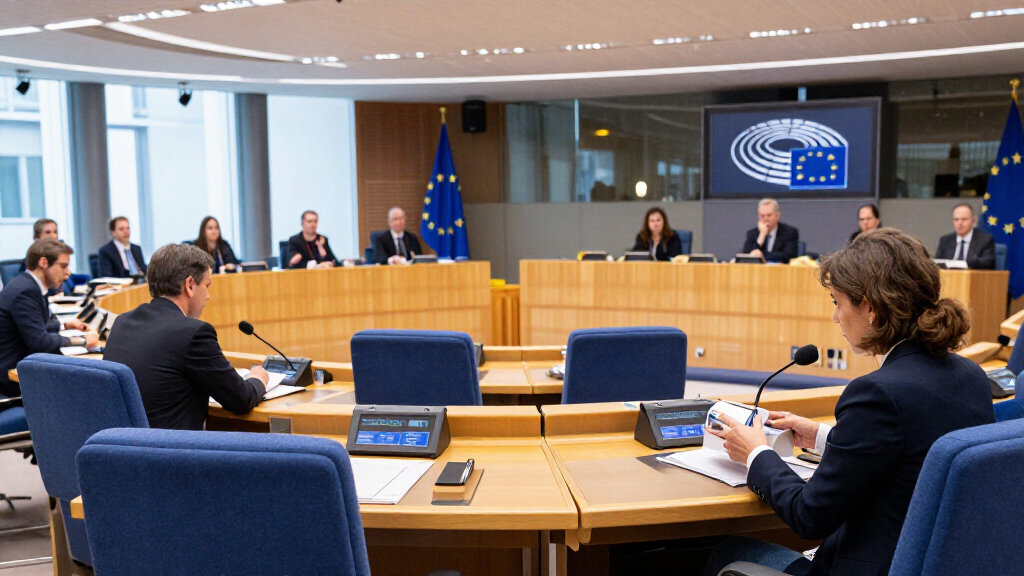
European Central Bank President Christine Lagarde told the European Parliament’s economic affairs committee on 28 September that the ECB had raised its three key interest rates by 25 basis points earlier this month, as energy costs pushed inflation higher. She also said artificial intelligence could affect productivity, investment and labour markets across Europe, with consequences for the economic outlook and monetary policy.
Lagarde said euro area real GDP grew solidly in the second quarter of 2026 despite an energy shock, with growth spread across most countries and sectors. She said that pattern was expected to continue in the third quarter. Manufacturing had support from higher government spending on defence and infrastructure, while recovering consumer confidence was helping services. She also pointed to AI-related activity in digital services, business investment and exports.
The labour market remained robust, she said, with unemployment at 6.4% in July, although employment and labour-force growth were slowing. Inflation rose to 3.2% in August from 2.9% in July, as energy inflation climbed to 14.3%. Inflation excluding energy and food edged down to 2.4%. Compensation per employee grew 3.3% in the second quarter, compared with 3.6% in the first, and Lagarde said wages had not yet shown a material response to the energy shock.
The ECB’s September staff projections put euro area growth at 0.9% in 2026, 1.4% in 2027 and 1.5% in 2028. The same baseline projected headline inflation averaging 3.0%, 2.5% and 2.1% in those years, respectively. Lagarde said the rate decision reflected the risk that higher energy prices could spread into other prices and wages. The ECB had not seen evidence of that process taking hold, she said, but judged a measured response appropriate.
Energy Costs Shape ECB Rate Decision
The rate rise affects the cost of borrowing across the euro area and signals how the ECB is weighing an energy-driven inflation increase against growth. Lagarde said the bank does not respond to energy prices alone; it assesses whether they are becoming embedded in inflation, alongside underlying price trends and how monetary policy affects borrowing costs and economic activity.
That distinction matters for households, businesses and governments making spending and investment decisions. The ECB’s projections show inflation easing over time, but its assessment also points to uncertainty: inflation risks are tilted upward while growth risks are tilted downward. Lagarde said long-term interest rates had risen notably since the prior policy meeting, which could slow growth and reduce the pass-through of energy costs.
AI adds another economic factor for policymakers. Lagarde said firms were expected to devote around 10% of total investment to AI in 2026, and AI-related borrowing already represented roughly a quarter of credit growth to firms. Those figures suggest the technology is becoming economically relevant, though they do not establish what its eventual effect on productivity, prices or employment will be.
The ECB’s Three Policy Criteria
Lagarde described the ECB’s approach to energy shocks through three criteria: the inflation outlook and its risks; underlying inflation, including whether energy costs pass through to other prices and wages; and the transmission of monetary policy to borrowing costs and economic growth. She said the latest decision followed an assessment of all three.
In the September projections, headline inflation was expected to average 3.0% in 2026, then fall to 2.5% in 2027 and 2.1% in 2028. Longer-term inflation expectations, she said, mostly stood around 2%, while shorter-term expectations remained elevated. The projections are a baseline, not a guarantee; Lagarde described the outlook as highly uncertain.
On AI, Lagarde framed the technology as a force that could reshape production, business models and economic structures. The speech excerpt provided for this report ends as she begins to describe the channels through which AI may affect the economy. It does not include her subsequent assessment of those channels.
“We do not react to energy prices, we react if we see risks of higher energy prices becoming embedded in inflation.”
— Christine Lagarde, ECB president
AI Effects and Inflation Risks
It remains unclear how quickly AI will raise productivity, how its benefits and costs will be distributed, or how it may affect employment and inflation. Lagarde called its overall macroeconomic effect uncertain, and the available speech excerpt does not provide her full discussion of AI’s economic channels.
On inflation, the ECB had not yet seen evidence that higher energy prices were feeding into higher wages, according to Lagarde. Whether that changes will depend on incoming data. The outlook also carries opposing risks: inflation could be higher than projected, while economic growth could be weaker.
Incoming Data Will Guide Policy
The ECB’s next policy decisions will depend on its continuing assessment of inflation, underlying price pressures and the effects of monetary policy on borrowing and growth. Lagarde’s remarks did not announce a further rate move or give a timetable for one. The September projections provide the bank’s current baseline, while energy prices, wages and activity remain areas to watch.
Further details on Lagarde’s AI analysis would be needed to assess the specific mechanisms and policy implications she discussed beyond the excerpt available here.
Key Questions
What did Lagarde tell the European Parliament?
She discussed the euro area outlook, the ECB’s recent 25-basis-point rate rise and the possible effects of AI on investment, productivity, labour markets and inflation.
Why did the ECB raise interest rates?
Lagarde said higher energy prices had worsened the inflation outlook. The ECB acted because of the risk that those increases could spread to other prices and wages, while noting it had not yet seen evidence of higher energy prices feeding into wages.
How high was euro area inflation in August 2026?
Headline inflation was 3.2% in August, up from 2.9% in July. Energy inflation was 14.3% in August, while inflation excluding energy and food was 2.4%.
What did Lagarde say about AI’s economic impact?
She said AI could reshape production and business models and could benefit European productivity and competitiveness. She also said its overall macroeconomic effect remains uncertain.
Source: primary
Halloween Picks
halloween
As an affiliate, we earn on qualifying purchases.