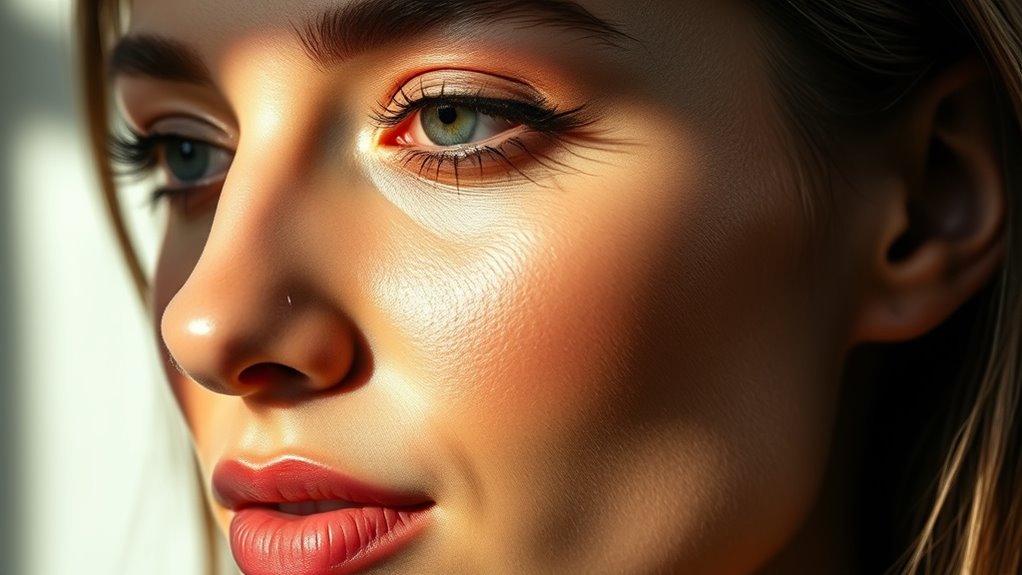

Use contour to create shadows and sculpt your facial features, like your cheekbones and jawline, for a more defined look. Bronzer, on the other hand, adds warmth and a sun-kissed glow, perfect for a natural, radiant appearance. Apply contour with darker shades where you want depth, and use bronzer on areas hit by sunlight. With the right techniques, you’ll achieve a harmonious balance—continue exploring to master how each enhances your beauty even further.
Key Takeaways
- Use contour to sculpt and define facial features with darker shades, especially under cheekbones and jawline.
- Apply bronzer to add warmth and a sun-kissed glow to areas where the sun naturally hits, like cheeks and forehead.
- Contouring creates shadows for depth, while bronzer enhances overall vibrancy and a natural glow.
- Use contour when seeking to sculpt specific features; choose bronzer for a warm, radiant complexion.
- Blend both seamlessly to achieve a harmonious, natural-looking makeup finish.
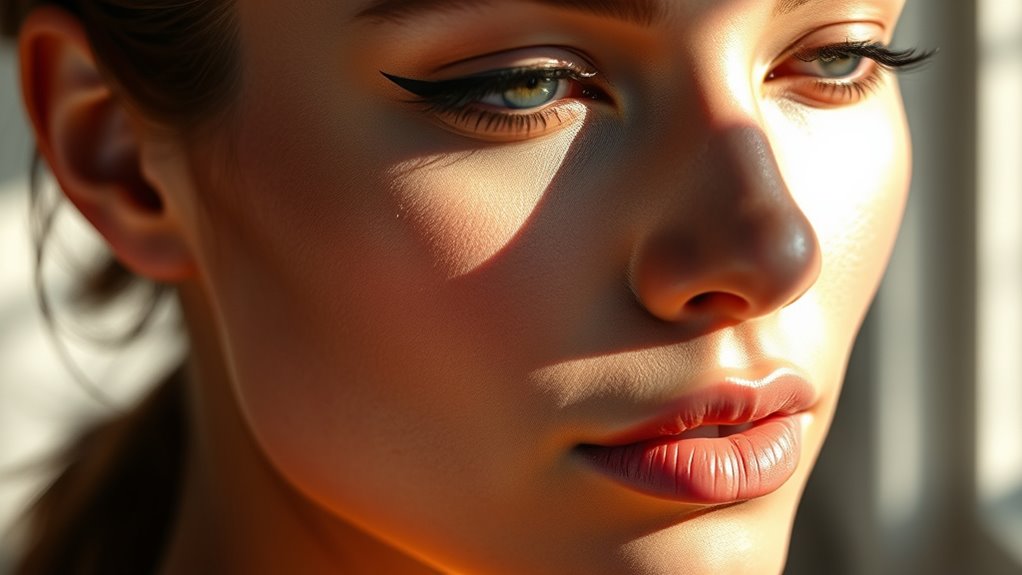
Have you ever wondered what sets contouring apart from bronzing? While both techniques aim to enhance your natural beauty and add dimension to your face, they serve different purposes and are applied differently. Contouring involves using darker shades to create shadows, giving the illusion of more defined cheekbones, a slimmer nose, or a more sculpted jawline. Bronzing, on the other hand, adds warmth and a natural glow, mimicking the effect of a sun-kissed complexion. Understanding when to use each can make a significant difference in your makeup routine.
Contouring creates shadows for definition, while bronzing adds warmth and a sun-kissed glow.
When it comes to highlighting techniques, these are often paired with contouring to accentuate certain features. Highlighters are typically applied to the high points of your face—like the tops of your cheekbones, the bridge of your nose, your brow bones, and the cupid’s bow—to reflect light and create a luminous look. This contrast between the matte contour and the shimmering highlight helps define your face shape and adds a healthy radiance. If you’re aiming for a more natural, dewy appearance, you’ll want to blend your highlighter well and choose shades that complement your skin tone. For a more dramatic effect, you might opt for a more intense highlight on the high points to catch the light under different angles.
Blush application is another essential aspect that ties into the overall look. While contouring sculpts and shapes, blush adds a pop of color that mimics natural flushes, bringing vitality to your face. Applying blush slightly above your cheekbones and blending it upward helps lift your face and soften any harsh lines created by contouring. The right blush shade depends on your skin tone, but soft pinks, peaches, or berry tones generally work well for most complexions. When combined with highlighting techniques, blush can enhance the perceived dimension of your face, making your makeup look more polished and lively.
Knowing when to emphasize highlighting techniques versus when to focus on blush application ensures your makeup enhances your features without looking overdone. Use highlighter strategically to draw attention to your favorite features and create a radiant glow, while blush adds warmth and a natural flush that ties everything together. Additionally, understanding the differences between contouring and bronzing allows you to select the right products and techniques for your desired look. By mastering these elements, you can achieve a balanced, harmonious look suited to any occasion. Whether you want a subtle daytime glow or a more sculpted evening appearance, understanding how to incorporate contour, bronzer, highlighting, and blush helps you craft your perfect makeup style.

Philips Norelco Shaver 3900 Series, Wet and Dry Electric Shaver, P-Cap, Travel Pouch, Charging Stand, Storm Blue, Model S3341/92
SkinProtect Technology: Achieve a clean, gentle shave with 5D pivot contour and AntiCorrosion Shaving System
As an affiliate, we earn on qualifying purchases.
Frequently Asked Questions
Can Contouring Replace Bronzer Completely?
No, contouring can’t replace bronzer completely. While contouring techniques focus on defining and shadowing specific areas for a sculpted look, bronzer application adds warmth and a sun-kissed glow. You might use bronzer for a natural, radiant finish, but contouring is essential for precise dimension. Combining both gives you a balanced, dynamic makeup look, so don’t rely solely on contouring—bronzer still plays a crucial role.
Which Product Lasts Longer on the Skin?
Bronzer generally lasts longer on your skin compared to contour products, thanks to its long-lasting formulas designed for durability. If you’re looking for a product that stays put throughout the day, opt for a bronzer with a matte finish and a waterproof or smudge-proof formula. Contours tend to fade faster, especially if you have oily skin or apply powder, so choose your product based on your desired longevity and finishing look.
Are There Skin Types That Shouldn’t Use Contour or Bronzer?
If you have sensitive skin or are prone to allergic reactions, you should be cautious with contour or bronzer. Some formulas contain fragrances or certain ingredients that might irritate your skin. Always check labels carefully, opt for hypoallergenic or mineral-based products, and do a patch test first. If you notice redness, itching, or irritation, it’s best to avoid these products or consult a dermatologist for safer options.
How Do I Choose the Right Shade for My Skin Tone?
Ever notice how finding the perfect shade feels like that missing piece in a puzzle? To choose the right one, focus on your skin undertones—warm, cool, or neutral. Shade matching is key; if you have warm undertones, go for bronzers with golden or peachy hues. For cool undertones, opt for shades with a hint of red or ash. Test in natural light to guarantee it seamlessly blends with your skin.
Is It Necessary to Use Both Contour and Bronzer Together?
You don’t always need to use both contour and bronzer together. When you want to add warmth and a sun-kissed glow, bronzer is sufficient and easier to blend. If you’re aiming for sculpted features, contouring is key. Product layering helps, but keep it simple—use bronzer for warmth and contour for definition. Experiment to see what enhances your look without overdoing it.
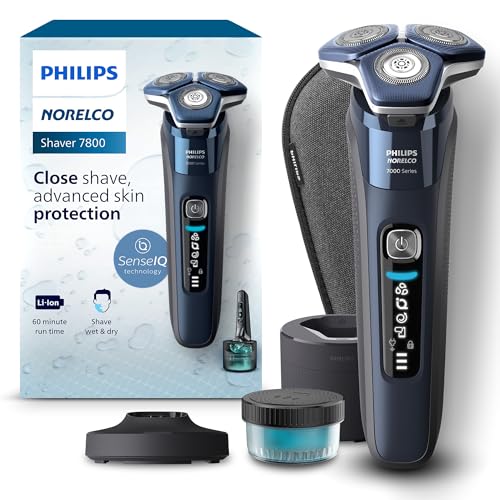
Philips Norelco Shaver 7800, Rechargeable Wet & Dry Electric Shaver with SenseIQ Technology, Quick Clean Pod, Charging Stand, Travel Case and Pop-up Trimmer, S7885/85
Made of up to 250,000 micro-tech beads per square cm, Nano SkinGlide coating improves gliding on skin by...
As an affiliate, we earn on qualifying purchases.
Conclusion
So, now you know the key differences between contour and bronzer. But here’s the exciting part—you’ll soon discover which one truly enhances your unique features. Will you master the art of sculpting shadows or embrace that warm, sun-kissed glow? The choice is yours, and your perfect look is just a brushstroke away. Are you ready to experiment and find out? The beauty world is waiting—dare to explore and create your signature style.

Braun Electric Shaver for Men, Series 5 5150cs, Wet & Dry Razor, Turbo Shaving Mode, Foil Shaver, with Beard Trimmer, Body Groomer and Charging Stand, Blue
World's #1 Foil Shaver Brand. The perfect holiday gift.
As an affiliate, we earn on qualifying purchases.

Philips Norelco Shaver 2400 Series, Wet and Dry Electric Shaver, Pop-up Trimmer, P-Cap, Deep Black, Model X3001/90
From the #1 electric shaver brand¹: Shaver 2400 Series gives you a fast, clean shave even on sensitive...
As an affiliate, we earn on qualifying purchases.