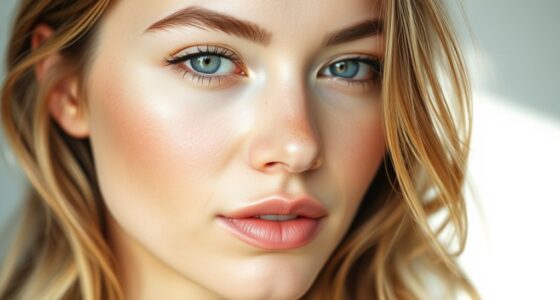
To enhance your natural features, place blush differently based on your face shape. For round faces, apply it above the apples and sweep toward your temples to elongate. If you have an oval face, apply on the apples and blend upward for a soft look. For square or rectangular faces, start above the hollows and blend outward to soften angles. Heart and long faces benefit from specific placements to balance proportions. Keep blending for a seamless finish—learn more about perfecting your blush technique below.
Key Takeaways
- Apply blush slightly above the apples of cheeks for round faces, sweeping diagonally toward temples to elongate the face.
- For oval faces, place blush directly on the apples and blend upward for a natural, soft look.
- Use circular motions to apply blush slightly above hollows for square or rectangular faces, softening angles.
- For heart-shaped faces, apply blush below the apples and sweep outward toward temples to balance a narrow chin.
- For long faces, focus blush on the apples, blending downward to add width and create facial harmony.
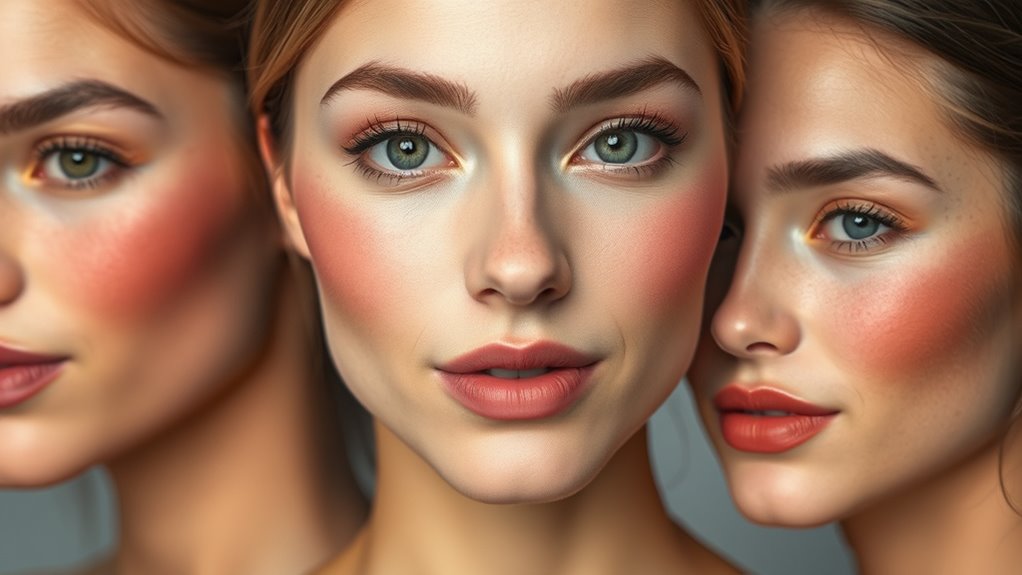
Choosing the right blush placement can dramatically enhance your natural features, but the best technique depends on your face shape. When selecting blush color choices, think about shades that complement your skin tone and bring warmth to your complexion. Soft pinks, peaches, and mauves often work well for fair skin, while deeper berry, terracotta, or brick tones suit medium to dark skin tones. The key is to choose shades that add a natural flush without overpowering your look. Once you’ve picked the right color, focus on blending techniques to achieve a seamless finish that accentuates your face shape. Proper blending is essential to ensure a natural and polished appearance, regardless of face shape.
Select blush shades that complement your skin tone and use blending techniques to enhance your natural features.
For round faces, your goal is to create the illusion of length and structure. Apply blush slightly above the apples of your cheeks and sweep it diagonally toward your temples. This placement elongates your face and lifts your features. Use a fluffy brush to blend the blush outward and upward, avoiding harsh lines. Opt for matte shades or subtle shimmer, depending on your preference, but always blend well to avoid a stark contrast. The blending techniques here are essential; they help soften the transition between blush and skin, making your look appear more natural and polished.
If you have an oval face, you’re in luck because most blush placements work well for you. To enhance your already balanced features, apply blush directly on the apples of your cheeks and blend slightly upward toward your temples. Use a light hand and build up the color gradually, focusing on blending thoroughly to keep your look soft and natural. For face shapes like square or rectangular, aim to soften your jawline by applying blush slightly above the hollows of your cheeks and blending it outward and upward. This technique creates a lifting effect, balancing sharp angles. Remember, blending techniques are essential here; use circular motions to diffuse the color into your skin, avoiding any harsh lines that could emphasize angular features.
Heart-shaped faces benefit from applying blush slightly below the apples of your cheeks and sweeping it outward toward your temples, which balances a narrower chin. For long faces, focus on applying blush on the apples of your cheeks and blending downward slightly, creating the illusion of width. In all cases, blending is your best friend—use a clean brush to softly diffuse the edges of your blush and avoid any streaky or patchy effects. The right blush color choices combined with effective blending techniques can make your face look more harmonious and radiant, highlighting your natural beauty based on your unique face shape.
Frequently Asked Questions
How Can I Adjust Blush Placement for Aging Skin?
To adjust blush placement for aging skin, opt for creamy textures and subtle shades that blend seamlessly. Apply blush slightly higher on the cheekbones to lift your face, avoiding the sagging areas. Use a light hand and build gradually for a natural look. Focus on the apples of your cheeks, then sweep upward towards your temples. This technique enhances your features and gives a youthful, radiant glow.
What Blush Colors Complement Different Face Shapes Best?
You should choose blush colors that enhance your face shape by adding natural warmth and dimension. For round faces, opt for soft peach or rose tones to create a slimming effect. Oval faces look great with warm corals or apricots that highlight your cheekbones. Square faces benefit from mauves or berry shades to soften angles. Always select blush color shades that complement your skin tone, ensuring your face shape is beautifully accentuated.
Can I Use Highlighter With Blush for My Face Shape?
Sure, you can totally use highlighter with blush, even if it sounds like overkill. Just remember, your blush techniques and blush tools matter. Lightly sweep highlighter on the high points of your face—cheekbones, brow bones, and nose bridge—and blend well. The trick is to enhance your natural glow without turning into a disco ball. So, go ahead, experiment, and enjoy a radiant, multi-dimensional look.
How Do I Prevent Blush From Accentuating Facial Asymmetry?
To prevent blush from accentuating facial asymmetry, focus on maintaining blush symmetry. Use a mirror to check that both sides are evenly applied, and subtly adjust if you notice unevenness. Lightly blend the blush to soften any harsh lines, and consider applying slightly more to the less prominent side if needed. This approach helps balance face imbalance visually, creating a harmonious, natural look without emphasizing imperfections.
Is It Better to Apply Blush Before or After Foundation?
You should apply blush after foundation layering. This approach allows you to see your true skin tone and blend blush seamlessly for a natural look. Applying blush first can interfere with the foundation application, causing uneven blending or shifting the blush. By layering foundation first, then adding blush, you guarantee a smooth, balanced finish that enhances your facial features without disrupting your makeup.
Conclusion
No matter your face shape, mastering the right blush placement can truly enhance your natural beauty. Did you know that 75% of people feel more confident when they highlight their best features? By choosing the right technique for your face shape, you’ll boost your confidence and create a more balanced, radiant look. So, experiment with these tips and find the blush placement that makes you feel your most beautiful every day.