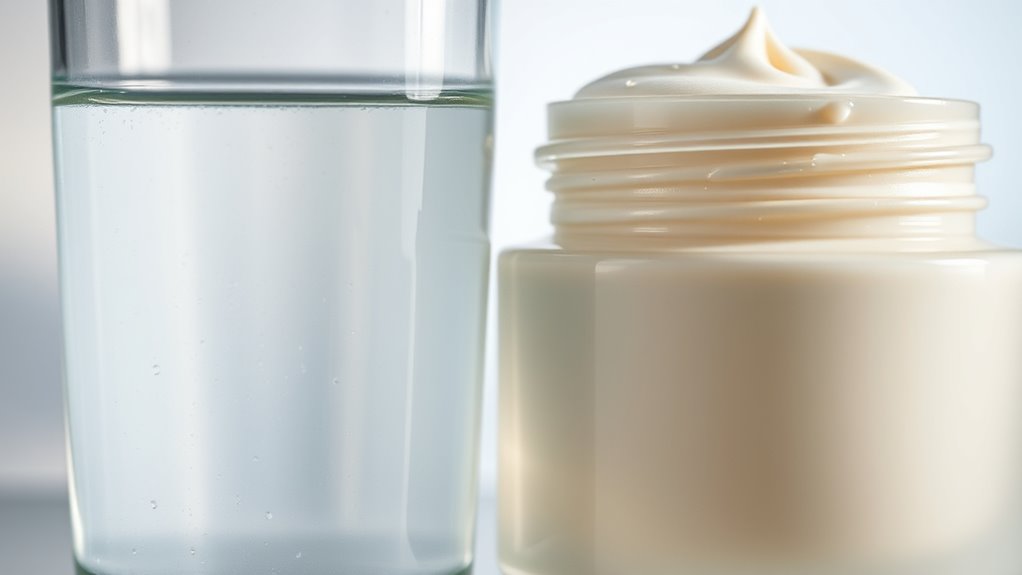

Hydration and moisturization both keep your skin healthy, but they serve distinct roles. Hydration involves increasing water content in your skin cells, making your skin look plump and dewy. Moisturization seals in that water with barrier-forming ingredients like occlusives and emollients, keeping your skin soft and smooth. To achieve the best results, you should address both issues together. Want to discover how to optimize your skincare routine? Keep exploring to find out more.

Get your next haul delivered free with Prime
- Fast, free delivery on millions of items
- Prime Video, Amazon Music and more included
- Member-only deals all year
Key Takeaways
- Hydration increases water content in skin cells, giving a plump, dewy look; moisturization seals in water and prevents loss.
- Hydration addresses water deficiency within the skin, while moisturization creates a barrier to stop moisture from escaping.
- Hydrating products contain water-attracting ingredients like hyaluronic acid; moisturizers include occlusive agents and emollients.
- Hydration makes skin appear vibrant and fresh; moisturization maintains softness, elasticity, and overall skin health.
- Both are essential and should be combined for optimal skin hydration, as they serve distinct but complementary roles.
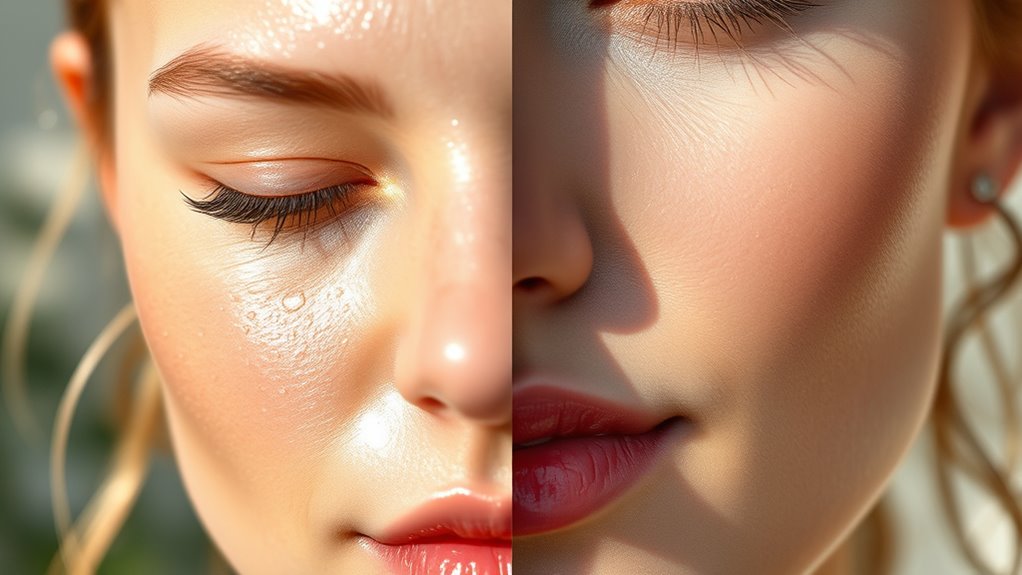
Have you ever wondered what truly makes your skin healthy and glowing: hydration or moisturization? Understanding the difference can considerably improve your skincare routine. According to dermatologist recommendations, maintaining a balance between these two is essential for achieving radiant, healthy skin. While they’re closely related, hydration and moisturization serve distinct purposes. Hydration involves increasing the water content in your skin cells, making your skin look plump, fresh, and dewy. Moisturization, on the other hand, aims to seal in that water and prevent moisture loss, creating a protective barrier on your skin’s surface.
When your skin is dehydrated, it often feels tight, looks dull, and may even become flaky. This condition arises when your skin lacks sufficient water, which can happen due to factors like weather, harsh skincare products, or internal issues such as dehydration. To combat this, dermatologist-recommended hydration strategies include drinking plenty of water, using water-based serums, and incorporating ingredients like hyaluronic acid that attract moisture into your skin. Natural remedies can also help boost hydration; for example, applying cucumber slices or aloe vera gel can provide cooling, water-rich benefits that soothe and hydrate your skin naturally.
Moisturization, on the other hand, is about locking in the hydration you already have. It involves applying creams or ointments that contain occlusive agents like petrolatum or emollients such as shea butter and ceramides. These ingredients create a barrier that prevents water from escaping, especially in dry or cold environments. Even if your skin isn’t visibly dry, using a moisturizer can help maintain its suppleness and prevent future dehydration. Dermatologists often recommend using a moisturizer suited to your skin type—lightweight gels for oily skin, richer creams for dry skin—and applying it immediately after cleansing to maximize absorption.
It’s important to recognize that hydration and moisturization work best together. If you focus solely on moisturizing, your skin might feel soft but still lack the water it needs, leading to a dull appearance over time. Conversely, over-hydrating without adequate sealing can leave your skin vulnerable to moisture loss. Combining water-based products with occlusive moisturizers creates a balanced approach. Natural remedies, like honey masks or coconut oil, can complement your routine by providing both hydration and barrier protection, making your skin look healthier and more radiant. Additionally, understanding the energetic connection between your skin health and overall well-being can further enhance your skincare practices.
Ultimately, understanding these differences helps you tailor your skincare to your individual needs. Listening to your skin’s signals and incorporating dermatologist-approved tips and natural remedies will ensure your skin remains well-hydrated, protected, and glowing.
hyaluronic acid serum for hydration
As an affiliate, we earn on qualifying purchases.
As an affiliate, we earn on qualifying purchases.
Frequently Asked Questions
Can Hydration and Moisturization Be Achieved With the Same Products?
Yes, you can achieve both hydration and moisturization with some products, especially those with ingredient overlap designed for dual action. Look for products that balance humectants like glycerin or hyaluronic acid with occlusives like petrolatum or oils. Check product compatibility to guarantee they suit your skin type and avoid conflicting ingredients. Using the right combination helps your skin stay plump, soft, and well-hydrated while maintaining a protective barrier.
How Do Climate Changes Affect Hydration and Moisturization Needs?
Climate changes can cause considerable confusion in your skincare routine. As temperatures shift, you’ll want to make seasonal adjustments to your hydration and moisturization needs. Cold, dry air demands more moisture to prevent dehydration, while hot, humid weather calls for lighter products to keep skin balanced. Climate impact affects how your skin absorbs and retains moisture, so stay attentive to changing conditions and adapt your skincare accordingly to maintain healthy, happy skin.
Are There Specific Ingredients That Target Only Hydration or Moisturization?
Yes, certain serum ingredients target hydration specifically, like hyaluronic acid and glycerin, which draw water into your skin. Moisturizer components such as ceramides, shea butter, and oils help lock in moisture and strengthen your skin barrier. You should choose products with these ingredients based on your skin’s needs. For ideal results, combine hydrating serums with nourishing moisturizers to maintain balanced, healthy skin.
How Often Should I Switch My Skincare Routine for Optimal Hydration and Moisturization?
You should adjust your skincare routine seasonally, about every few months, to maintain radiant skin. As seasons change, incorporate lighter products in summer and richer ones in winter, focusing on product layering for ideal hydration and moisturization. Pay attention to how your skin feels; if it’s dull or tight, it’s time to switch things up. Listen to your skin’s needs and adapt your routine to keep it glowing year-round.
Do Different Skin Types Require Different Hydration and Moisturization Strategies?
Yes, your skin type influences your hydration and moisturization strategies. For example, oily skin needs lightweight, non-comedogenic products, while dry skin benefits from richer creams. Consider skin type considerations and product compatibility to select the right formulas. You should tailor your routine accordingly, using hydrating products that replenish moisture for dry skin, and balancing oil production for oily skin. Regular adjustments ensure your skin stays healthy and comfortable.
occlusive moisturizer for dry skin
As an affiliate, we earn on qualifying purchases.
As an affiliate, we earn on qualifying purchases.
Conclusion
Understanding hydration and moisturization helps you care for your skin better. While hydration floods your skin with water, giving it a plump, dewy look, moisturization locks in that water, creating a barrier against dryness. Think of hydration as a invigorating drink and moisturization as sealing that drink in a bottle. Both are essential; neglect one, and your skin might feel either too parched or greasy. Mastering the balance keeps your skin healthy and radiant.
As an affiliate, we earn on qualifying purchases.
ceramide moisturizer for sensitive skin
As an affiliate, we earn on qualifying purchases.
As an affiliate, we earn on qualifying purchases.
Halloween Picks
halloween
As an affiliate, we earn on qualifying purchases.