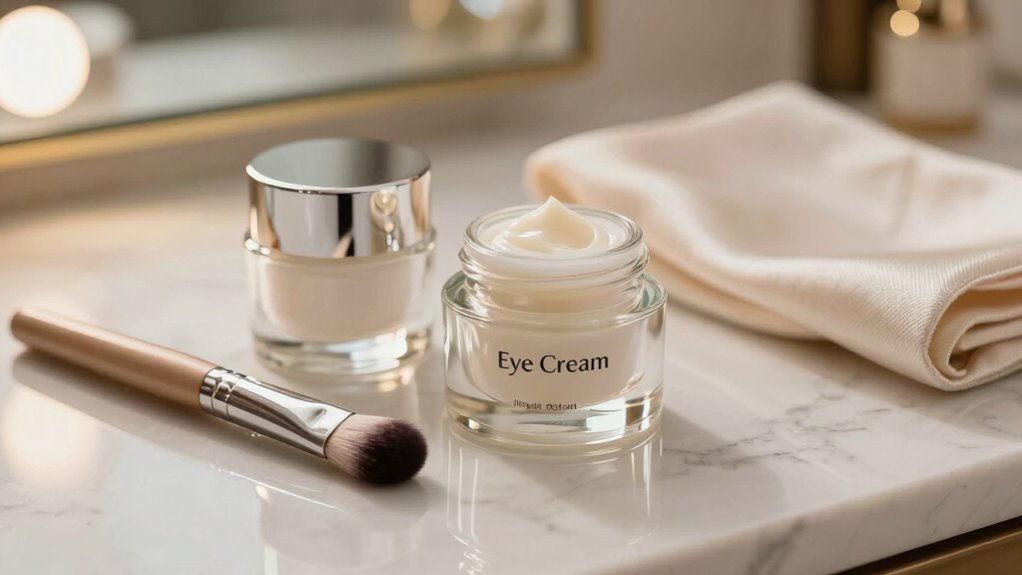

Many eye creams promise quick results, but their true effectiveness depends on ingredients and proper use, not hype. Ingredients like caffeine can reduce puffiness temporarily, while vitamin C may brighten dark circles over time. However, moisturizers alone can improve dryness and fine lines but won’t tackle pigmentation or genetic circles. If you want to see real benefits, focus on proven ingredients and correct application. Keep going to discover when eye creams really work and when they’re just moisturizers.
Key Takeaways
- Not all eye creams contain proven ingredients; some are just moisturizers offering temporary hydration.
- Caffeine in eye creams can reduce puffiness temporarily but doesn’t eliminate underlying causes.
- Long-term dark circle reduction requires consistent use of ingredients like Vitamin C, not just moisturizing.
- Proper application techniques enhance effectiveness; excessive product or rubbing can cause irritation.
- Be cautious of false promises—eye creams cannot deliver overnight miracles or permanently erase dark circles.

Many people believe that eye creams can instantly erase dark circles and puffiness, but these claims are often exaggerated or misleading. While some products may offer temporary improvements, understanding the ingredient effectiveness is key to setting realistic expectations. Not all eye creams are created equal, and their success largely depends on the ingredients they contain. For example, ingredients like caffeine can temporarily reduce puffiness by constricting blood vessels, while vitamin C can brighten the skin and diminish dark circles over time. However, if a product relies on moisturizing ingredients alone, such as shea butter or hyaluronic acid, it might improve hydration but won’t target the underlying causes of dark circles or swelling. Knowing what ingredients to look for helps you choose products that truly support your skin’s needs rather than just providing fleeting relief.
Application techniques also play a paramount role in how effective your eye cream is. Many people make the mistake of applying too much product or using the wrong method, which can lead to waste or even irritation. To maximize benefits, gently tap a small amount of cream around your orbital bone using your ring finger, which applies the least pressure and minimizes potential damage to delicate skin. Always use your ring finger because it naturally exerts less force, ensuring you don’t pull or stretch the skin unnecessarily. Applying too much product can clog pores or cause puffiness, especially if the ingredients are heavy or occlusive. Also, patting rather than rubbing helps the absorption process and stimulates circulation, potentially aiding in reducing puffiness and improving skin tone over time. Incorporating visual and auditory cues can further enhance the effectiveness of your routine by engaging multiple senses and reinforcing proper application techniques.
While some eye creams claim to produce dramatic, overnight results, you should remain cautious. Consistency and patience are indispensable, especially if you’re targeting dark circles caused by genetics or pigmentation issues. Incorporate eye creams into your daily routine, applying them correctly and choosing formulations with proven ingredients. Remember that moisturization alone can improve the appearance of fine lines and dryness but won’t necessarily eliminate persistent dark circles or swelling caused by factors like allergies, fatigue, or genetics. Be skeptical of products that promise instant miracles, and instead focus on those formulated with proven ingredients and proper application techniques. Ultimately, understanding what your eye cream can realistically do helps you avoid disappointment and guarantees you use it effectively as part of a holistic skincare routine.
Frequently Asked Questions
Can Eye Creams Prevent Wrinkles Before They Appear?
Yes, eye creams can help prevent wrinkles if you use them as part of your preventative skincare routine. Early intervention is key; applying eye cream daily can hydrate and protect delicate skin around your eyes, reducing the likelihood of fine lines developing. Look for ingredients like peptides and antioxidants. While eye creams aren’t magic, consistent use supports your efforts to maintain youthful skin and delay wrinkle formation.
Are Natural Ingredients More Effective Than Chemical Ones?
You might think natural ingredients always beat chemical ones, but the truth is, ingredient efficacy varies more than labels suggest. Natural ingredients can be potent, but some chemicals are scientifically proven to deliver targeted results faster. Don’t fall for the myth that all natural is better—it’s about what works best for your skin. Sometimes, a well-formulated chemical ingredient can outperform natural counterparts, making it worth considering both options.
How Often Should I Apply Eye Cream for Best Results?
You should apply eye cream twice daily, once in the morning and once at night, for the best results. Focus on the ideal timing by gently tapping the cream around your eyes after cleansing and before applying moisturizer. Consistent application helps improve hydration and reduces signs of aging. Be gentle and avoid overdoing it, as excess application can cause irritation. Regular use maximizes benefits and keeps your eye area looking refreshed.
Do Eye Creams Work Equally for All Skin Types?
Do eye creams work equally for all skin types? Not really. Your skin sensitivity and ingredient compatibility play big roles. If you have sensitive skin, look for gentle formulas free from irritants. Those with specific concerns like puffiness or dark circles might need targeted ingredients. Always choose an eye cream suited to your skin type and test new products first. Isn’t it worth finding what truly works best for your unique skin?
Is It Necessary to Use Special Eye Makeup Remover?
You should use a special eye makeup remover to protect your delicate skin. Dual phase removers work well because they combine water-based and oil-based formulas, effectively removing stubborn makeup without harsh rubbing. Oil-based formulas are especially good at dissolving waterproof mascara and eyeliner. Regular facial cleansers might be too harsh or leave residue, so choosing a gentle, eye-specific remover helps prevent irritation and keeps your eye area healthy.
Conclusion
Ultimately, choosing an eye cream is like tending a delicate garden—you must understand the truth beneath the surface. Don’t let myths shade your judgment; instead, nurture your skin with knowledge and patience. Remember, not every droplet holds magic, just as not every storm leaves destruction. Trust in what genuinely benefits your eyes, and you’ll find clarity blooming amid the shadows, revealing a radiant, confident you—blooming quietly, yet profoundly, like dawn’s first light.