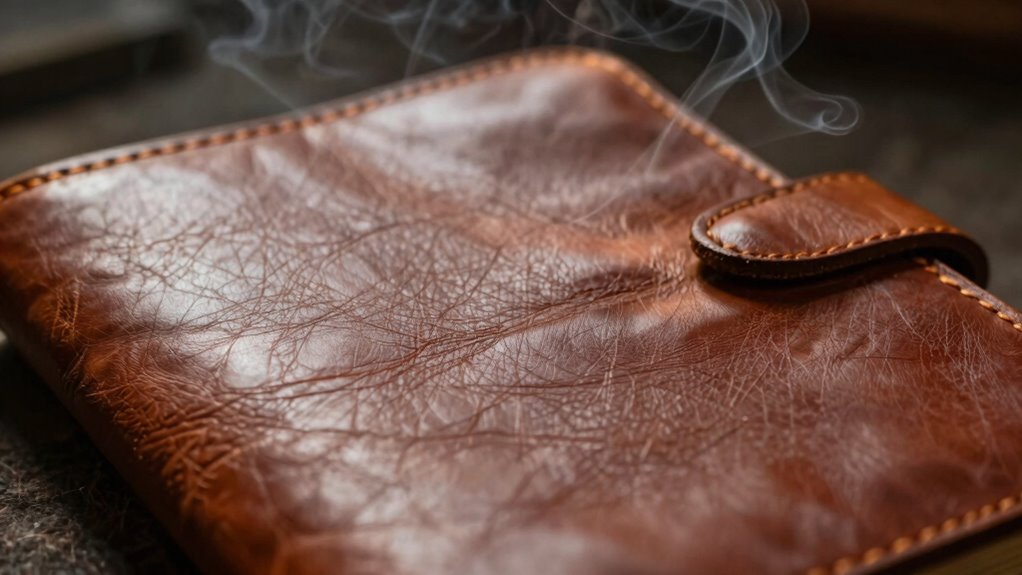

Leather notes can smell soft, smoky, or sharp because of the complex ingredients and aging processes used in crafting scents. Smoky accords evoke smoldering fires, while velvety notes add softness and richness. Sharp aromas come from aldehydes or certain raw materials. As leather ages, its scent deepens and changes, becoming more refined or rugged over time. This variability makes leather scents dynamic and inspiring—if you’re curious about how these transformations happen, there’s more to discover.

Get your next haul delivered free with Prime
- Fast, free delivery on millions of items
- Prime Video, Amazon Music and more included
- Member-only deals all year
Key Takeaways
- Leather scents vary based on ingredients like smoky resins, woody notes, and aldehydes, creating different profiles.
- Aging process chemically transforms leather, making its aroma softer, richer, or more intense over time.
- The interaction of scent components influences whether leather smells warm, sharp, or smoky.
- Skin chemistry and environment affect how leather notes develop and are perceived on individual wearers.
- Perfumers manipulate ingredients and aging to craft leather scents that are soft, smoky, or sharp.
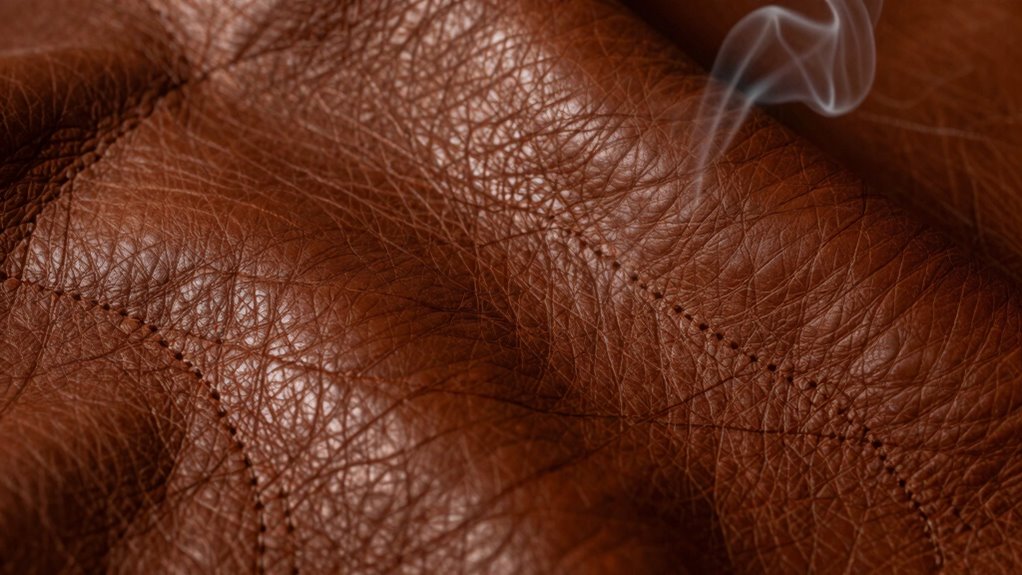
Leather notes in fragrances can evoke a range of scents, from soft and smooth to smoky or sharp, because of the complex ingredients and processes involved in their creation. When you encounter a leather scent, you’re actually experiencing a carefully crafted blend that has undergone a detailed scent development process. The way leather ages plays a significant role in shaping its aroma, influencing whether it smells warm and mellow or bold and intense. As leather matures, it undergoes chemical changes that deepen its character, often resulting in a softer, more refined scent. This aging process allows perfumers to create leather accords that feel smooth and inviting, or alternatively, more rugged and striking, depending on the desired outcome.
Leather notes evolve over time, shifting from soft and refined to bold and rugged through complex aging and scent development.
The scent development of leather fragrances involves more than just the raw materials; it’s about how those materials interact over time. During production, perfumers select specific ingredients—like smoky resins, woody notes, or sharp aldehydes—to complement the natural scent of leather. When these elements combine, they can produce a scent profile that leans toward warmth and softness, or one that is more piercing and edgy. For example, the addition of smoky accords can give leather a rugged, almost charred quality, evoking images of smoldering fires or well-worn saddle leather. On the other hand, softer, more velvety leather notes emerge when the scent development emphasizes smooth, milky facets, which can evoke the feeling of supple, well-conditioned leather.
The perception of leather scent is also influenced by the way it interacts with your skin chemistry and the environment. Over time, as the fragrance develops on your skin, the initial sharpness may mellow into a more rounded and harmonious aroma. Conversely, certain leather accords retain their sharpness if combined with bright, citrusy or spicy elements that highlight their boldness. The key lies in how the perfumer balances these components during scent development and how the leather ages within the fragrance’s lifespan. Additionally, understanding the chemical changes involved in leather aging can help enthusiasts appreciate the nuanced differences in scent profiles. Furthermore, the oxidation process plays a crucial role in transforming the scent over time, adding depth and complexity to the fragrance. This process can sometimes amplify the smoky or sharp qualities, depending on the ingredients used.
Ultimately, whether leather smells soft, smoky, or sharp depends on how it’s crafted and how it evolves. The process of leather aging and scent development allows perfumers to manipulate the fragrance’s character, creating a spectrum of sensations that can be both comforting and daring. This complexity is what makes leather notes so fascinating—they’re never static, always shifting, and capable of evoking different feelings based on their composition and how they mature over time.
As an affiliate, we earn on qualifying purchases.
Frequently Asked Questions
How Long Do Leather Notes Typically Last in a Fragrance?
Leather notes in a fragrance usually last from a few hours up to a day, depending on leather aging and the fragrance’s composition. You’ll notice that as the scent evolves, the leather becomes softer or sharper, influenced by fragrance blending. Over time, the initial intensity fades, revealing subtler nuances. To enjoy the leather aroma longer, consider layering or choosing formulations with lasting base notes.
Can Weather Affect the Smell of Leather Notes?
Think of leather notes like a campfire—weather can change their aroma dramatically. Environmental factors, such as humidity or temperature, influence scent longevity and how leather smells. On a hot day, leather might smell sharper and more intense, while in cooler weather, it may seem softer or smoky. So, yes, weather directly impacts the way leather notes develop and linger in your fragrance.
Are Synthetic Leather Notes Different From Natural Leather Notes?
Synthetic leather notes differ from natural leather notes primarily in their composition. You’ll find that synthetic leather offers an artificial aroma, often more uniform and less nuanced than natural leather’s rich, organic scent. While natural leather develops complex, smoky, or soft notes over time, synthetic options tend to have a more consistent, sometimes sharper smell. This distinction influences how you perceive and enjoy fragrances containing either type of leather note.
How Do Leather Notes Interact With Other Fragrance Components?
Think of leather notes as a seasoned storyteller; they interact dynamically with other fragrance components, creating rich scent layering. As leather ages, it can deepen or soften, blending seamlessly with spices, woods, or florals. This interaction influences the overall aroma, making it more complex and nuanced. You’ll notice how leather’s smoky or sharp qualities can highlight or mellow other notes, shaping the fragrance’s unique personality.
What Techniques Are Used to Enhance Leather Scent in Perfumes?
To enhance the leather scent in perfumes, perfumers often use techniques like leather aging, which develops richer, more authentic notes over time, and fragrance layering, where leather is combined with complementary scents such as smoky or woody notes. These methods deepen the leather aroma, making it more complex and appealing. You can experiment with layering different scents or allowing the perfume to age, which brings out the full, nuanced leather character.
As an affiliate, we earn on qualifying purchases.
Conclusion
Just like a well-worn novel carries its unique scent, leather’s aroma tells a story of its origins and aging. Whether soft as a whisper, smoky as a cozy fire, or sharp as a gust of winter air, each note reveals its character, inviting you to explore its layers. Remember, the essence of leather is like a good mystery—complex and ever-changing, waiting for you to uncover its depth with every sniff.
As an affiliate, we earn on qualifying purchases.
As an affiliate, we earn on qualifying purchases.
Halloween Picks
halloween
As an affiliate, we earn on qualifying purchases.