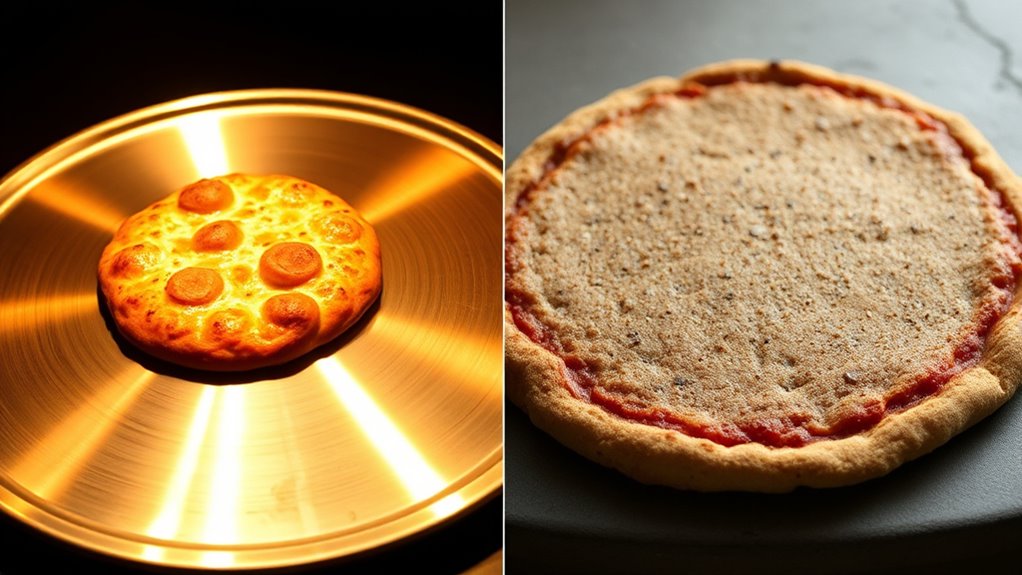

If you want a crispy crust, a pizza steel is your best bet because it heats faster, reaches higher temperatures, and transfers heat quickly for that perfect crunch. A stone takes longer to preheat but offers more even heat distribution, helping you bake more consistently. Both can produce great results, but understanding their heat properties can help you choose the right tool based on your baking style. Keep going to discover how to optimize each for perfect pizza every time.
Key Takeaways
- Steel heats faster and reaches higher temperatures more efficiently than stones, promoting quicker crisping and browning.
- Preheat steel for at least 45 minutes to maximize heat transfer, essential for achieving a crispy crust.
- Steel’s rapid heat response allows better control over baking time and crust texture compared to the slower-heating stone.
- Stones provide even heat distribution once properly preheated, ensuring uniform crust baking.
- High dough hydration (65-70%) enhances crust crispiness, especially when baked on preheated steel at over 500°F.
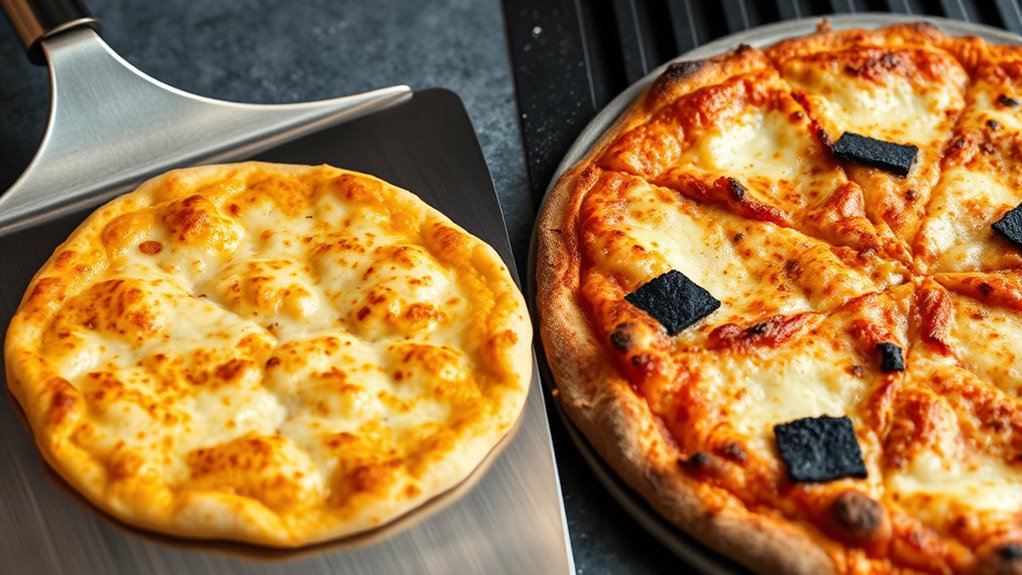
Are you wondering whether a pizza steel or a pizza stone is better for achieving that perfect crispy crust? The answer largely depends on how you manage your dough hydration and baking temperature. When aiming for a crisp, evenly baked crust, these factors play a vital role. Dough hydration, which refers to the amount of water in your dough, affects how well it responds to high heat. A dough with higher hydration tends to produce a lighter, airier crust with a beautiful crunch, especially when baked on a hot surface. Conversely, lower hydration doughs are denser and may require more precise temperature control to avoid a soggy or uneven crust.
Baking temperature is equally critical. Both pizza steels and stones excel at conducting heat, but their performance varies depending on how hot your oven gets. Pizza steels typically heat up faster and reach higher temperatures more efficiently because of their metal composition, often allowing you to preheat them to over 500°F. This rapid heat transfer is ideal for creating that signature crispy bottom, especially when your dough has been properly hydrated. On the other hand, pizza stones, made from ceramic or cordierite, absorb heat more slowly and may require longer preheating times to reach suitable temperatures. Once heated, they distribute heat evenly, which is beneficial for consistent crust baking.
Pizza steels heat faster and reach higher temps than stones, ensuring a crispy crust with proper hydration.
To maximize the benefits of either surface, you should pay close attention to your dough hydration level. A higher hydration dough, around 65-70%, responds better to intense heat, resulting in a crisper crust without becoming overly dry or tough. When baking at high temperatures, it’s essential to preheat your steel or stone thoroughly—at least 45 minutes—to ensure the surface is hot enough to instantly vaporize moisture in the dough and promote proper browning. Using a baking surface at the right temperature, coupled with well-hydrated dough, helps you achieve that perfect balance of a crispy exterior and tender interior. Additionally, proper oven maintenance can influence heat consistency and baking results.
In essence, whether you choose a pizza steel or stone, understanding how dough hydration interacts with baking temperature will guide you toward better results. A well-hydrated dough baked on a preheated, high-temperature surface creates that irresistible, crispy crust everyone loves. Both tools work best when you adapt your dough and oven settings accordingly. With patience and experimentation, you’ll discover the ideal combination to make bakery-quality pizza right at home.
pizza steel for crispy crust
As an affiliate, we earn on qualifying purchases.
As an affiliate, we earn on qualifying purchases.
Frequently Asked Questions
How Does Cleaning Differ Between Pizza Steel and Stone?
Cleaning techniques differ between pizza steel and stone. With a pizza steel, you can scrub off residue with a brush or scraper, then wipe it with a damp cloth. For a stone, avoid soap and water; instead, use a stiff brush or spatula to remove residue, letting it cool first. You should dry both thoroughly to prevent rust or cracking, ensuring they stay in good condition for your next pizza.
Which Material Is More Durable Over Time?
You’ll find that pizza steel generally offers greater material longevity and wear resistance over time. Its sturdy metal construction withstands frequent use and high temperatures better than stone, which can crack or chip with time. Steel’s durability means it maintains its performance longer, making it a smart choice if you want a resilient surface that won’t degrade quickly. So, for lasting durability, pizza steel tends to be the more reliable option.
Can Pizza Steel or Stone Be Used on Outdoor Grills?
Ever wondered if you can use pizza steel or stone on outdoor grills? The answer is yes, but with some considerations. Pizza steel is highly durable and conducts heat well, making it suitable for outdoor grilling if your grill can handle high temperatures. Pizza stones are also compatible but need careful handling to avoid cracking. Always check your grill’s material compatibility and avoid direct flame contact to keep your pizza perfect.
Is There a Difference in Weight Between the Two?
You’ll find that pizza steel generally weighs more than a stone due to its higher material density, making it sturdier but also heavier to handle. The weight comparison shows steel’s density gives it a solid, substantial feel, while stones are lighter and easier to maneuver. If you prefer a lighter option, a stone might suit you better, but if durability and heat conduction matter most, steel’s weight is an advantage.
How Long Does Each Take to Reach Optimal Temperature?
You’ll find that a pizza steel heats up faster, typically reaching ideal temperature in about 20-30 minutes, thanks to its high thermal conductivity. A stone takes longer, around 30-45 minutes, because it retains heat more effectively but heats more slowly. The steel’s superior heat transfer helps you achieve a crisp crust quickly, while the stone’s better heat retention ensures consistent heat for a more evenly cooked pizza.
pizza stone for even baking
As an affiliate, we earn on qualifying purchases.
As an affiliate, we earn on qualifying purchases.
Conclusion
When choosing between a pizza steel and stone, remember that steels heat up to 30% faster, giving you a crispier crust in less time. Did you know that nearly 70% of home bakers report better crusts with steels? If you want quick, evenly cooked pizza with that perfect crunch, a steel might be your best bet. Whichever you pick, both tools can help you elevate your homemade pizza game to professional levels.
high temperature pizza steel
As an affiliate, we earn on qualifying purchases.
As an affiliate, we earn on qualifying purchases.
ceramic pizza stone
As an affiliate, we earn on qualifying purchases.
As an affiliate, we earn on qualifying purchases.