
Microplane graters are versatile tools that let you effortlessly zest citrus, grate hard cheeses, and garnish dishes with precision. Their sharp blades glide through ingredients easily, making prep quicker and cleaner. With ergonomic handles, you get better control, and proper cleaning keeps them sharp and effective over time. Storing them carefully guarantees longevity and peak performance. If you’d like more tips on using and maintaining your Microplane, you’ll find helpful details to enhance your kitchen skills.
Key Takeaways
- Microplane graters excel at zesting citrus fruits for vibrant garnishes and flavor enhancement.
- Their sharp blades effortlessly grate hard cheeses like Parmesan for topping dishes.
- Microplane graters provide quick, clean shredding of spices such as nutmeg for recipes and drinks.
- They are ideal for garnishing desserts, salads, and drinks with fine, decorative zest and shavings.
- Easy to clean and store, Microplane graters ensure precise, mess-free results for zesting, grating, and garnishing.
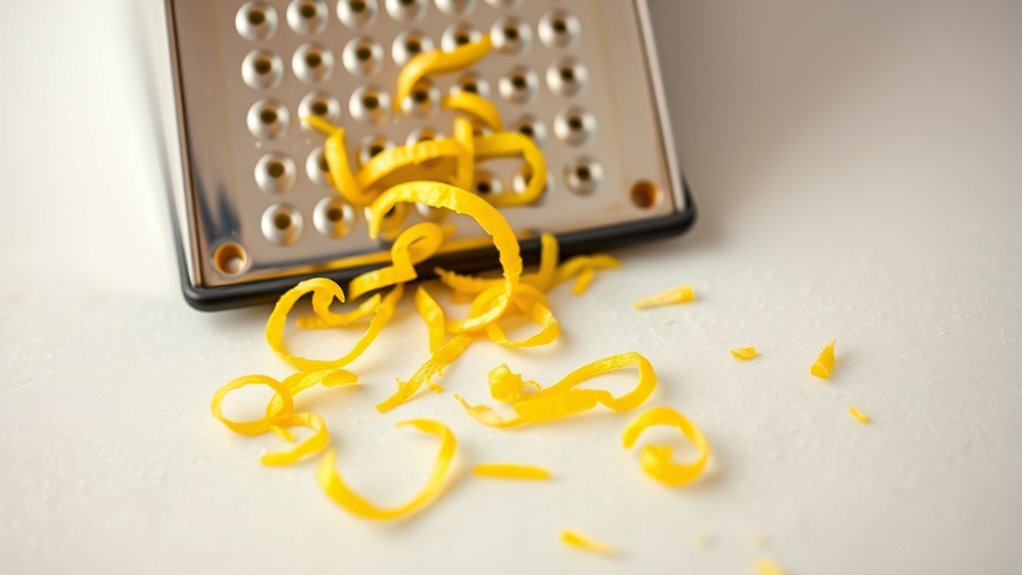
Microplane graters are essential tools in any kitchen, known for their sharp, fine blades that effortlessly zest citrus, grate hard cheeses, and shred spices. These handheld tools are designed for precision, making quick work of tasks that might otherwise require more effort or multiple utensils. When you’re working with Microplane graters, you’ll notice how their sharp edges cut cleanly through ingredients, giving you perfect results every time. Whether you’re preparing a garnish of lemon zest or grating nutmeg over a dessert, these tools make the process simple and efficient.
Microplane graters deliver sharp, precise zesting and grating for effortless kitchen prep.
One of the key advantages of using handheld tools like Microplane graters is their portability and ease of use. Unlike bulky box graters, these small, lightweight devices let you work directly over your mixing bowls or plates, minimizing mess and cleanup. The ergonomic handle provides a comfortable grip, giving you better control and reducing fatigue during prolonged use. Plus, because of their sharp blades, you don’t need to apply much pressure, which helps prevent injuries or accidents in the kitchen.
Cleaning your Microplane grater is straightforward but important to maintain its effectiveness and longevity. To keep it in prime condition, you should rinse it immediately after use to prevent residue from drying and becoming difficult to remove. For stubborn bits of cheese or zest, soaking it in warm, soapy water for a few minutes loosens debris. When washing, avoid using abrasive scrubbers that might dull the blades. Instead, opt for a soft brush or sponge to gently clean the surface, paying close attention to the small holes where bits can get lodged. Dry the grater thoroughly to prevent rusting, especially if it’s made of metal. Some models are dishwasher safe, but handwashing is often recommended for a longer lifespan and to preserve sharpness.
In addition to cleaning tips, it’s worth noting how you can maximize your grater’s lifespan by storing it properly. Keep it in a drawer with other utensils, or use a blade cover if available, to prevent accidental dulling or damage. Regularly inspecting the blades for dullness helps you decide when it’s time to replace or sharpen the tool. Maintaining a sharp edge ensures you continue to get precise zesting and grating without exerting extra effort. Proper blade maintenance is essential to keep your Microplane performing at its best over time.
Frequently Asked Questions
How Do I Clean Stubborn Residue From Microplane Graters?
To clean stubborn residue from your Microplane graters, you should use effective cleaning techniques like soaking them in warm, soapy water for a few minutes. Then, gently scrub with a soft brush or toothbrush to remove residue removal buildup. Rinse thoroughly and dry. For tough spots, try using a bit of baking soda paste or vinegar to loosen stubborn residue, ensuring your grater stays sharp and clean.
Are Microplane Graters Suitable for Grating Soft Cheeses?
A stitch in time saves nine, so you’ll want to choose the right tool. Microplane graters aren’t ideal for soft cheese, as they may clog or mash the cheese rather than grate it nicely. For soft cheese, a box grater or a specialized cheese grater works better. Microplane graters excel at zesting and garnishing, but for grated cheese, stick with tools designed for softer textures to get perfect results every time.
Can I Use a Microplane for Zesting Citrus Fruits?
Yes, you can definitely use a microplane for citrus zesting. Its sharp, fine blades make it easy to peel off thin, flavorful strips from oranges, lemons, or limes. To get the best results, use gentle pressure and follow microplane tips like keeping the fruit steady and avoiding the bitter pith underneath. This way, you’ll achieve perfect zesting, adding a bright, fresh flavor to your dishes.
What Materials Are Microplane Graters Typically Made Of?
Stainless steel durability meets ergonomic handle design in most microplane graters. You’ll find their blades crafted from high-quality stainless steel, ensuring they stay sharp and resist rust. The handles are often made of sturdy plastic or rubber, providing a comfortable grip for extended use. This combination of materials makes microplane graters both reliable and easy to handle, whether zesting citrus or grating cheese, giving you precise results every time.
How Do I Sharpen a Dull Microplane Grater?
To sharpen a dull Microplane grater, you can use sharpening techniques like gently running a fine diamond stone or a sharpening steel along the blades’ surface. Make sure you maintain proper grater maintenance by cleaning it thoroughly after use and drying it well. Regularly sharpening your grater will keep it effective and safe, preventing buildup and ensuring your zesting and grating tasks stay effortless.
Conclusion
With a microplane grater in your kitchen, you’ll find zesting, grating, and garnishing feels like a breeze—like a gentle breeze on a summer day. These tools turn your cooking into a creative adventure, making flavors pop and dishes look stunning. Once you experience their versatility, you’ll wonder how you ever cooked without them. Keep one handy, and let your culinary imagination run wild, transforming simple ingredients into extraordinary meals.