
To cut like a pro with a mandoline, always keep your blades sharp and handle them carefully during cleaning and maintenance. Use the built-in safety features like hand guards, and never bypass safety mechanisms. Store your mandoline with blades covered and out of children’s reach to prevent accidents. Break down large foods for easier handling, and stay attentive during slicing. Continuing will equip you with essential tips to guarantee safe, precise cuts every time.
Key Takeaways
- Keep blades sharp and well-maintained to prevent slips and ensure smoother cutting.
- Handle blades carefully with gloves during cleaning and sharpening to avoid cuts.
- Store mandoline with blades covered and out of children’s reach to prevent accidents.
- Always use safety features like hand guards and avoid bypassing safety mechanisms.
- Clean blades carefully after use, and store with safety features engaged to minimize injury risks.
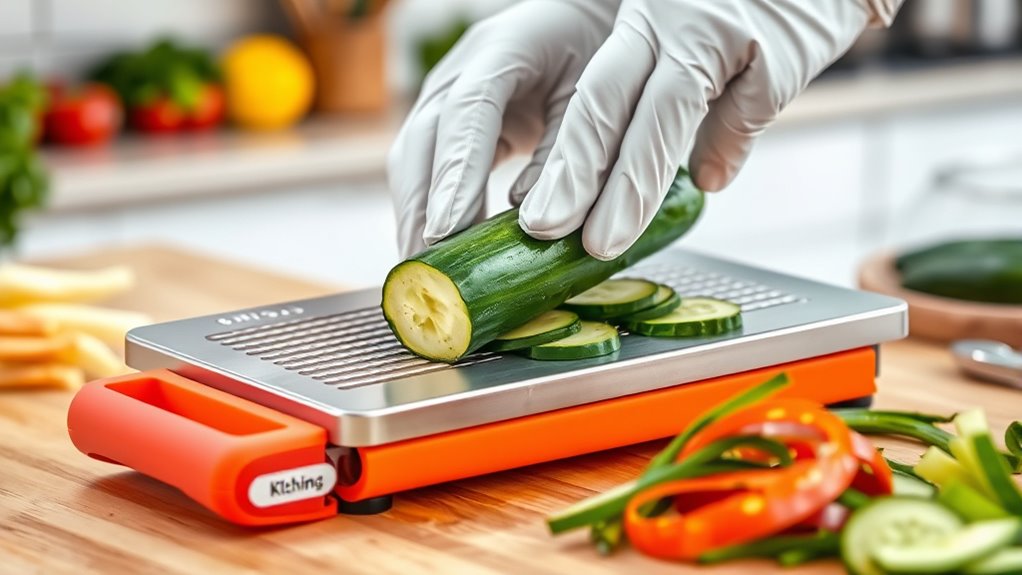
Using a mandoline can make food prep faster and more consistent, but it also poses safety risks if you’re not careful. To avoid injuries, it’s fundamental to understand proper blade maintenance and how to store your mandoline safely. The blade is the most dangerous part of the tool, so keeping it sharp and well-maintained is essential. Dull blades require more force to cut, increasing the chances of slips and accidental cuts. Regularly inspect the blade for signs of dullness, nicks, or rust. When necessary, sharpen or replace the blade promptly to guarantee smooth, safe slicing. Always handle blades carefully during maintenance—use protective gloves if possible—and follow the manufacturer’s instructions for cleaning and sharpening. Proper blade maintenance not only extends the life of your mandoline but also enhances safety during use. Additionally, choosing a mandoline with built-in safety features can further reduce the risk of injury and ensure safer operation.
Safe storage is another critical aspect of mandoline safety. When not in use, always store your mandoline with the blade covered or in a designated protective sheath. This prevents accidental cuts when grabbing or passing the tool, especially if it’s stored in a drawer or cabinet. Keep the blade out of reach of children, and consider storing it in a separate, secure location if you have young kids around. Clear labeling or dedicated storage compartments can help guarantee you always handle the mandoline correctly. Furthermore, avoid leaving the blade exposed on countertops, especially if you’re in a hurry or distracted. Proper storage practices minimize the risk of unintended injuries and help maintain the sharpness and integrity of the blade over time.
When using your mandoline, always pay attention to the safety features designed to protect you, such as hand guards or safety locks. Never bypass these safety measures, even when you’re in a rush. Use the hand guard to keep your fingers away from the blade, and don’t attempt to force food through if it’s too large or uneven—break it down into smaller pieces first. After each use, clean the blade carefully, avoiding direct contact with the sharp edge. Store the mandoline immediately afterward, ensuring the blade is covered and secure. By staying diligent about blade maintenance and safe storage, you markedly reduce the risk of accidents. Remember that proper exfoliation with glycolic acid can also improve skin texture and safety when applied correctly.
Frequently Asked Questions
Can I Wash My Mandoline in the Dishwasher Safely?
You can’t safely wash your mandoline in the dishwasher because dishwasher safety varies depending on the model. Many mandolines have sharp blades that could get damaged or cause injury if washed this way. Instead, use gentle cleaning methods like hand washing with warm, soapy water and a brush. Always check your mandoline’s care instructions first to make certain of proper cleaning and to avoid damaging its parts or compromising safety.
What Should I Do if I Cut Myself Using a Mandoline?
If you cut yourself using a mandoline, act quickly like a hero from a vintage comic strip. First, apply pressure with a clean cloth to stop bleeding, then rinse the wound with clean water. Use an antiseptic for proper wound care and cover it with a sterile bandage. Seek medical attention if the cut is deep or won’t stop bleeding. Prompt first aid prevents infection and speeds up healing.
Are There Safety Features I Should Look for in a Mandoline?
When choosing a mandoline, look for safety features like a blade guard to protect your fingers and a non-slip base to keep it steady during use. These features help prevent accidents and improve control, making slicing safer and easier. Always guarantee these safety elements are included, so you can confidently handle your mandoline without worry. Prioritizing these features ensures a safer, more efficient cooking experience.
How Do I Properly Store a Mandoline to Prevent Accidents?
To prevent accidents, store your mandoline safely by keeping it in a secure, dry place away from children. Use storage safety features like blade covers or locking mechanisms to safeguard yourself when not in use. Always wear protective gear, such as cut-resistant gloves, when handling or cleaning it. By following proper storage safety and using protective gear, you minimize risks and ensure your mandoline stays in good condition.
Is It Safe to Use a Mandoline on Hard Vegetables Like Potatoes?
Using a mandoline on hard vegetables like potatoes is safe if you prioritize proper technique. Hard vegetable safety is vital because tougher produce can strain the mandoline’s durability, but most high-quality tools are built to handle this. Just make sure you’re applying steady pressure, keeping fingers clear of the blade, and using the safety guard. With these precautions, you can confidently slice potatoes and other firm veggies without risking damage or injury.
Conclusion
Remember, a mandoline is your sharp ally in the kitchen, but it’s also a fierce dragon if mishandled. Treat it with respect, keep your fingers safe, and stay attentive with every slice. When used wisely, it becomes an extension of your skill, turning raw ingredients into art. With caution as your shield, you’ll slice like a pro, creating culinary masterpieces that shine as brightly as a perfectly carved gemstone. Safety first, and let your kitchen adventure unfold smoothly.