
When choosing food processor blades and discs, look for stainless steel options for durability, rust resistance, and maintaining sharpness. Hardened steel blades are great if you often process tough ingredients, while shredding, slicing, or julienne discs make prep faster and more consistent. Properly selecting and caring for these blades extends their lifespan and enhances performance. Stay with us, and you’ll discover tips to make the most of your food processor’s blades and discs.
Key Takeaways
- Food processor blades are typically made from stainless steel or hardened steel for durability and sharpness.
- Different discs—shredding, slicing, julienne—serve specific prep functions for efficiency and variety.
- High-quality blades resist dulling, offering longer lifespan and consistent performance over time.
- Proper maintenance and cleaning prolong blade and disc effectiveness and safety.
- Selecting the right blades and discs based on materials and functions enhances overall food processing results.

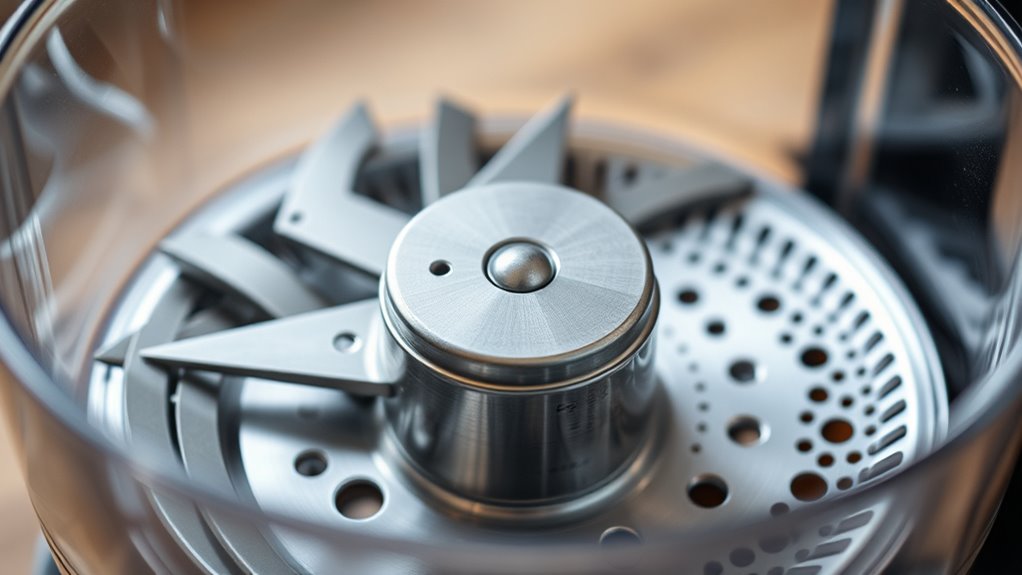
A food processor’s blades and discs are essential tools that considerably influence how efficiently you prepare your meals. The materials used for blades and the variety of disc types determine their durability, performance, and suitability for different tasks. When selecting blades, you’ll find that blade materials vary widely, with stainless steel being the most common. Stainless steel blades are known for their strength, resistance to rust, and ability to hold a sharp edge over time. They’re versatile enough for chopping, slicing, and pureeing, making them a reliable choice for most kitchen tasks. Some high-end models incorporate blades made from hardened steel, which offer even greater durability and edge retention, especially useful if you process tough ingredients frequently. Avoid blades made from cheaper metals or inferior alloys, as they tend to dull quickly, reducing efficiency and potentially compromising safety.
Disc types are equally important and come in a variety of styles designed for specific functions. Shredding discs typically feature sharp, raised teeth that produce evenly shredded vegetables, cheese, or cooked meats. Slicing discs, on the other hand, have adjustable blades or fixed sharp edges to create uniform slices, ideal for preparing salads or garnishes. There are also julienne discs that cut ingredients into matchstick-sized pieces, perfect for stir-fries or salads. Other specialized discs include grating, kneading, and dough blades, which expand the food processor’s capabilities beyond simple chopping. Choosing the right disc depends on your cooking habits; for example, if you often prepare salads, a good set of shredding and slicing discs will speed up your prep work markedly.
Understanding blade materials and disc types can also help you select options that are easier to clean and maintain, prolonging their lifespan and keeping your food processor performing at its best. Ultimately, understanding blade materials and disc types helps you optimize your food processor’s performance and enhances your overall cooking experience.
Frequently Asked Questions
Can I Sharpen My Food Processor Blades at Home?
Yes, you can sharpen your food processor blades at home. Use a sharpening stone or a fine-grit diamond file for blade sharpening to maintain their edge. Be sure to check disc compatibility before attempting any sharpening, as some discs may be more delicate or require specific tools. Carefully follow safety precautions, and take your time to ensure an even, sharp edge for better performance.
Are All Blades Dishwasher Safe?
Imagine you’re cleaning your food processor after a big meal, wondering if all blades are dishwasher safe. The truth is, not all blades withstand dishwasher cleaning—some require hand washing to prevent damage. For blade safety and to maintain sharpness, always check manufacturer instructions. Using gentle cleaning methods, like hand washing with warm soapy water, preserves your blades longer and keeps them safe for future use.
How Do I Identify Compatible Discs for My Model?
To identify compatible discs for your food processor, first check your model number and consult the user manual or manufacturer’s website. Look for blade compatibility details specific to your unit, and compare disc sizes and attachment mechanisms. Disc identification usually involves noting the shape, size, and connector type. By verifying these details, you guarantee the discs will fit securely and work effectively with your processor.
What Materials Are Food Processor Blades Typically Made From?
Think of your food processor blades as the sword of your kitchen arsenal. They’re usually made from stainless steel, which symbolizes strength and resilience. This material offers excellent blade durability while resisting material corrosion over time. You’ll find some blades with coated surfaces for extra protection. Choosing high-quality stainless steel guarantees your blades stay sharp and effective, making prep work faster and safer while standing up to wear and tear.
How Often Should I Replace Food Processor Blades and Discs?
You should replace your blades and discs when you notice dullness, chipping, or difficulty in achieving clean cuts. Regular blade maintenance helps extend their lifespan, but disc compatibility varies, so check your model’s recommendations. Typically, replacing every 1-2 years is preferable, especially if you use your processor frequently. Keep an eye on performance, and don’t hesitate to swap out blades for safety and ideal results.
Conclusion
Remember, choosing the right blades and discs isn’t just about convenience—it’s about opening your kitchen’s full potential. Think of them as extensions of your creativity, transforming simple ingredients into culinary masterpieces. Believe it or not, the right tools can inspire you to experiment more and elevate your cooking game. So, invest in quality, learn their true purpose, and let your food processor become a trusted partner in every delicious adventure.