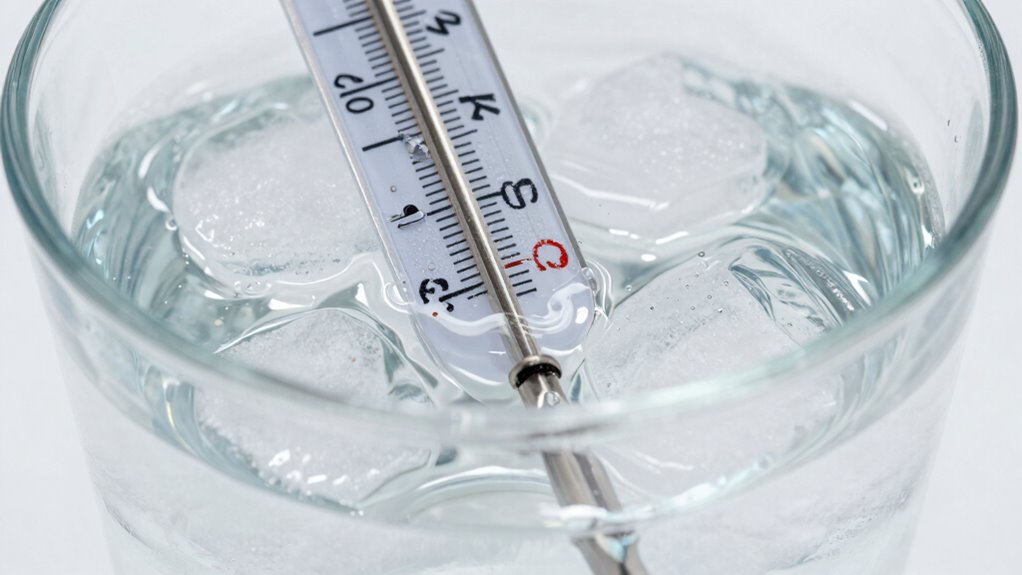

To check your kitchen thermometer’s accuracy, the ice-water test is simple and effective. Fill a glass with crushed ice and cold water, stir, and wait a minute. Your thermometer should read 32°F (0°C). If it doesn’t, you can adjust it or note it for future reference. Performing this test regularly helps keep your cooking temperatures precise. Keep going to discover more tips for maintaining your thermometer’s accuracy and ensuring safe, perfectly cooked meals.
Key Takeaways
- The ice-water test checks if your thermometer reads 32°F (0°C), ensuring accurate kitchen measurements.
- Fill a glass with crushed ice and cold water, stir, and let sit for about a minute before testing.
- For digital thermometers, use the calibration feature or button to adjust the reading to 32°F.
- For analog thermometers, turn the calibration screw or dial until the needle points to 32°F.
- Regularly performing the ice-water test helps maintain thermometer accuracy for safe, consistent cooking.

Ensuring your kitchen thermometer provides accurate readings is essential for safe and perfectly cooked meals. When it comes to calibration methods, understanding the difference between digital and analog thermometers can make a big impact on your cooking results. Digital thermometers often come with built-in calibration features or easy-to-access settings, making it straightforward to verify and adjust their accuracy. Analog thermometers, on the other hand, usually require a manual calibration process, which might seem more involved but is equally effective when done correctly. Knowing how to calibrate either type ensures your readings stay precise, preventing undercooking or overcooking your food.
Calibration methods for kitchen thermometers generally involve a simple ice-water test, which is accessible to anyone. To perform this test, fill a glass with crushed ice and a small amount of cold water, then stir and let it sit for a minute. The goal is to see if your thermometer reads 32°F (0°C), the freezing point of water. If it doesn’t, you’ll need to adjust your device accordingly. For digital thermometers, some models have a calibration button or a menu option allowing you to set the correct temperature. You simply press or access this feature and adjust the reading until it matches 32°F. For analog thermometers, calibration often involves gently turning a screw or dial at the back of the device until it reads correctly in the ice-water mixture. This manual adjustment ensures that the thermometer’s needle points to the accurate temperature. Additionally, regularly performing this test helps identify potential sensor drift, which can impact accuracy over time.
It’s important to note that calibration methods differ slightly between digital and analog models, but the core principle remains the same: verifying the thermometer against a known standard. Digital models typically provide more convenience, with some even offering automatic calibration or digital prompts. Analog thermometers, while requiring a bit more manual effort, are reliable when calibrated properly and don’t rely on batteries or electronic components that can fail over time. Whichever type you have, regularly performing this ice-water test, especially before important cooking tasks, helps maintain your thermometer’s accuracy.
Frequently Asked Questions
How Often Should I Calibrate My Kitchen Thermometer?
You should calibrate your kitchen thermometer at least once a year to maintain accuracy consistency. If you notice inconsistent readings or after dropping or banging it, recalibrate immediately. Regular calibration helps ensure precise temperature measurements, especially when cooking or food safety is critical. Some chefs calibrate quarterly, but annual checks are generally sufficient. Make calibration part of your routine to keep your thermometer reliable and your cooking safe.
Can I Calibrate Digital and Analog Thermometers the Same Way?
You can calibrate digital and analog thermometers using similar methods, like the ice-water test, but keep in mind that calibration methods may vary slightly. Digital thermometers often have reset buttons or calibration features, while analog ones might require turning a screw. Regular calibration helps extend your thermometer’s lifespan and guarantees accurate readings. Always follow the manufacturer’s instructions for calibration to maintain precision and avoid premature replacement.
What’s the Best Way to Prevent Thermometer Damage?
To prevent thermometer damage, follow a regular calibration schedule to guarantee accuracy, and handle your thermometer carefully to extend its lifespan. Avoid dropping or exposing it to extreme temperatures, and store it properly when not in use. Clean it gently after each use, especially if it’s digital, and avoid immersion beyond the recommended level. Proper maintenance helps your thermometer stay accurate and lasts longer, saving you money and ensuring food safety.
How Do Ambient Temperatures Affect Thermometer Accuracy?
Ambient temperatures can considerably skew your thermometer’s accuracy. When environmental impact fluctuates, your device may give false readings, leading to faulty food safety checks. To combat this, regularly calibrate your thermometer and keep it away from extreme heat or cold. By doing so, you guarantee consistent, correct readings, no matter the environment. Calibration frequency becomes your key to maintaining precision amid changing ambient temperatures.
Are There Specific Thermometers Better for Certain Foods?
Yes, there are specific thermometers better suited for certain foods. For example, digital instant-read thermometers work well for meats and liquids, guaranteeing food safety by providing quick, accurate readings. Candy and deep-fry thermometers are designed for high temperatures, while probe thermometers are ideal for roasts. Regular thermometer maintenance, like cleaning and calibration, helps uphold accuracy and guarantees safe, properly cooked food. Choose the right thermometer to keep your food safe and flavorful.
Conclusion
Now that you know how to test your kitchen thermometer with the ice-water method, you’re all set to cook with confidence. Just remember, a reliable thermometer is your best friend in the kitchen—don’t let it be the weak link. By regularly checking its accuracy, you’ll keep things running smoothly and avoid surprises. Think of it as having a trusted compass, guiding you through perfect meals and safe cooking every time. Keep it calibrated, and you’ll always be on the mark.