
If you want quick, simple bread toasting for busy mornings, a toaster is your best choice. It’s compact and easy to operate, focusing mainly on browning bread. For more versatile cooking, like baking, broiling, or roasting, a toaster oven offers many options and extra control. It saves space and replaces multiple appliances. To learn how each device fits different kitchen needs, explore further—you’ll find more useful details ahead.
Key Takeaways
- Toasters are best for quick, simple bread toasting with minimal controls, ideal for busy mornings.
- Toaster ovens offer versatile cooking options like baking, broiling, and roasting for larger quantities.
- Toaster ovens are suitable for multitasking, preparing baked goods, reheating leftovers, and roasting vegetables.
- Toasters are compact and straightforward, focusing solely on bread toasting for convenience.
- Toaster ovens save space by combining multiple functions, replacing several kitchen appliances.
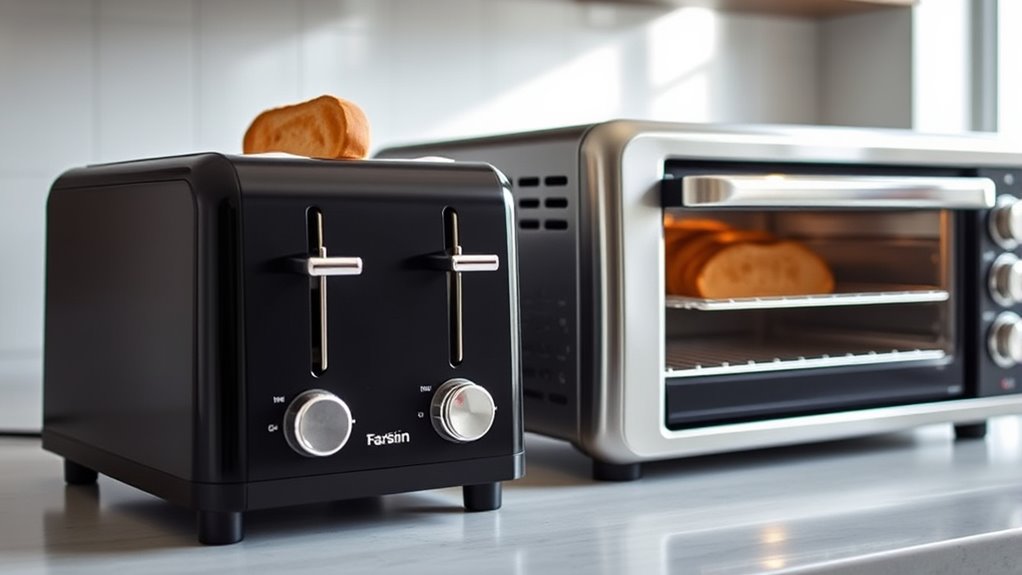
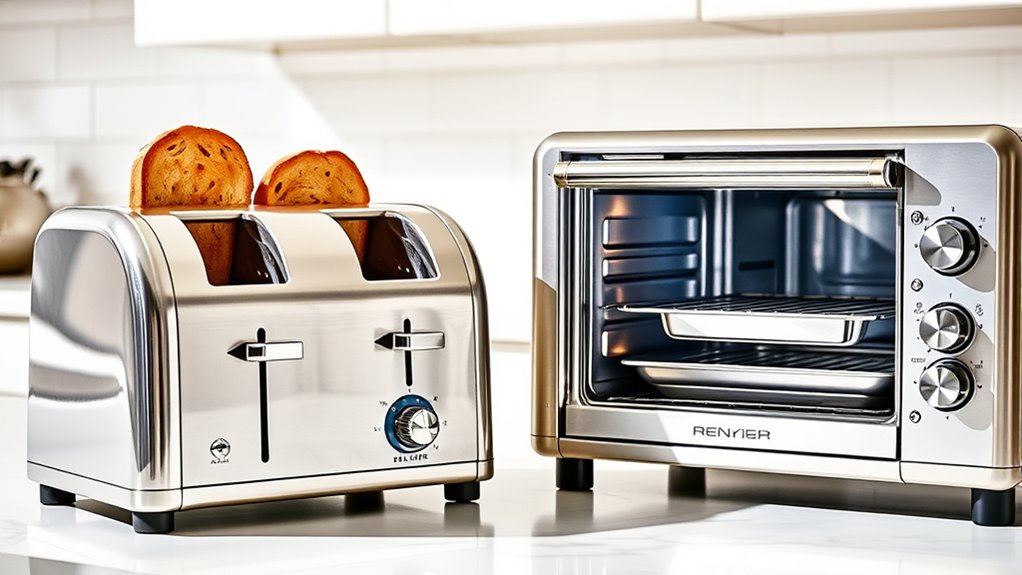
When deciding between a toaster and a toaster oven, understanding their differences can help you choose the right appliance for your needs. Both appliances handle bread toasting, but they serve different purposes beyond that. A toaster is designed primarily for quick, efficient bread toasting, making it perfect for mornings when you want your toast fast and simple. It typically has slots to accommodate slices of bread, bagels, or English muffins, and it offers straightforward controls for browning levels. If your main goal is bread toasting with minimal fuss, a toaster is a reliable choice. However, it’s limited in versatility, offering little beyond that basic function.
A toaster oven, on the other hand, offers much more baking versatility. It functions as a mini oven, capable of baking, broiling, roasting, and even reheating. This means you can prepare a variety of foods using a toaster oven, from cookies and small casseroles to roasted vegetables and reheated leftovers. When it comes to bread toasting, a toaster oven can do this too, but it also allows you to toast larger quantities at once or prepare toasted dishes that require more control over heat and texture. Plus, many toaster ovens come with features like convection fans, adjustable racks, and temperature controls, giving you flexibility not available in a traditional toaster.
The key difference lies in how you plan to use these appliances. If your focus is solely on quick, convenient bread toasting, a simple toaster will likely meet your needs efficiently. But if you want an appliance that can handle multiple cooking tasks, including bread toasting, baking, and reheating, a toaster oven’s baking versatility makes it a smarter investment. It’s especially useful if you have limited space in your kitchen and prefer a multi-functional appliance over several standalone devices. Additionally, some toaster ovens incorporate advanced features like digital controls and timers, further expanding their usability beyond basic toasting.
Frequently Asked Questions
Can a Toaster Oven Replace a Microwave?
A toaster oven can’t fully replace a microwave because it’s slower for tasks like reheating leftovers or popping popcorn, but it excels at bread toasting and baking small items. You might find it convenient for crispy snacks, but for quick reheats or quick popcorn popping, a microwave is more efficient. So, while a toaster oven handles some tasks well, it doesn’t completely substitute a microwave’s speed and versatility.
Which Appliance Is More Energy-Efficient?
Like a wise old owl, choosing the most energy-efficient appliance depends on your needs. Generally, a toaster uses less energy because of its smaller size and quick operation, consuming less power during use. A toaster oven, while more versatile, has higher energy consumption due to its larger heating element and longer cooking times. So, if saving power is your goal, a toaster is the smarter choice for minimal power usage.
Are Toaster Ovens Safer Than Traditional Toasters?
Toaster ovens are generally safer than traditional toasters because they come with safety features like automatic shut-off and cool-touch exteriors, reducing the risk factors of burns or fires. Traditional toasters lack these advanced safety options, making them slightly riskier if not monitored carefully. You should always follow safety guidelines, but opting for a toaster oven with modern safety features can provide extra peace of mind during use.
How Do Cleaning Requirements Differ?
You’ll find that cleaning requirements differ between toasters and toaster ovens. Toaster ovens need more frequent cleaning because crumbs and food splatters can accumulate inside, requiring you to wipe down the interior and clean the crumb tray regularly. Maintenance tips include unplugging the appliance before cleaning, using a damp cloth for the exterior, and avoiding abrasive cleaners. Toasters need less maintenance, mainly just emptying crumbs from the tray.
Can a Toaster Oven Bake Larger Items Than a Toaster?
Yes, a toaster oven can bake larger items than a traditional toaster due to its greater baking capacity and size limitations. You’ll find that toaster ovens typically have more interior space, allowing you to cook bigger dishes or multiple items at once. This makes them versatile for baking, roasting, and more, whereas toasters are mainly limited to smaller slices of bread or similar-sized snacks.
Conclusion
Choosing between a toaster and a toaster oven is like picking the right tool for your kitchen adventures. I once tried baking cookies in my toaster oven—surprisingly, it turned out perfectly crispy! Just like selecting the right brush for a painting, understanding their use cases helps you make smarter choices. Whether you want quick slices or versatile baking, knowing their strengths guarantees your kitchen works smoother, making every meal feel like a small victory.