A stand mixer with the right attachments and precise speed control makes preparing doughs, batters, and meringue easy and professional. Use the dough hook for dense bread or pizza dough, the flat beater for cake and pancake batter, and the wire whip to whip up fluffy meringues or whipped cream. Adjust speeds carefully to achieve perfect consistency without overworking ingredients. Keep exploring to discover tips that take your baking to the next level.
Key Takeaways
- Use the dough hook at low to medium speeds for kneading dense bread doughs effectively.
- Employ the flat beater at medium speeds for mixing cake batters and pancake mixes thoroughly.
- Utilize the wire whip at high speeds to achieve light, stable meringues and fluffy whipped cream.
- Adjust speed settings carefully to prevent overmixing or damaging delicate ingredients.
- Switch attachments and speeds based on specific tasks to ensure optimal results in doughs, batters, and meringues.
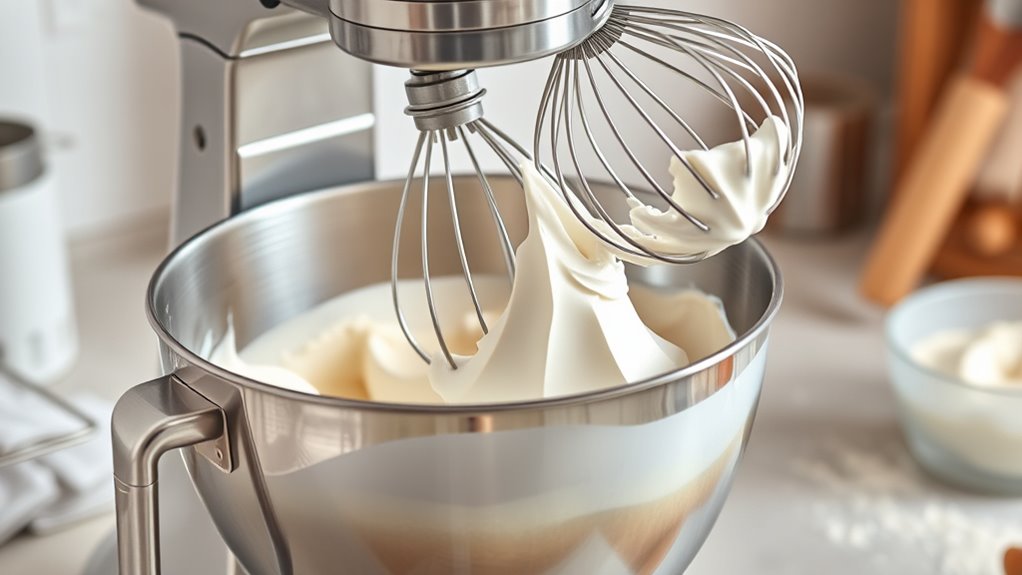
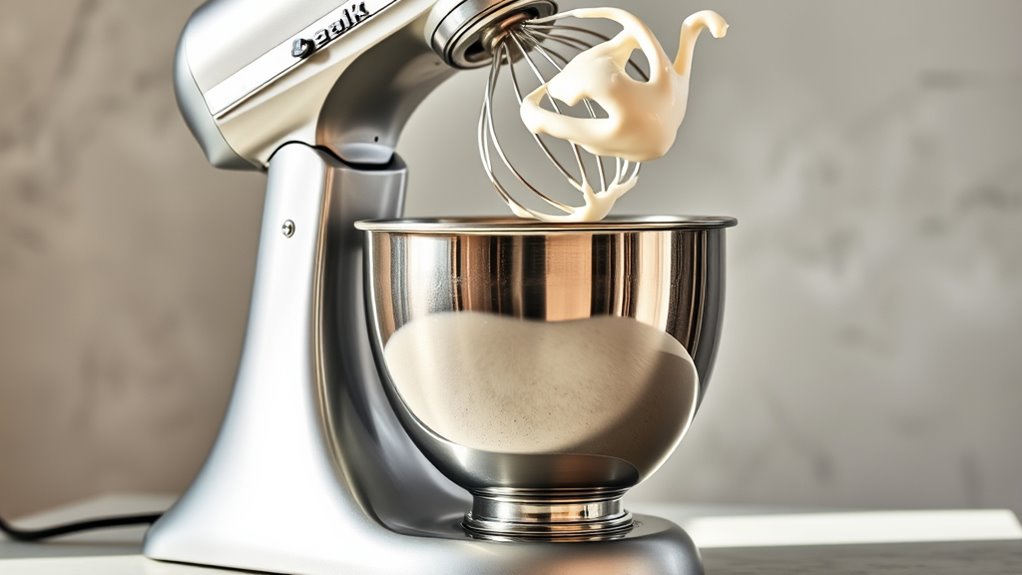
Have you ever wondered how professional bakers achieve perfectly mixed doughs and batters with ease? The secret often lies in their trusty stand mixers. These versatile appliances come equipped with a variety of attachment options that let you tackle different baking tasks effortlessly. Whether you’re kneading dense bread dough, whipping airy meringue, or stirring smooth batters, the right attachment makes all the difference. For doughs, the dough hook attachment is your best friend, mimicking the kneading process you’d do by hand but with less effort and more consistency. For mixing cake batters or pancake mixes, the flat beater attachment ensures thorough blending without overworking the ingredients. And when you need to whip cream or egg whites, the wire whip attachment provides the volume and stability you’re aiming for.
Discover how the right stand mixer attachments streamline your baking, from kneading to whipping perfection.
In addition to the attachment options, your stand mixer’s speed settings play an essential role in achieving perfect results. Most models offer multiple speed options, usually ranging from low to high, allowing you to control the mixing process precisely. For gentle folding or initial mixing, starting at a low speed prevents splatters and over-mixing. Once the ingredients are combined, you can increase the speed to incorporate air into your batter or achieve a smooth, even consistency. When whipping egg whites or creating meringue, high speed is vital to get that light, fluffy texture. Using the right speed setting at the right time guarantees your ingredients are mixed thoroughly without risking overworking them, which can lead to tough dough or deflated meringue.
Adjusting the speed settings is straightforward, and many stand mixers come with a pulse or turbo function for quick bursts of power when needed. This feature is particularly helpful when you want to incorporate ingredients gradually or add mix-ins like nuts or chocolate chips without breaking the mixture. The variety in attachment options combined with multiple speed settings gives you the flexibility to experiment and perfect your recipes. It also saves you time and effort compared to manual mixing, producing more consistent results every time.
Additionally, understanding the specific attachment functions and how they interact with different ingredients can further enhance your baking precision. Ultimately, mastering your stand mixer’s attachment options and speed settings transforms your baking experience. You’ll find that tasks like kneading, whipping, and mixing become faster, easier, and less messy. With a little practice, you’ll be able to produce bakery-quality doughs, batters, and meringues right in your own kitchen. The key is to understand how each attachment functions and when to adjust your mixer’s speed, giving you full control over your baking process and elevating your culinary creations.
Frequently Asked Questions
Can Stand Mixers Handle Hot or Cold Ingredients?
Yes, you can put hot or cold ingredients in your stand mixer, but you should consider temperature safety and ingredient compatibility. Hot ingredients may cause splattering or damage to the mixer if not cooled down first, while cold ingredients are usually fine. Always guarantee ingredients are at safe temperatures to avoid damaging the appliance or compromising the recipe. When in doubt, let ingredients reach room temperature before mixing.
What Is the Maximum Capacity for Different Attachments?
You’ll find that the maximum capacity varies by attachment, so check your stand mixer’s compatibility. For example, the mixing bowl typically holds 4.5 to 7 quarts, suitable for large batches of doughs and batters. Be mindful that attachment compatibility is key; using incompatible attachments can limit mixing capacity or cause damage. Always refer to your mixer’s manual to guarantee your attachments are designed for the maximum capacity you need.
Are Stand Mixers Suitable for Kneading Gluten-Free Dough?
You might think stand mixers struggle with gluten-free baking, but they’re actually quite helpful. While gluten-free doughs don’t require traditional kneading techniques, a stand mixer can gently mix ingredients without overworking them. It’s perfect for combining delicate batters or sticky doughs, making gluten-free baking easier and more consistent. Just use the paddle attachment and avoid over-mixing to make certain your baked goods turn out tender and delicious.
How Do I Prevent Splattering During Mixing?
To prevent splatters during mixing, you should use splatters prevention techniques like starting at a low speed and gradually increasing it. Make sure your bowl is securely attached and use a splash guard if available. Keep ingredients at room temperature for smoother mixing, and avoid overfilling the bowl. These mixing techniques help contain ingredients, minimize mess, and guarantee a cleaner, more efficient process.
What Maintenance Is Required for Long-Term Use?
Think of your mixer as a trusted companion that needs gentle care. To guarantee its durability, regularly wipe down the exterior and check for loose parts. Keep attachments clean and well-lubricated, avoiding harsh chemicals. Periodically inspect the cord and motor vents to prevent dust buildup. Proper attachment maintenance and routine cleaning help your mixer perform smoothly for years, letting you create culinary masterpieces without interruption.
Conclusion
You might think a stand mixer is just a kitchen tool, but it’s so much more. Many believe it can magically turn baking into effortless art, and honestly, there’s truth to that. As you watch your dough rise or meringue form peaks, you realize it’s not just equipment—it’s a trusted partner in your culinary journey. Embrace it, and discover how a simple machine can release your true baking potential.