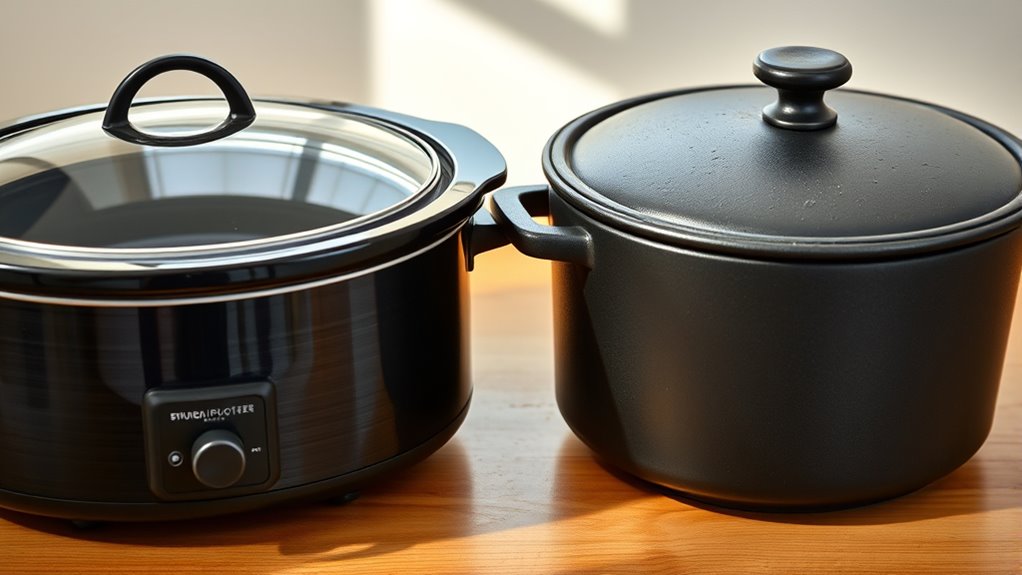
A slow cooker and Dutch oven differ mainly in how you prepare your meals. A slow cooker is perfect for set-it-and-forget-it dishes like stews and soups, cooking slowly over hours. A Dutch oven offers more versatility, allowing you to sear, saute, and roast in addition to slow-cooking. It gives you greater control and quicker results. To learn more about when and how to use each, keep exploring these differences.
Key Takeaways
- Slow cookers are designed for long, unattended simmering, while Dutch ovens offer versatile cooking techniques including searing and roasting.
- Dutch ovens provide more control over temperature and cooking methods compared to slow cookers’ set-it-and-forget-it approach.
- Slow cookers are ideal for hands-off, consistent meals like stews and soups, whereas Dutch ovens suit complex recipes requiring multiple steps.
- Dutch ovens can be used on stovetops and in ovens, offering greater flexibility; slow cookers are limited to their electrical appliance.
- Both tools produce hearty, flavorful dishes but differ in convenience, control, and range of cooking techniques.
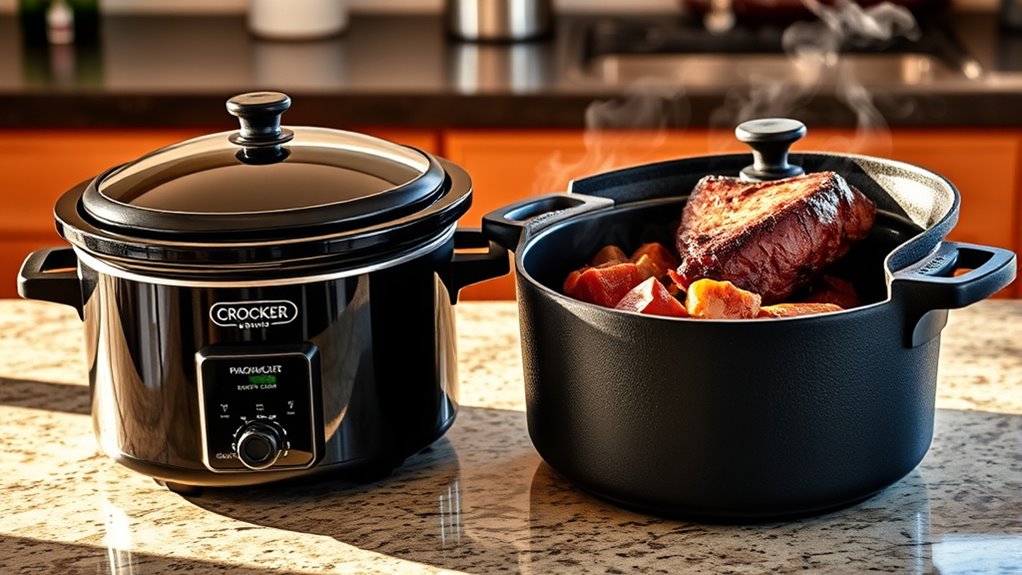
When deciding between a slow cooker and a Dutch oven, it’s important to understand how each appliance fits into your cooking style and needs. Both are excellent tools for making hearty, flavorful meals, but they differ markedly in their recipe versatility and cooking time. A slow cooker is designed for convenience, allowing you to prepare dishes in advance and let them cook slowly over several hours. It excels at simmering stews, soups, and braises with minimal supervision. This means you can toss in ingredients in the morning and come home to a ready-to-eat meal. Its ability to cook at low temperatures for extended periods enhances recipe versatility, as you can experiment with different ingredients and flavors without constant attention. However, because of its slow cooking process, some recipes—especially those requiring quick searing or browning—may not be suitable for a slow cooker.
On the other hand, a Dutch oven is a versatile, heavy-duty pot that can handle everything from stovetop simmering to oven roasting. It offers much more control over the cooking process, giving you the flexibility to brown meats, sauté vegetables, and then slow-cook or braise—all in one vessel. When it comes to recipe versatility, a Dutch oven shines because it can handle a wider range of cooking techniques. You can start by searing meat on the stove, then pop the oven to finish the dish slowly or cook on the stovetop if needed. The cooking time for dishes in a Dutch oven varies depending on the recipe, but it generally allows for quicker adjustments—like increasing heat or switching cooking methods—making it ideal for more hands-on cooking sessions. Additionally, traditional Indigenous cooking methods often utilize versatile tools like Dutch ovens for preparing meals that honor cultural traditions.
While a slow cooker’s strength lies in set-it-and-forget-it convenience, it’s less adaptable for recipes that require precise timing or quick changes. Its extended cooking times often mean you need to plan ahead, sometimes waiting several hours for a meal to finish. Conversely, a Dutch oven offers quicker results when you need more control over the process, although it may require more active involvement. If you prioritize recipe versatility and the ability to adapt your cooking techniques, the Dutch oven provides a broader range of options. But if you value convenience, consistent results over long periods, and minimal supervision, a slow cooker might be the better choice. Ultimately, understanding these differences helps you select the right tool based on your culinary preferences and schedule.
Frequently Asked Questions
Can I Use a Dutch Oven in the Oven as a Slow Cooker Substitute?
Yes, you can use a Dutch oven in the oven as a slow cooker substitute. Its versatility allows for slow cooking, braising, and roasting, making it a great alternative. Unlike a slow cooker, which offers portability and set-it-and-forget-it convenience, a Dutch oven stays in the oven for hours, providing even heat. This makes it perfect for slow-cooked meals, and you don’t lose any cooking quality or flavor.
Which Appliance Retains Moisture Better During Cooking?
Think of a Dutch oven as a treasure chest sealing in precious moisture, making it excellent for retaining food moisture during cooking. Its heavy lid traps steam, enhancing cooking efficiency and keeping dishes juicy. On the other hand, slow cookers also lock in moisture but may sometimes allow slight evaporation. If you want maximum moisture retention, the Dutch oven is your best ally, ensuring your meals stay tender and flavorful.
Are There Specific Recipes Better Suited for One Over the Other?
You’ll find that certain recipes are better suited for one appliance over the other. For instance, slow cookers excel at recipes that benefit from long, gentle simmering, like stews and pulled meats, enhancing flavor and tenderness. Dutch ovens are great for recipes needing precise heat control, such as bread, roasts, or braised dishes. Choosing the right tool depends on your recipe’s compatibility with each appliance’s cooking method and flavor enhancement capabilities.
How Does Cleaning Differ Between a Slow Cooker and a Dutch Oven?
Like a modern-day Marie Kondo, you’ll find cleaning your Dutch oven more involved than a slow cooker. For residue removal, you’ll need to soak and scrub the Dutch oven’s cast iron or ceramic surface, avoiding harsh detergents. Slow cookers, on the other hand, are easier—just remove the stoneware insert and wash with warm soapy water. Both require cleaning techniques that prevent staining and keep them in top shape.
Can a Dutch Oven Replace a Slow Cooker for Everyday Meals?
Yes, a Dutch oven can replace a slow cooker for everyday meals. It offers versatile cooking, allowing you to braise, stew, and roast, but cooking time may be longer. You’ll also notice better flavor retention due to its enclosed design. Keep in mind, you’ll need to monitor temperature and adjust methods, but overall, a Dutch oven provides rich flavors and satisfying results, making it a practical substitute for everyday cooking.
Conclusion
So, whether you choose the slow cooker’s gentle hug or the Dutch oven’s fiery embrace, each brings its own magic to your kitchen. Think of the slow cooker as your steady gardener, nurturing flavors over time, while the Dutch oven is your fiery chef, quick to transform ingredients into hearty masterpieces. No matter your pick, you’re about to turn simple ingredients into a delicious story. Happy cooking—your culinary adventure is just a simmer away!