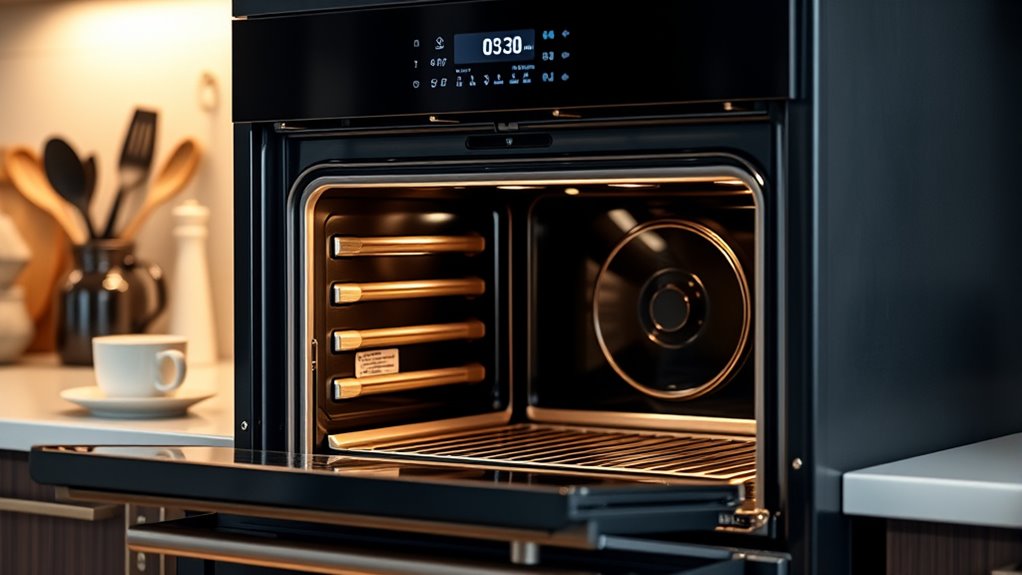
Self-cleaning ovens make cleaning easier by burning off grime with high heat and turning residues into ash that you can wipe away easily. They help save time, reduce exposure to harsh chemicals, and improve energy efficiency. However, it is crucial to follow safety precautions such as good ventilation and removing racks before starting. Knowing how to operate and maintain your oven properly guarantees ideal performance. Keep exploring to understand the best practices and safety tips for your self-cleaning oven.
Key Takeaways
- Self-cleaning ovens simplify maintenance by burning off grime at high temperatures, leaving ash for easy removal.
- They improve energy efficiency and prevent residue buildup, enhancing oven performance over time.
- Proper ventilation during cleaning cycles is essential to manage smoke, odors, and safety risks.
- Removing racks and utensils before cleaning prevents damage and ensures effective cleaning.
- Regular use and adherence to manufacturer instructions extend oven lifespan and promote safe operation.

Self-cleaning ovens have revolutionized how you maintain your kitchen appliances by simplifying the cleaning process. Instead of scrubbing and scraping, you can activate a cycle that burns off grime and grease, leaving behind ash that’s easy to wipe away. This feature not only saves you time but also enhances the oven’s energy efficiency. When you run a self-clean cycle, the oven uses high temperatures to break down residues, which often consumes less energy than traditional cleaning methods that involve multiple rinses and scrubbing. Plus, because you’re not using harsh cleaning chemicals, you avoid exposing yourself and your family to potentially harmful substances. Many modern self-cleaning ovens are designed to operate with minimal use of cleaning chemicals, relying instead on high heat to do the work. This can be a safer choice and also environmentally friendly, reducing the amount of chemical waste released into the environment. Additionally, regular use of the self-clean function helps prevent the buildup of residues that can affect oven performance over time.
However, it’s important to understand how to use these ovens properly for crucial results. Before starting a self-clean cycle, you should remove any oven racks, utensils, or loose debris. While some models allow you to clean racks separately, others recommend cleaning them manually to prevent damage. During the cleaning process, the oven heats up to extremely high temperatures—sometimes over 900 degrees Fahrenheit—so it’s essential to ensure good ventilation. Opening windows or turning on an exhaust fan helps manage the smoke or odors that might be generated. Also, it’s wise to consult your oven’s manual regarding the use of cleaning chemicals, as some models advise against using them during the self-clean cycle. Using chemical cleaners can interfere with the cleaning process or damage sensitive components.
Another benefit of self-cleaning ovens is that they help maintain energy efficiency over time. By regularly removing baked-on grease and food particles, your oven operates more efficiently because it doesn’t have to work as hard to heat or cool. This means lower energy bills and longer appliance lifespan. Remember, though, that the initial high-heat cleaning cycle can produce smoke or odors, so proper ventilation is vital. Some newer models incorporate features like catalytic liners or special coatings to assist in the cleaning process and reduce odors, but you should still follow safety precautions. Overall, self-cleaning ovens make upkeep easier, safer, and more environmentally conscious, but understanding how to use them correctly guarantees you get the best results without risking damage or health hazards. Proper maintenance, including cleaning residues, is key to extending the lifespan and efficiency of your appliance.
self cleaning oven racks
As an affiliate, we earn on qualifying purchases.
As an affiliate, we earn on qualifying purchases.
Frequently Asked Questions
How Energy-Efficient Are Self-Cleaning Ovens Compared to Traditional Models?
Self-cleaning ovens are generally less energy-efficient than traditional models because their cleaning cycles consume significant electricity, leading to higher energy consumption. However, they can save you time and effort, reducing the environmental impact of manual cleaning. To improve energy savings, use the oven efficiently and only run the cleaning cycle when necessary. While they may use more energy during cleaning, they can still be environmentally friendly with proper use and maintenance.
What Is the Typical Lifespan of a Self-Cleaning Oven?
You can expect your self-cleaning oven to last around 10 to 15 years, depending on usage and care. Its durability relies on proper maintenance, including regular cleaning and avoiding harsh chemicals. The cleaning cycle lifespan is designed to handle many cycles without degrading the oven’s components. By following manufacturer instructions and addressing minor issues promptly, you’ll maximize your oven’s durability and enjoy consistent performance over its lifespan.
Are There Health Risks Associated With the Cleaning Cycle Fumes?
Yes, there are health concerns linked to oven fumes during the cleaning cycle. When the oven heats up, it releases fumes that can contain smoke, ash, and potentially harmful chemicals from food residues. To protect yourself, make certain proper ventilation by opening windows or turning on the exhaust fan. Avoid inhaling the fumes directly, especially if you have respiratory issues. Taking these precautions helps minimize health risks during self-cleaning cycles.
Can Self-Cleaning Ovens Be Used for Baking During Cleaning Cycles?
You shouldn’t bake during the cleaning cycle; the oven’s temperature fluctuations can cause uneven heat distribution and potential safety hazards. As the self-cleaning process intensifies, fumes and high heat are released, making it dangerous to use the oven for baking. Wait until the cycle finishes completely. Rushing this process risks your safety and compromises your baked goods’ quality. Always follow the manufacturer’s instructions for safe operation.
What Maintenance Is Needed to Ensure the Self-Cleaning Feature Works Properly?
You should regularly clean the oven interior with a damp cloth to remove grease and debris, ensuring the self-cleaning feature works properly. Check the door seal for any cracks or damage, as a good seal helps contain heat during cleaning cycles. Avoid using harsh chemicals on the interior, and make sure the oven is cool before running a cleaning cycle. Proper maintenance keeps your self-cleaning oven running efficiently.
oven vent fan
As an affiliate, we earn on qualifying purchases.
As an affiliate, we earn on qualifying purchases.
Conclusion
Now, as you upgrade to a self-cleaning oven, you’ll find it conveniently saves time—just like that unexpected spill you’ll catch before it becomes a mess. With proper precautions, you’ll enjoy a spotless oven without the harsh fumes or damage. It’s funny how sometimes, the simplest features turn out to be the most helpful. So, embrace your new appliance’s benefits, and you might just discover that cleaning becomes less of a chore and more of a breeze.
high temperature oven cleaner
As an affiliate, we earn on qualifying purchases.
As an affiliate, we earn on qualifying purchases.
oven ash scraper
As an affiliate, we earn on qualifying purchases.
As an affiliate, we earn on qualifying purchases.