To guarantee safe pressure cooker operation, you should know how to properly release pressure. You can do a natural release by turning off the heat and waiting for the pressure to drop gradually, or a quick release by carefully venting steam through the valve. Always verify that pressure has fully subsided before opening the lid, using long tools or gloves for safety. Continuing with this guide will help you master these methods safely and confidently.
Key Takeaways
- Understand both natural and quick release methods to safely lower pressure before opening the cooker.
- Always confirm pressure has fully subsided using indicators or by listening for hissing sounds.
- Use long-handled tools or heat-resistant gloves when venting steam to prevent burns.
- Never force open a lid until pressure release is complete and safety measures indicate it’s safe.
- Regularly check and maintain pressure valves and safety accessories for proper functioning.
Pressure cookers are convenient appliances that speed up meal preparation, but if you don’t use them properly, they can pose serious safety risks. One of the most critical components to understand is the valve mechanism. These mechanisms regulate the pressure inside the cooker, preventing dangerous build-ups that could lead to explosions. Most modern pressure cookers feature a primary pressure release valve, which automatically vents excess steam when the pressure exceeds safe levels. Some models also include a secondary or safety valve as an extra layer of protection. It’s essential to confirm these valves are clean, unobstructed, and functioning correctly before each use. Blocked or faulty valves can prevent pressure from releasing properly, increasing the risk of accidents.
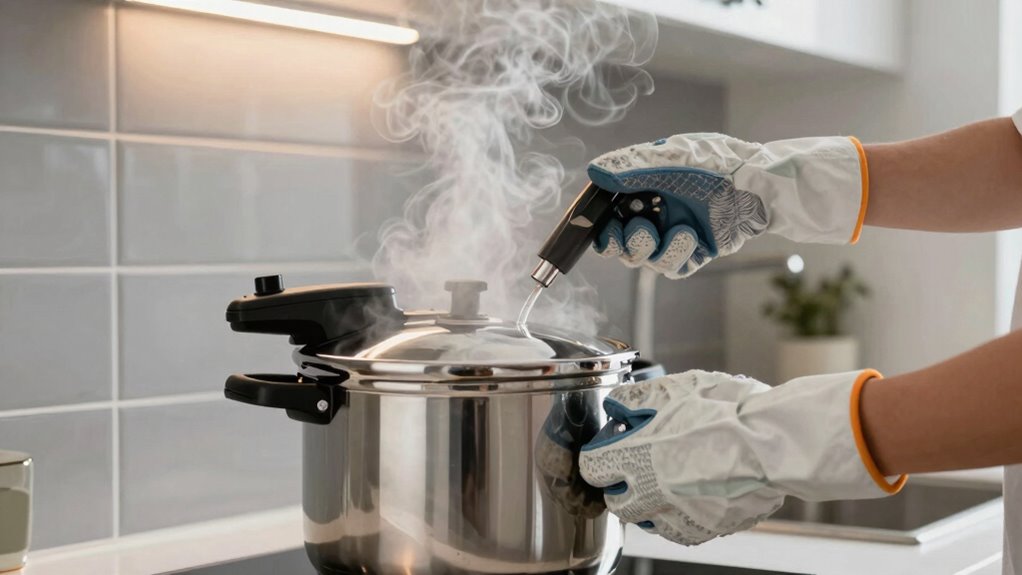
In addition to understanding valve mechanisms, safety accessories play an important role in maintaining safe pressure cooker operation. Many cookers come with safety features such as locking lids that won’t open until the pressure is fully released, preventing accidental openings under pressure. Some models include pressure indicators, which give you visual confirmation that the cooker has reached the desired pressure and safely vented excess steam. You should always familiarize yourself with these safety accessories and their proper use to avoid mishaps. For example, never force open a lid if the pressure indicator shows the cooker is still under pressure, as doing so can cause hot steam or liquid to spray out violently. Proper pressure release methods are essential for safe operation and preventing accidents. When it’s time to release pressure, you have several methods at your disposal. Natural release involves turning off the heat and letting the pressure decrease gradually on its own. This method is ideal for foods that continue to cook from residual heat, such as beans or tough cuts of meat. Quick release, on the other hand, involves carefully turning or lifting the pressure valve to vent steam rapidly. This method is useful when you need to prevent overcooking or when you’re preparing delicate foods like vegetables. Always use a long-handled utensil or a heat-resistant glove to turn the valve, and keep your face and hands away from the steam vent to avoid burns. Whichever release method you choose, confirm that the pressure has fully subsided before opening the lid. Checking the pressure indicator or listening for the hissing sound will confirm that it’s safe to open.
Frequently Asked Questions
Can I Open the Pressure Cooker Immediately After Cooking?
No, you shouldn’t open the pressure cooker immediately after cooking. You need to wait for the pressure to relieve naturally or use the instant release method, but always follow safety precautions. Instant release quickly reduces pressure, but it can be dangerous if done too soon or improperly. Always verify the pressure is fully released and the safety valve drops before opening the lid. This keeps you safe from burns or accidents.
What Are the Risks of Rapid Pressure Release?
Thinking rapid pressure release is safe? Think again. You risk sudden steam explosions due to intense pressure buildup. If the valve malfunctions or gets blocked, it can cause dangerous bursts or spills. Rushing the process ignores safety, risking burns or kitchen chaos. Always opt for natural or quick release methods, and make certain your valve works properly. Otherwise, you’re playing with a mini volcano ready to erupt unexpectedly.
How Do I Know When It’s Safe to Open?
You know it’s safe to open your pressure cooker when the steam safety indicator drops, or the valve operation shows no more steam escaping. Always wait until pressure has fully released, either naturally or through a quick-release method, to avoid accidents. Never force the lid open while steam or pressure is still present, as it can cause dangerous burns. Ensuring proper steam safety and valve operation keeps you safe.
Is Natural Release Better Than Quick Release?
Natural release is often better because it allows the pressure build-up to gradually decrease as the steam escape process happens slowly, reducing the risk of splatters. It’s ideal for foods that tend to overcook or foam, like beans or meats. Quick release rapidly releases steam escape, which can cause hot liquid or food to splatter. Choose natural release for gentle cooling and safety, especially with delicate or starchy foods.
What Should I Do if the Pressure Doesn’T Release?
When pressure refuses to release, think of it as a stubborn knot needing gentle undoing. First, turn off the heat and wait a few minutes, then carefully follow safety precautions. If pressure still won’t release, consult your pressure cooker’s emergency procedures or contact customer support. Never force the lid open — rushing could cause injury. Patience and caution are your best allies in ensuring safe, successful cooking.
Conclusion
So, next time you hear that satisfying hiss, remember: a little patience and proper release can save you from a mini explosion of regret. Ignoring safety might just turn your kitchen into a fireworks show—minus the fun. Don’t be the hero who forgets the basics; instead, be the smart cook who respects the pressure. After all, nobody wants their dinner to become a fiery spectacle. Stay safe, and keep those releases gentle!