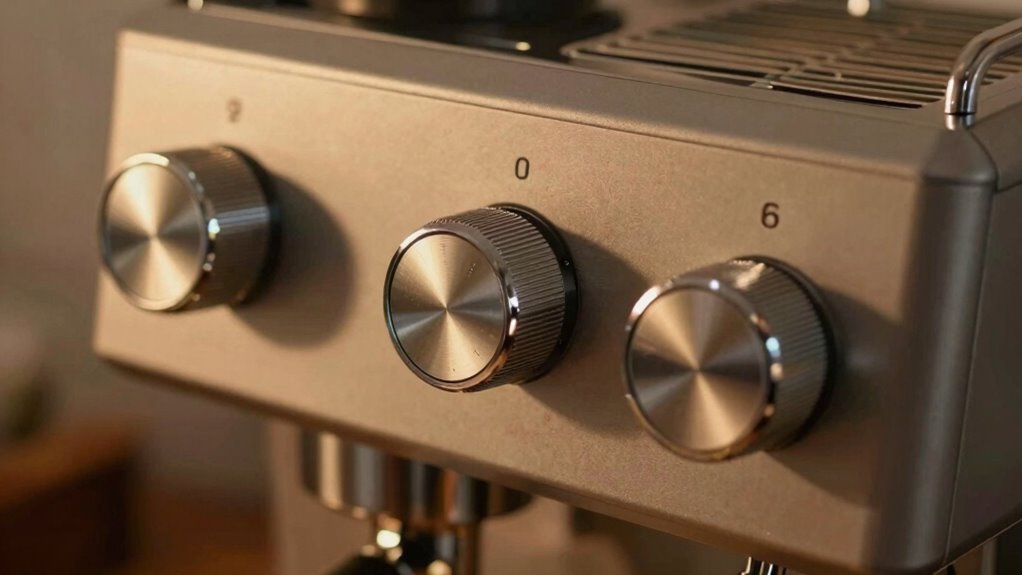

To fix bitter shots, focus on adjusting three key knobs: grind size, brew time, and water flow. Start with a slightly coarser grind to lessen over-extraction, aiming for a brew time around 25-30 seconds. If the shot pulls too quickly, coarsen the grind; if it’s too slow, make it finer. Fine-tuning these settings helps balance extraction, eliminating bitterness. Keep practicing, and you’ll gain confidence in achieving perfect shots every time.
Key Takeaways
- Adjust the grind size to control water flow; coarser for bitterness, finer for sourness.
- Modify brew time by fine-tuning grind size to prevent over-extraction causing bitterness.
- Ensure consistent grind size for steady water flow and balanced extraction.
- Shorten shot time with coarser grind to reduce over-extraction and bitterness.
- Make small, incremental adjustments and keep notes to dial in the perfect shot.
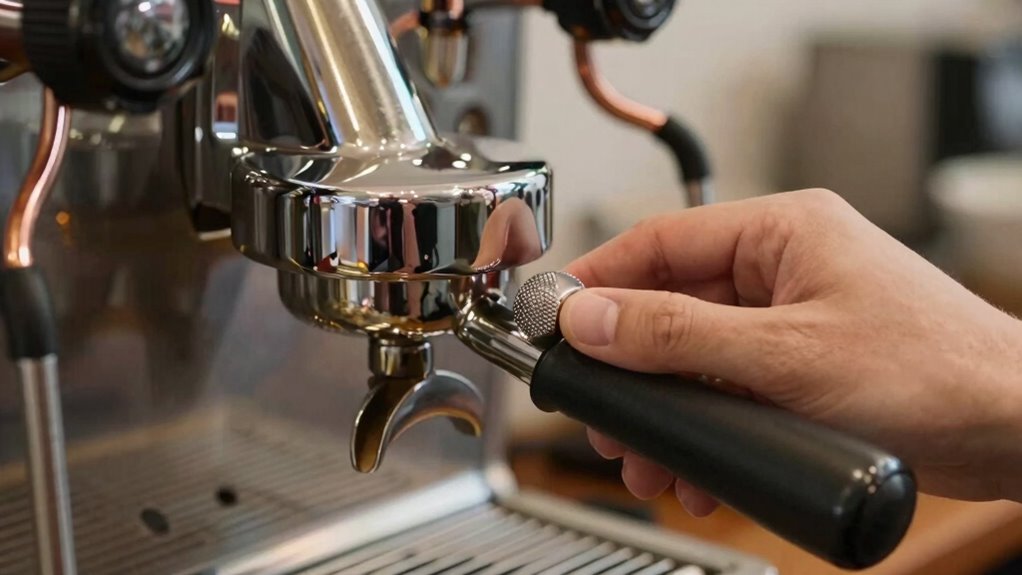
Dialing in espresso is a crucial step to achieving that perfect shot, and it requires a bit of patience and precision. One of the most critical factors in this process is adjusting your grind size. If your espresso tastes bitter or over-extracted, your grind is likely too fine, slowing down the extraction and pulling out harsh flavors. Conversely, if it’s weak or sour, your grind might be too coarse, leading to under-extraction. You want to find that sweet spot where the grind size allows water to pass through at the right rate, extracting a rich, balanced flavor. Keep in mind, even a slight change in grind size can greatly impact brew time, which is another key aspect of dialing in your shot. Achieving consistent results often depends on understanding how your equipment responds to different adjustments. Brew time directly influences how your espresso turns out. Ideally, a good shot takes about 25 to 30 seconds to pull. If it takes longer, it’s often a sign that your grind is too fine, causing the water to struggle through the coffee bed and over-extracting the flavors, which results in bitterness. If it’s too quick, your grind might be too coarse, leading to under-extraction and a sour, weak shot. Adjusting your grind size helps control brew time. For example, if your shot pulls too quickly, try a finer grind; if it takes too long, go a bit coarser. It’s a balancing act, and small tweaks can make a big difference. Remember, the goal isn’t just about hitting a specific brew time or grind size but understanding how they interact. Your grind size influences the flow rate of water through the coffee, which directly affects extraction. Over-extracting by brewing too long or using too fine a grind can produce bitter, harsh flavors. Under-extracting from a coarse grind or short brew time results in sourness and a lack of depth. To dial in your espresso effectively, start with a consistent grind size and aim for that 25-30 second brew window. Then, make tiny adjustments—finer if the shot is too quick, coarser if it’s too slow—until you find that perfect balance. Patience is key. It might take several attempts to get the grind size and brew time just right, but once you do, your espresso will be smoother, richer, and free from bitterness. Keep notes of your adjustments, and don’t be afraid to experiment gradually. Over time, you’ll develop a better sense of how your equipment responds and how to fine-tune your grind size and brew time for consistently excellent shots. Developing a good understanding of espresso extraction can greatly improve your brewing skills and results.
Frequently Asked Questions
How Often Should I Recalibrate My Espresso Machine?
You should recalibrate your espresso machine roughly every 1 to 3 months, depending on usage and machine maintenance. Regular calibration guarantees consistent shot quality and prevents bitterness. Keep an eye on your machine’s performance; if you notice changes in taste or extraction times, it’s time to adjust your calibration schedule. Consistent maintenance and recalibration help maintain ideal flavor, making your espresso shots perfect every time.
What’s the Ideal Temperature for Brewing Espresso?
You should aim for an extraction temperature of around 195-205°F for the best espresso. Interestingly, studies show even a 2°F difference can alter flavor markedly. With precise temperature control, you can avoid over-extraction and bitterness. Consistently monitoring and adjusting your machine’s temperature control guarantees ideal flavor, preserving the perfect balance of acidity and richness. Keep your brew temperature steady, and you’ll enjoy consistently excellent shots every time.
Can Changing Grind Size Improve Bitter Shot Issues?
Yes, changing grind size adjustments can improve shot bitterness. If your espresso is too bitter, try making the grind slightly coarser, which reduces extraction time and prevents over-extraction. Conversely, if the shot is weak or under-extracted, a finer grind can help extract more flavors. You’ll find that tweaking the grind size directly influences shot bitterness, giving you better control over your espresso’s taste.
How Do Humidity Levels Affect Espresso Taste?
Humidity levels profoundly affect your espresso taste. High humidity can cause your coffee beans to absorb moisture, leading to a dull or sour shot, while low humidity keeps beans dry and fresh. To manage this, store your coffee beans in airtight containers and regularly calibrate your grinder to adapt to moisture changes. This way, you maintain consistent extraction, ensuring your espresso remains rich and balanced regardless of humidity fluctuations.
Are There Specific Brands of Knobs or Dials Recommended?
Think of choosing knobs like selecting the right tuning pegs for a guitar; quality matters. For precise control, go with reputable brands like Espro or Baratza, known for durable, accurate knobs. Their build quality guarantees consistent adjustments, helping you fine-tune your espresso shot without guesswork. Investing in well-made knobs makes dialing in easier, so your espresso always hits the right notes—rich, balanced, and free of bitterness.
Conclusion
Now that you’ve mastered those three knobs, your espresso machine becomes an artist’s palette, ready to paint each shot with perfection. Think of it as tuning a fine instrument—once you find the right balance, every cup sings with vibrant flavor and smooth richness. With each adjustment, you’re carving out a path to espresso bliss, transforming bitter disappointments into a symphony of taste. Keep experimenting, and soon, your mornings will feel like a well-orchestrated masterpiece.