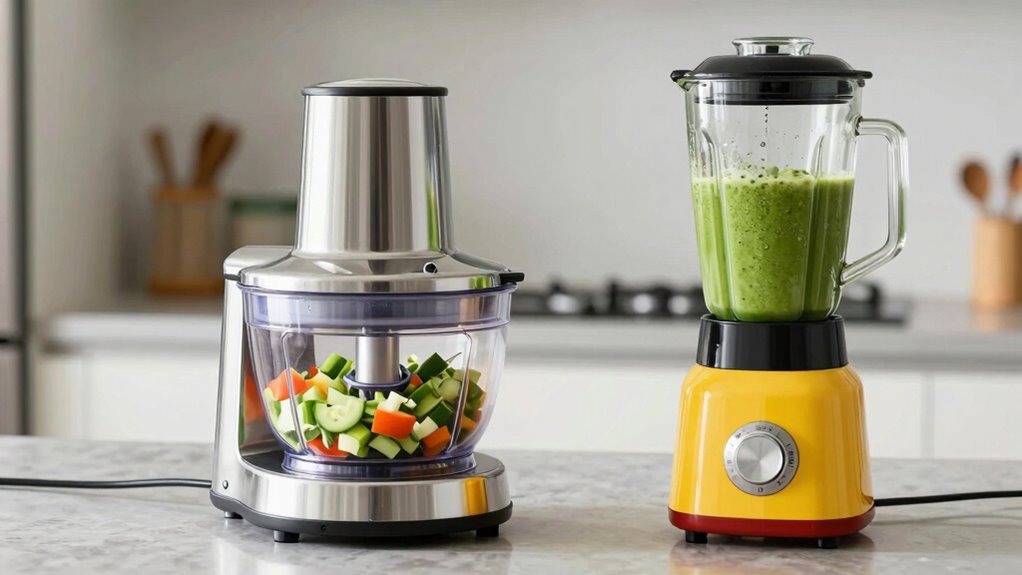
A food processor is best for chopping, slicing, kneading, and handling dense ingredients like nuts, meat, or dough, giving you more control over texture. A blender excels at creating smooth liquids, purees, smoothies, and crushing ice for drinks. Each appliance shines with specific tasks, so choosing the right one depends on what you want to make. Keep going to discover how each can elevate your kitchen skills even further.
Key Takeaways
- Food processors excel at handling dense, solid ingredients like meat, dough, and vegetables, while blenders are best for liquids and soft foods.
- Blenders create smooth purees, smoothies, and milkshakes, whereas food processors are ideal for chopping, mincing, and kneading dough.
- Food processors have powerful motors and sharp blades for dense textures; blenders offer multiple speeds for emulsifying and crushing ice.
- For control over chopping and dough textures, use a food processor; for silky drinks and sauces, choose a blender.
- Selecting the right appliance enhances recipe outcomes, with food processors suited for solid foods and blenders for liquids and purees.
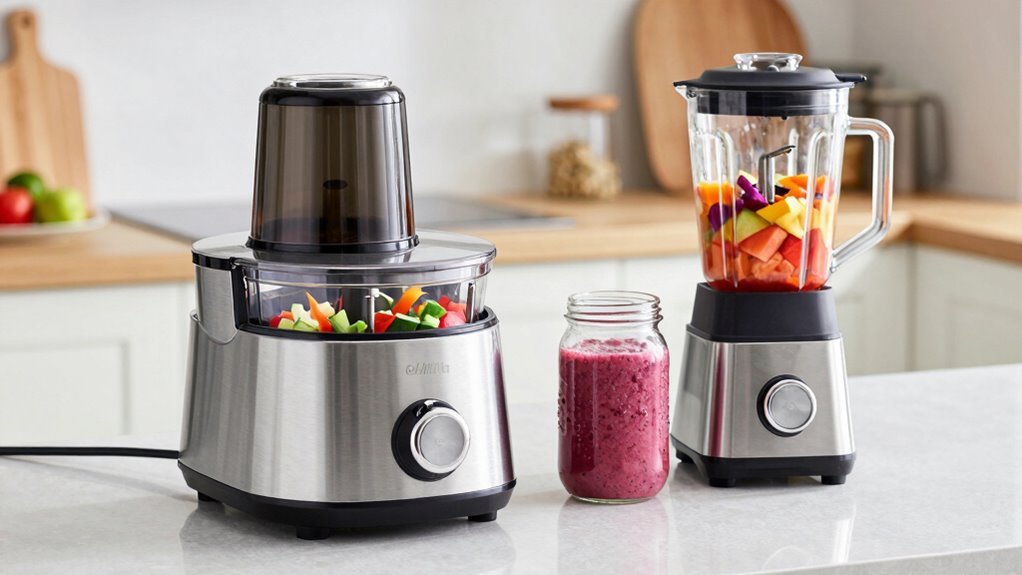
A food processor is your go-to for handling dense, solid ingredients. If you need to grind meat for burgers, sausages, or other recipes, a food processor is perfect. Its powerful motor and sharp blades make short work of chopping and mincing meat efficiently, giving you control over texture. Similarly, if you’re making dough, such as bread or pizza, a food processor can knead the dough quickly and evenly, saving you from the manual effort of hand-kneading. Its dough blade or pulse function helps achieve the right consistency without overworking the ingredients. This versatility makes a food processor a handy tool for both savory and baking recipes. Understanding appliance functions can help you select the right tool for each task, ensuring optimal results in your cooking.
On the other hand, a blender is designed to blend liquids and soft ingredients into smooth textures. If you’re making smoothies, milkshakes, or purees, a blender is your best bet. It excels at breaking down fruits, vegetables, nuts, and ice into silky drinks or creamy sauces. While some high-powered blenders can handle thicker mixtures, they generally aren’t suitable for meat grinding or kneading dough. Blenders are more about creating a uniform, smooth consistency rather than handling dense, solid foods. They usually have multiple speed settings and pulse functions to control texture, but they lack the powerful blades needed for meat processing or dough preparation.
Frequently Asked Questions
Can a Food Processor Replace a Blender Entirely?
A food processor can’t replace a blender entirely. While it’s great for vegetable chopping, meat grinding, and preparing dough, it struggles with smooth, liquid textures like smoothies or purees. A blender excels at blending liquids and soft ingredients into smooth consistency, which a food processor can’t achieve as effectively. So, for versatility, keep both in your kitchen—each serves unique functions that the other can’t fully replace.
Which Appliance Is Better for Making Smoothies?
A blender is better for making smoothies because it offers superior blending efficiency, creating smooth, consistent textures quickly. Its design enhances smoothie versatility, allowing you to blend fruits, ice, and liquids effortlessly. Unlike a food processor, which may leave chunks or require more effort, a blender specializes in turning ingredients into a silky drink. For smooth, well-blended smoothies, investing in a good blender is your best choice.
Are Food Processors Suitable for Pureeing Soups?
Yes, food processors are suitable for pureeing soups, especially if you want to control the texture. They can create smooth pureed soups by processing cooked ingredients quickly. However, keep in mind that they might not achieve the same silky consistency as blenders. Use the pulse function for better texture control, and add liquid gradually to avoid over-processing. Food processors are versatile but may require extra effort for ultra-smooth purees.
How Do Cleaning Procedures Differ Between the Two?
You should clean your food processor and blender differently, mainly due to their design. For the food processor, use warm water and mild detergent, paying attention to blades and bowls, and clean after each use to prevent residue buildup. For blenders, rinse immediately after use, then wash with gentle detergent or run a soap and water cycle. Regular cleaning frequency keeps both appliances hygienic and guarantees peak performance.
Can Both Appliances Handle Dough Preparation Effectively?
You can use a food processor for dough kneading and bread-making, as it handles thick dough efficiently with its powerful motor and sturdy blades. However, a blender isn’t ideal because its design isn’t meant for heavy kneading. For best results, stick with a food processor when preparing bread dough, ensuring even mixing and proper kneading without straining your appliance.
Conclusion
Choosing between a food processor and a blender is like selecting the right brush for your masterpiece. Each tool has its own specialty, helping you craft delicious creations with ease. Think of the food processor as your versatile sculptor, chopping and slicing with precision. Meanwhile, the blender is your smooth artist, blending everything into a silky masterpiece. By understanding their strengths, you’ll create culinary magic, turning your kitchen into a canvas of endless possibilities.