When choosing between flat and conical burr coffee grinders, you’ll notice that flat burrs produce very uniform grinds, ideal for precise brewing, while conical burrs generate slightly less heat and are more forgiving, helping preserve delicate flavors. Flat burrs can create more consistent results, but conical options reduce heat buildup and clogging. Understanding these differences can help you make better coffee, and if you keep exploring, you’ll learn even more about optimizing your grinder’s performance.
Key Takeaways
- Flat burr grinders produce more uniform grind sizes, ideal for precise extraction and consistent flavor.
- Conical burr grinders generate less heat, preserving delicate coffee flavors during grinding.
- Flat burrs may require more maintenance but offer higher precision, while conical burrs are more forgiving and easier to clean.
- Flat burrs are preferred for espresso due to their consistent grind, whereas conical burrs suit drip and French press brewing.
- Both types require regular cleaning and calibration to maintain optimal performance and flavor quality.
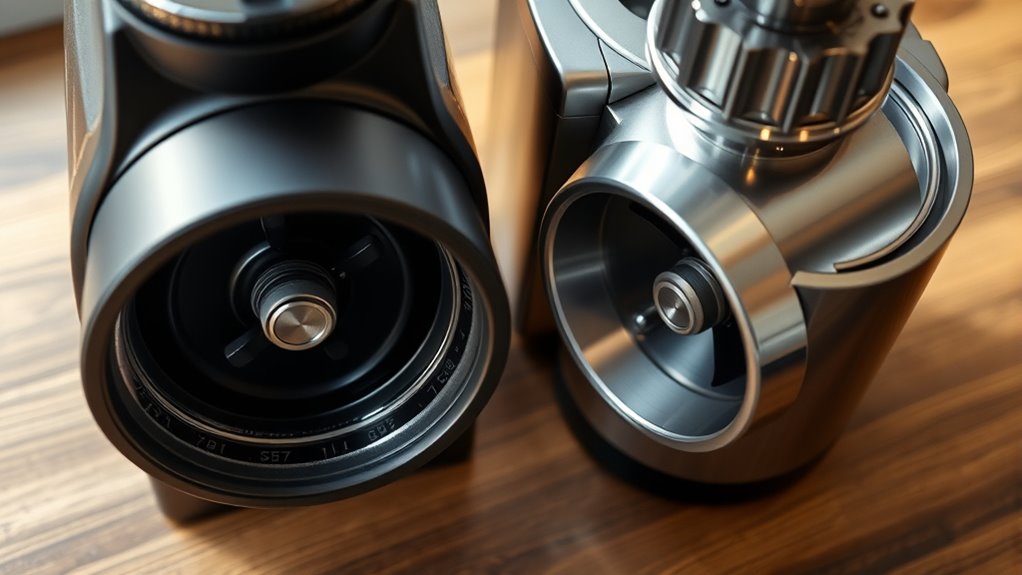
A good coffee grinder is vital for brewing the freshest, most flavorful cup of coffee. When choosing between flat and conical burr grinders, understanding how they affect grind consistency can make a big difference in your brewing experience. Flat burr grinders feature two parallel, flat rings that crush beans between them. They tend to produce very uniform grind sizes, which is essential if you want precise control over extraction. Consistent grind size ensures your coffee brews evenly, preventing over-extraction or under-extraction, both of which can ruin the flavor. Conical burr grinders, on the other hand, have a cone-shaped center burr that spins against a ring-shaped outer burr. While they may not always achieve the same level of grind consistency as flat burrs, they excel in producing a slightly more forgiving grind with less heat generated during the process. This can help preserve the beans’ delicate flavors. Additionally, automated calibration features in some grinders can assist in maintaining optimal grind settings over time, improving reliability and consistency.
Choosing the right grinder isn’t just about the burr type; maintaining it properly is equally important. Regular maintenance tips can help you keep your grinder performing at its best. First, always clean your burrs and hopper regularly to remove coffee oils and residue that can clog the mechanism and affect grind consistency. Use a soft brush or a specialized grinder cleaning brush to clear out any leftover grounds. Some grinders allow you to disassemble the burrs easily for a more thorough cleaning—be sure to follow the manufacturer’s instructions. Additionally, avoid grinding oily or flavored beans that can coat the burrs and impact performance over time. Adjusting your grind setting periodically is also key to maintaining consistency, especially if you notice changes in brew quality. Proper calibration ensures you’re getting the desired grind size each time.
Another maintenance tip is to avoid overloading your grinder with beans, which can strain the motor and lead to uneven grinding. Instead, grind smaller batches more frequently to keep the burrs clean and functioning smoothly. If your grinder has a built-in cleaning cycle or descaling option, use these features as recommended to prevent buildup inside the machine. By staying on top of these maintenance routines, you prolong your grinder’s lifespan and guarantee that each cup you brew is optimized for flavor. Whether you prefer flat or conical burrs, regular upkeep is the key to achieving consistent grind quality. When your grinder is well-maintained, it delivers the uniform grind needed for perfect extraction, ultimately elevating your coffee experience.
Frequently Asked Questions
How Do Burr Types Affect Coffee Flavor Profiles?
Choosing between flat and conical burrs impacts your coffee flavor profile markedly. Flat burrs provide consistent grind size, enhancing flavor extraction and resulting in a uniform, bright taste. Conical burrs tend to preserve more aroma due to their slower grinding process, which minimizes heat and preserves delicate flavors. Your choice influences how well the beans’ nuanced flavors are extracted and retained, shaping the overall aroma and taste experience in your cup.
Which Grinder Type Is Better for Espresso?
For espresso, you should choose a conical burr grinder because it offers better grind consistency and less heat during grinding, preserving flavor. Look for a model with durable burr material like hardened steel or ceramic. Also, consider grinder ergonomics—opt for one that’s comfortable to use and easy to adjust, so you can fine-tune your espresso shots effortlessly. This combination ensures ideal flavor and ease of use.
Are Conical Burrs More Durable Than Flat Burrs?
Yes, conical burrs are generally more durable than flat burrs because of their design and burr material. They tend to handle a wider range of burr materials, like stainless steel or ceramic, which affects their longevity. Plus, conical burrs usually produce lower noise levels, making your grinding process quieter. Their robust construction means you can expect them to last longer with less wear, ensuring consistent coffee grounds over time.
What Maintenance Is Required for Different Burr Types?
Burrs need proper preservation through regular cleaning and occasional sharpening. For both flat and conical burrs, you should clean your grinder at least once a week to prevent buildup and maintain flavor. Sharpening isn’t usually necessary unless you notice inconsistent grinding. Use a brush or cloth to clear grounds and remove residue, and follow the manufacturer’s guidelines for deep cleaning, ensuring your grinder stays in tip-top shape for tasty, consistent coffee.
Do Burr Types Impact Grind Consistency Over Time?
Yes, burr types do impact grind size stability over time. Conical burrs tend to maintain consistent grind size longer because of their design, leading to better grind size stability. Flat burrs may experience more burr wear comparison, which can cause fluctuations in grind consistency over extended use. Proper maintenance helps preserve grind quality, but your choice of burrs influences how well your grinder keeps a steady grind over time.
Conclusion
Think of your coffee grinder as a trusty compass guiding your morning journey. Flat burrs are like a steady map, offering consistent, precise paths for your beans, while conical burrs are like a versatile explorer, smoothly maneuvering different terrains. Whichever you choose, remember it’s about your adventure in flavor. With the right grinder, you’ll always find your way to a perfect cup, no matter where your coffee journey takes you.