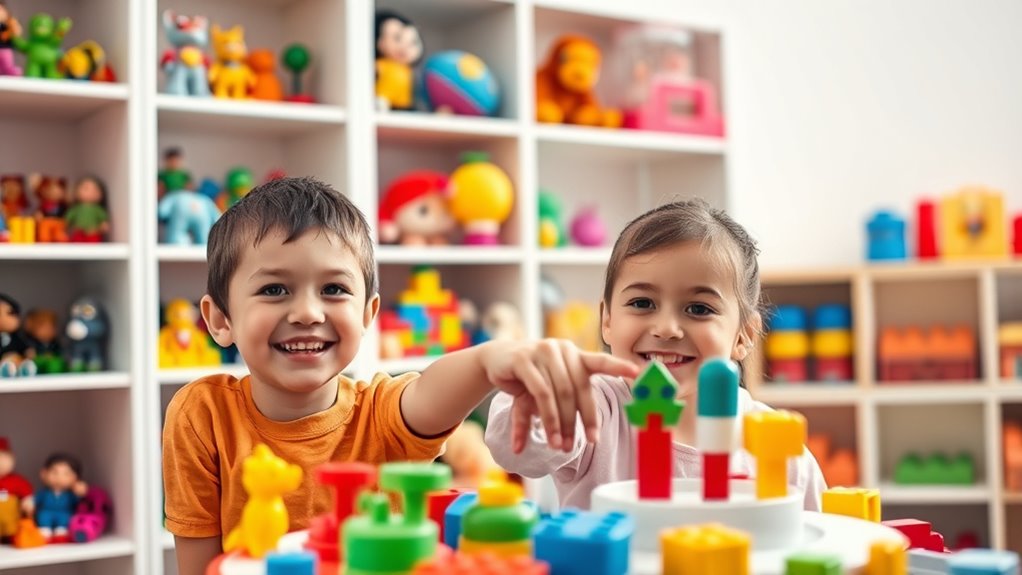

A toy rotation system keeps kids more engaged and excited for playtime by introducing fresh options regularly. By swapping out toys every week or so, you limit clutter, making play areas neater and less overwhelming. Kids tend to appreciate their toys more when they have fewer to choose from at a time, leading to deeper exploration and creativity. To discover simple ways to set up an effective rotation, keep exploring—you’ll find tips that work for your family.

Get your next haul delivered free with Prime
- Fast, free delivery on millions of items
- Prime Video, Amazon Music and more included
- Member-only deals all year
Key Takeaways
- Kids enjoy variety and novelty, making toy rotation exciting and engaging for longer play sessions.
- Involving children in selecting which toys to keep out boosts their interest and sense of ownership.
- Rotating toys prevents boredom by consistently introducing fresh, familiar, but varied play options.
- Simplified clutter and organized spaces create a more inviting environment, encouraging kids to play more happily.
- The system fosters creativity and exploration by offering new ways to interact with familiar toys.

If you’ve ever struggled with kids losing interest in their toys, a toy rotation system might be the solution they’ve actually enjoyed. This approach keeps playtime fresh and exciting, preventing boredom from setting in. Instead of leaving all their toys out at once, you select a handful to keep accessible and store the rest away. Every week or so, you swap out the toys, giving your child a new set to explore. This simple change can make a big difference in how engaged they are during play.
One reason this works so well is that kids tend to get overwhelmed or overstimulated when they see too many toys at once. When you limit their options, each toy feels more special and intriguing. They’re more likely to focus and create longer, more meaningful play sessions. Plus, it mirrors how kids naturally experience novelty and discovery; they don’t need a mountain of toys to stay entertained, just a well-curated selection that’s rotated regularly.
Limiting toys helps children focus, feel special, and enjoy longer, more meaningful play sessions.
Implementing a toy rotation system is straightforward. Start by gathering all the toys your child owns and then dividing them into smaller groups. You might choose to keep three or four toys out at a time, storing the rest in a box or closet. When it’s time for a change—say, after a week—you swap out the current toys for a different set. You can even involve your child in selecting which toys to keep out, giving them a sense of control and making the process more engaging.
Another benefit is that this system helps reduce clutter. When only a few toys are accessible, your space stays neater, and cleaning up becomes quicker and less overwhelming. Less clutter also means your child can focus better on play rather than being distracted by a jumble of toys. Since they’re excited about the toys they currently have, they’re less likely to seek out new distractions or ask for more toys constantly.
Over time, you’ll notice your child developing a more appreciative attitude toward their toys. They’ll start to see each item as special and worth exploring deeply. Plus, rotating toys can spark creativity, as your child may come up with new ways to play with familiar objects. Additionally, understanding that the market for toys is influenced by global economic factors can help you make more mindful decisions about toy purchases in the future. Overall, a toy rotation system not only keeps your child entertained but also nurtures their imagination, reduces clutter, and simplifies cleanup—all while giving them a fresh sense of discovery every time you change out the toys.
Frequently Asked Questions
How Often Should I Rotate My Child’s Toys?
You should rotate your child’s toys every one to three weeks to keep their interest piqued. Observe how they play with their current toys; if they seem bored or stop engaging, it’s time for a switch. Regular rotation prevents clutter and makes playtime more exciting. Adjust the frequency based on your child’s preferences and attention span, ensuring they stay engaged without feeling overwhelmed by too many options.
What Types of Toys Are Best for Rotation?
You should rotate a variety of toys, including puzzles, art supplies, building blocks, and dress-up clothes. Focus on toys that stimulate creativity, problem-solving, and physical activity. Keep some toys for longer periods and switch out others every few weeks to keep your child’s interest alive. Avoid overly complex or noisy toys that might become overwhelming. Regular rotation keeps play fresh, engaging, and helps your child develop diverse skills.
How Do I Introduce the Toy Rotation System?
You start by choosing a few toys to keep accessible and store the rest. Explain to your kids that you’ll rotate their toys weekly or bi-weekly to keep things fresh and exciting. Involve them in selecting which toys to put away and which to bring out. Keep the process simple and positive, emphasizing the fun of new toys and less clutter, making the progression smooth and enjoyable for everyone.
Will My Child Notice the Toy Changes?
Imagine opening a treasure chest of toys, only to find new gems each time. Your child will notice the changes, but in a fun way, like discovering surprises. They might ask about the missing toys or get excited seeing something new. Keep the progressions smooth by explaining it as a game or adventure. This keeps their curiosity alive and makes the toy swaps feel natural and exciting, not alarming.
How Can I Make Toy Rotation Fun for Kids?
You can make toy rotation fun by involving your kids in the process. Let them choose which toys to put away and which to bring out again. Turn it into a game, like a surprise reveal or a treasure hunt. Celebrate their choices and make it a special event. This way, they’ll look forward to the new toys and enjoy the change, feeling more excited and engaged.
Conclusion
Implementing a toy rotation system can truly transform your child’s playtime. Imagine Sarah, a busy mom, swapping out her kids’ toys weekly, and suddenly, they’re excited to explore and enjoy each piece anew. Their clutter decreases, and their imagination flourishes. With just a simple rotation, your kids will look forward to playtime again, discovering joy in their toys all over again. Give it a try, and watch your child’s happiness and engagement grow.
Halloween Picks
halloween
As an affiliate, we earn on qualifying purchases.