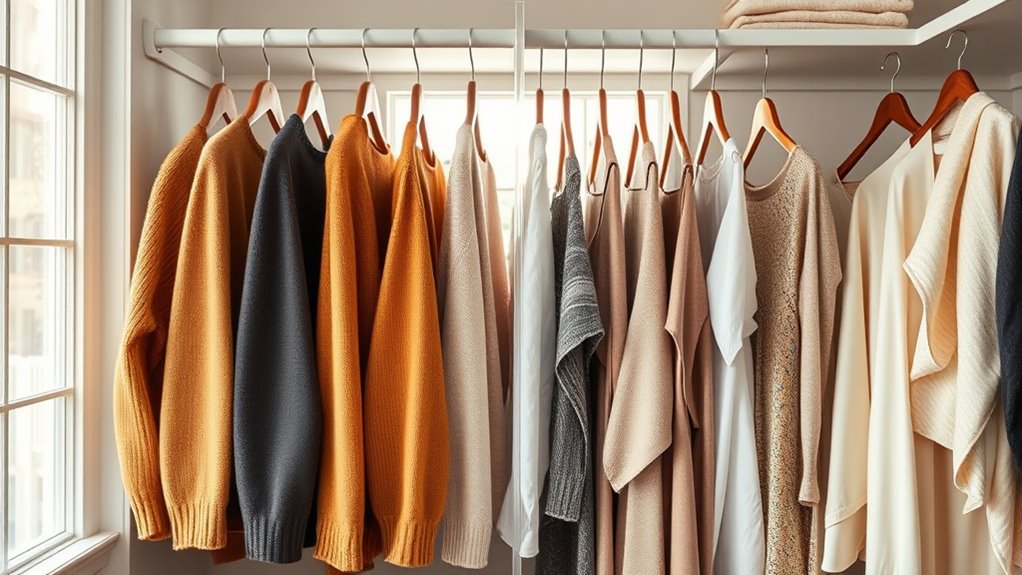
To rotate your seasonal clothes, first sort your wardrobe into winter, spring, summer, and fall categories. Store off-season items in breathable bins or vacuum-sealed bags, clearly labeled and placed aside in a clean, dry space. Keep frequently used clothing accessible and use organizers for efficiency. Regularly inspect, clean, and repair garments before storing. Maintaining a system helps you stay organized and extend the life of your clothes—continue to explore how to master this process smoothly.
Key Takeaways
- Sort clothes by season and store off-season items in breathable containers or vacuum-sealed bags.
- Clean and repair garments before storage to prevent damage and ensure freshness.
- Use labeled, dedicated storage solutions for easy identification and access during rotation.
- Rotate clothing based on current weather, keeping frequently worn items at eye level or within easy reach.
- Regularly review and declutter your wardrobe to refresh your collection and maintain organization.
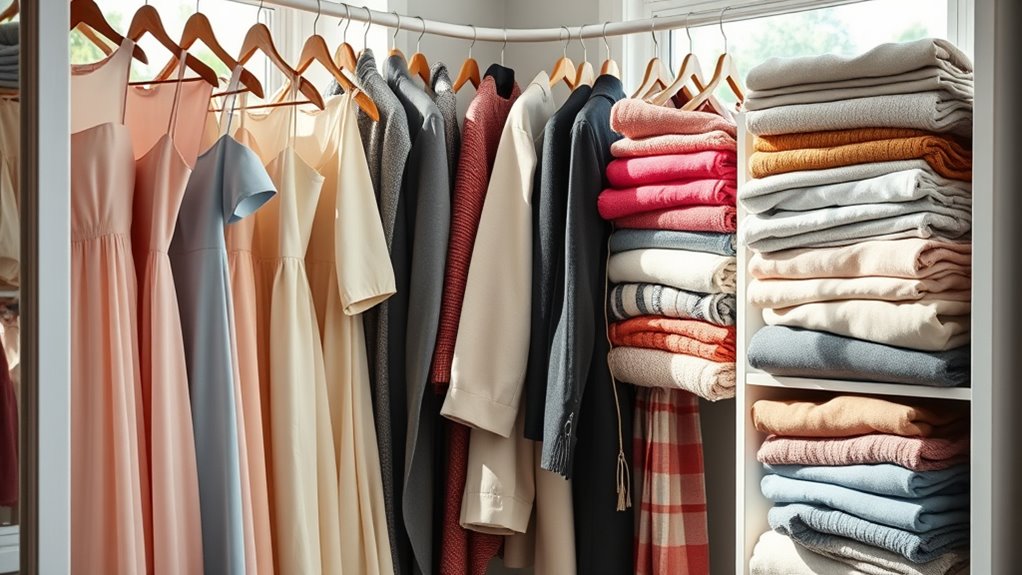
As the seasons change, rotating your wardrobe becomes essential to stay comfortable and organized. When you switch out your clothing, it’s a perfect opportunity to focus on fabric storage and wardrobe organization. Properly storing off-season clothes helps maximize space and keeps your wardrobe clutter-free. Start by sorting your clothes into categories: winter, spring, summer, and fall. This step makes it easier to identify what needs to be stored away and what should be readily accessible.
Before you begin storing, confirm your fabric storage solutions are suitable for your needs. Use breathable storage bins or fabric bags to preserve the quality of delicate garments. Avoid plastic containers that trap moisture and cause mold or fabric deterioration. For items like sweaters, coats, and scarves, consider vacuum-sealed bags that save space while protecting your clothing from dust and pests. Label each container clearly, so you don’t have to rummage through multiple boxes when the weather shifts again.
When it comes to wardrobe organization, keep frequently worn items at eye level or within easy reach to simplify your daily routine. For seasonal clothes, assign a dedicated space in your wardrobe or closet. Invest in storage solutions like hanging organizers, shelf dividers, or drawer dividers to keep different clothing types separate and accessible. Fold heavier sweaters and knitwear neatly to prevent wrinkles and maintain their shape. Use uniform hangers to create a streamlined look and prevent garments from slipping or deforming.
As you pack away your off-season clothes, check each item for stains, tears, or damage. Repair anything that needs mending before storing it long-term. This prevents minor issues from worsening over time. When storing, confirm your wardrobe is clean and dry. Avoid overcrowding your closet, as cramped spaces can damage fabrics and make it harder to find what you need later. Keeping your wardrobe organized means you can quickly locate your seasonal favorites without sifting through piles of clutter.
Additionally, be aware that spoiled fabric storage can lead to mold or fabric deterioration if not managed properly, so ensure your storage environment is suitable. Periodically, review your stored fabric clothing to remove items you no longer wear or need. Donating or recycling outgrown or unused clothes clears space for new pieces and keeps your wardrobe fresh. By having an organized system for fabric storage and wardrobe organization, you’ll streamline your seasonal clothing rotation. When the next season arrives, you won’t be overwhelmed by clutter—just an easy, efficient transition that keeps your wardrobe neat, your clothing protected, and your style on point.
Frequently Asked Questions
How Do I Store Off-Season Clothing Properly?
To store off-season clothing properly, first clean and thoroughly dry each piece to guarantee clothing preservation. Fold or hang your clothes neatly, then place them in airtight storage containers to protect against dust, pests, and moisture. Label the containers clearly, and store them in a cool, dark, and dry place. This method keeps your clothing in top condition, ready for the next season while maximizing space and maintaining quality.
When Is the Best Time to Rotate Seasonal Wardrobe?
Think of the best time to rotate your seasonal wardrobe as when the weather’s like a rollercoaster—unexpected and changing. You should do it as soon as the climate considerations shift, usually when temperatures consistently stay above or below certain thresholds. Keep an eye on current fashion trends, too; they often influence wardrobe updates. Typically, late spring and early fall are perfect for switching out winter and summer clothing, ensuring you’re always stylish and comfortable.
How Do I Decide Which Clothes to Keep or Donate?
You decide which clothes to keep or donate by starting with wardrobe categorization and clothing condition assessment. Sort your items into keep, donate, or discard piles. Check for wear, stains, or fit issues; if an item is damaged or no longer suits your style, it’s time to let it go. Keep only what fits well, is in good condition, and aligns with your current wardrobe needs.
What Are Eco-Friendly Ways to Rotate Clothing?
You can rotate clothes eco-friendly by practicing sustainable laundry practices like washing in cold water, air drying, and using eco-friendly detergents. Store off-season clothing properly to extend its lifespan and reduce waste. Consider swapping clothes with friends or donating items you no longer wear. These habits help conserve resources and promote eco-friendly fabric care, making your wardrobe rotation more sustainable and environmentally responsible.
How Can I Organize My Closet for Easy Rotation?
You can organize your closet for easy rotation by using clear wardrobe labels to sort seasonal clothing and accessories. Hang or fold items based on season, and create designated sections for each. Keep off-season clothes in bins or drawers, clearly labeled for quick access. Regularly review and update your labels to stay organized, making it simple to swap out clothing and accessories as seasons change, saving time and reducing clutter.
Conclusion
By following this seasonal clothing rotation method, you’ll keep your wardrobe fresh and organized, like a well-tuned symphony. Regularly swapping out your clothes guarantees you wear everything you love while making space for new favorites. Think of it as tending a garden—carefully pruning and nurturing your wardrobe so it blooms beautifully year-round. Embrace this rhythm, and you’ll enjoy a clutter-free closet that feels just right, no matter the season.