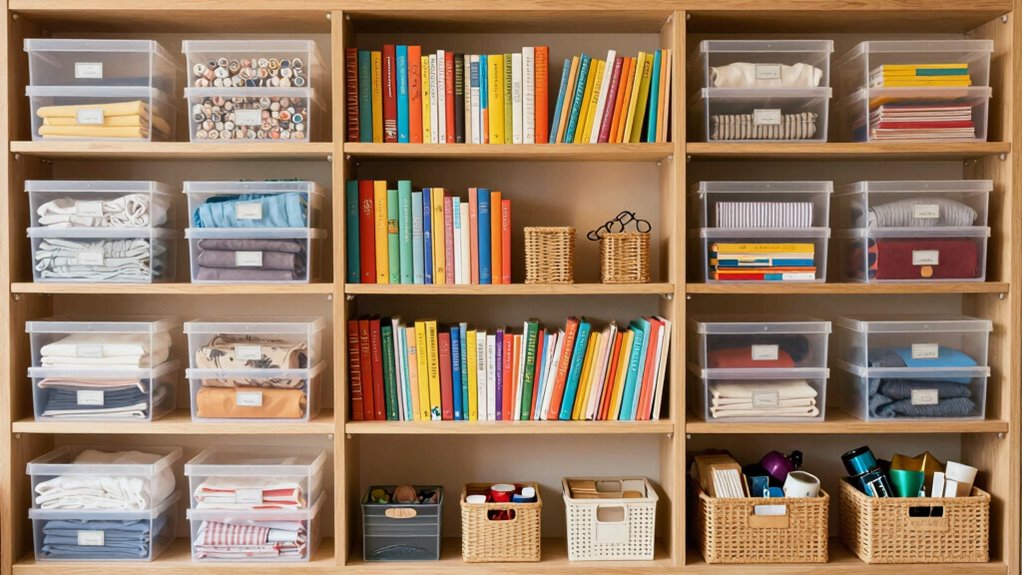

To prevent items from getting lost in deep shelves, group similar items together and use clear, labeled containers for easy identification. Store frequently used items at eye level or within easy reach, and place less-used items toward the back or on higher shelves. Incorporate stackable bins, vertical dividers, and stylish baskets to maximize space and visibility. Keep your shelves tidy and review them regularly—if you want expert tips, there’s more to discover below.

Get your next haul delivered free with Prime
- Fast, free delivery on millions of items
- Prime Video, Amazon Music and more included
- Member-only deals all year
Key Takeaways
- Group similar items together and label containers for quick identification and easy retrieval.
- Use vertical dividers or stackable containers to maximize space and prevent items from hiding.
- Store frequently used items at eye level for easy access, and less-used items at the back or higher shelves.
- Incorporate clear or decorative storage solutions to improve visibility and reduce lost items.
- Regularly review and tidy shelves to remove unnecessary items and maintain organization.
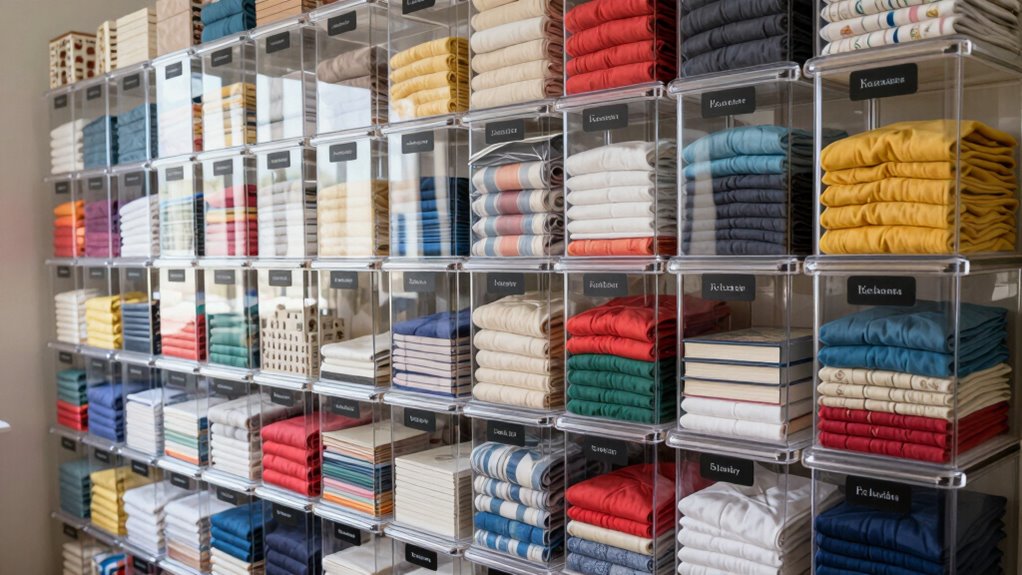
Deep shelves can easily become cluttered and hard to access, but with the right organization techniques, you can maximize their storage potential. To keep everything visible and reachable, consider incorporating decorative storage solutions that serve both functional and aesthetic purposes. Stylish baskets, woven bins, and colorful boxes can hide clutter while adding a decorative touch to your shelves. When choosing these containers, pick ones that match your room’s decor, so your storage doesn’t look out of place. This approach helps create a cohesive look, making your shelves inviting and easy to navigate.
Stylish storage solutions enhance deep shelves’ functionality and style, making your space inviting and easy to navigate.
Accessibility tips are essential when organizing deep shelves. First, group similar items together, so you know exactly where everything is. For example, keep all your books in one section, kitchen supplies in another, and decorative items in a separate zone. Use vertical dividers or stackable containers to maximize space and prevent items from toppling over. Labeling your storage containers is a smart move—labels help you quickly identify what’s inside without rummaging through everything. You can use chalkboard labels for a rustic look or sleek adhesive labels for a modern style. Keep frequently used items at eye level or within easy reach, so you don’t have to dig through the depths every time.
When arranging items, think about visibility. Place lighter and smaller items in front, so they’re not hidden behind bulky containers. For larger or less frequently used items, store them towards the back or on higher shelves. This way, you avoid cluttering the most accessible areas with seldom-used objects. Consider adding a small step stool nearby if your shelves are particularly deep, making it easier to access items stored at the back without risking a fall. Incorporating awareness of biodiversity can also inspire eco-friendly storage choices, such as sustainable baskets made from natural materials. Additionally, choosing ergonomic storage solutions can significantly improve ease of access and reduce strain when reaching for items. Being mindful of space optimization techniques can further ensure your shelves remain organized and functional over time. Regularly reviewing your storage setup can help you identify opportunities for better space utilization and improve overall accessibility. Incorporating sustainable materials into your storage options supports environmentally conscious practices and adds a natural aesthetic.
Lastly, don’t forget to incorporate decorative storage that doubles as a visual feature. Elegant baskets or trendy boxes can break up the monotony of uniform containers, adding personality to your space. This not only keeps your shelves functional but also visually appealing. Regularly reassess and tidy your shelves, removing items you no longer need or use. This ongoing maintenance prevents clutter from building up again, ensuring your deep shelves stay organized, accessible, and stylish.
clear labeled storage containers for shelves
As an affiliate, we earn on qualifying purchases.
As an affiliate, we earn on qualifying purchases.
Frequently Asked Questions
How Often Should I Reorganize My Deep Shelves?
You should reorganize your deep shelves every six months to maintain effective storage solutions and prevent clutter. Regular shelf maintenance helps you keep track of items, spot expired or unused products, and optimize space. By setting a schedule, you guarantee everything stays accessible and organized. Plus, periodic reorganization allows you to adjust your storage solutions as your needs change, making your shelves more functional and easier to navigate over time.
What Tools Can Help Me Access Items at the Back?
You might think reaching the back is tricky, but storage bins and pull-out organizers prove otherwise. These tools aren’t just for convenience—they actually reveal that accessible storage solutions can transform your space. By investing in clear bins, you can see everything at a glance, and pull-out organizers let you easily access items deep in the shelf. This approach challenges the idea that deep shelves are hard to organize, making retrieval simple and efficient.
How Do I Prevent Items From Falling off Deep Shelves?
To prevent items from falling off deep shelves, use shelf dividers to keep groups of items separated and stable. Incorporate storage bins to contain loose or smaller items, reducing the chance of things toppling over. Regularly check and adjust the placement of your bins and dividers, ensuring everything stays secure. This method keeps your shelves tidy, accessible, and minimizes accidents caused by falling objects.
What Are the Best Labeling Techniques for Deep Shelves?
Imagine your deep shelves as a well-organized library, each section clearly marked. Use shelf dividers to create distinct zones and enhance visibility. Pair them with a labeling system—bold, legible labels on the front or side of each section—that’s easy to read at a glance. This combo keeps everything accessible, prevents mix-ups, and makes returning items hassle-free. Your shelves will look tidy, and you’ll find what you need in seconds.
How Can I Maximize Space Without Cluttering?
To maximize space without cluttering, use decorative storage options that fit neatly on your shelves, keeping things visually appealing yet organized. Incorporate color coding to categorize items, making it easier to find what you need quickly. Stack items vertically and utilize baskets or bins for smaller objects. Regularly declutter, and label storage containers for added clarity. This approach keeps your deep shelves tidy while making the most of every inch.
stackable storage bins for deep shelves
As an affiliate, we earn on qualifying purchases.
As an affiliate, we earn on qualifying purchases.
Conclusion
Now that you know how to organize your deep shelves effectively, you’ll never have to dig through a cluttered mess again. With these simple tips, your space will stay tidy and items easily accessible — it’s like turning chaos into calm. Imagine the relief of finding everything instantly, saving you hours of frustration. Keep your shelves neat, and watch your home transform into a sanctuary of order where nothing ever gets lost again. You’ve got this!
As an affiliate, we earn on qualifying purchases.
As an affiliate, we earn on qualifying purchases.
Fall Picks
fall essentials
As an affiliate, we earn on qualifying purchases.