
Don’t rely on guesswork when it comes to garage shelving load ratings, as inaccurate assumptions can lead to dangerous collapses or damage. Always check the manufacturer’s specified weight limits for each shelf before placing heavy items. Proper materials like steel or solid wood support heavier loads, and distributing weight evenly is vital. Overloading any shelf weakens its structure over time. To guarantee safety, focus on verified ratings and proper organization—you’ll learn essential tips to keep your garage secure and efficient.
Key Takeaways
- Always check the manufacturer’s specified load ratings rather than estimating or guessing shelf capacities.
- Avoid overloading shelves beyond their rated weight to prevent structural failure and safety hazards.
- Properly distribute weight evenly across shelves to maintain their integrity and prevent bending or tipping.
- Regularly inspect shelves for signs of warping, corrosion, or damage that could compromise load capacity.
- Use durable, high-quality materials and consider capacity buffers to ensure safety and longevity of garage shelving.
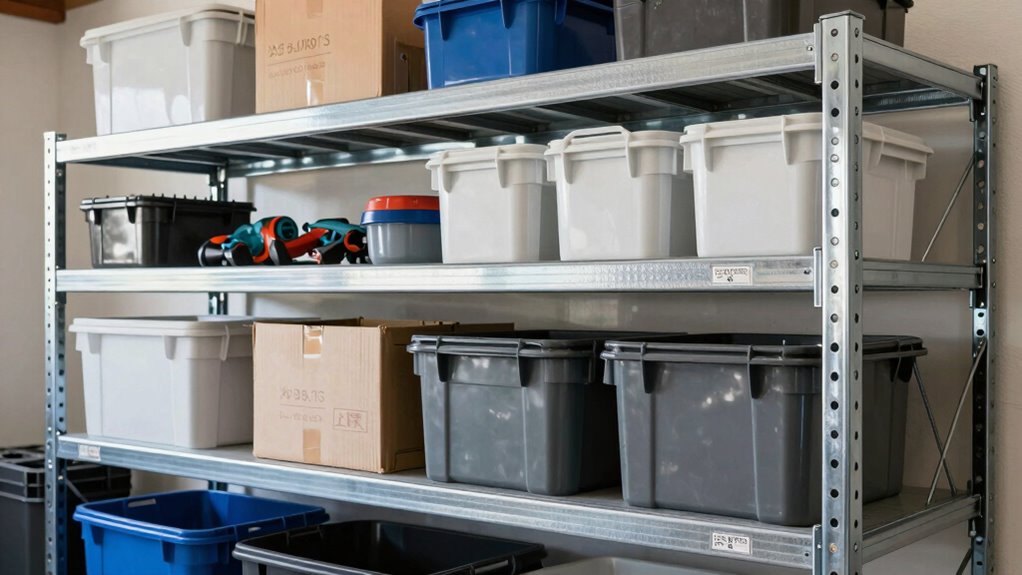
When choosing garage shelving, understanding load ratings is crucial to guarantee safety and functionality. Knowing how much weight your shelves can support helps you avoid accidents, damage, or clutter that could compromise the space. One of the most important aspects to consider is material durability. Shelving made from high-quality materials like steel or solid wood generally supports heavier loads without warping or breaking down over time. Cheaper, flimsy materials might seem tempting but can fail under even moderate weight, leading to potential hazards. By selecting shelves with proven material durability, you ensure they will hold up as your storage needs grow, giving you long-term peace of mind. Additionally, material durability plays a key role in how well shelves resist environmental factors like humidity or corrosion, which are common in garage settings.
Equally critical is understanding weight distribution. Even if your shelves are rated to hold a certain maximum weight, how you distribute that weight across the surface makes a big difference. Placing all your heavy items in the center or on one side can cause uneven stress, risking bending or collapsing the shelf. Proper weight distribution involves spreading out your stored items evenly and placing heavier objects closer to the front or center of the shelves, where the support is strongest. This approach not only preserves the structural integrity of your shelving but also prevents accidental tipping or collapse that could damage your belongings or cause injury.
Many people overlook the importance of load ratings, assuming they can load shelves as they see fit. This mistake can be costly. Always check the manufacturer’s specified load rating for each shelf or unit, and consider adding a little extra capacity buffer. If you plan to store particularly heavy items like tools, paint cans, or storage bins filled with dense contents, prioritize shelves with higher load ratings and superior material durability. Remember, a shelf rated for 100 pounds isn’t designed to hold 200 pounds safely. Overloading, even slightly, can weaken the shelf over time, leading to sudden failure.
Additionally, keep in mind that the way your garage is organized impacts load capacity. Installing adjustable shelving can help you optimize weight distribution, allowing you to customize shelf heights based on the size and weight of stored items. Regularly inspecting your shelves for signs of wear—such as warping, bending, or corrosion—also ensures safety. When you pay close attention to material durability and proper weight distribution, you’re not just choosing shelves; you’re investing in a safe, organized, and efficient garage. Never rely on guesswork when it comes to load ratings—being informed and cautious keeps your storage safe and functional for years to come.
Frequently Asked Questions
How Often Should I Check My Garage Shelving Load Capacity?
You should check your garage shelving load capacity at least once a year. Regular inspections guarantee load distribution stays even and that shelf reinforcement is intact. Look for signs of sagging, cracks, or damage, and adjust or reinforce shelves as needed. Proper load management prevents accidents and prolongs your shelving’s lifespan. Consistent checks help you stay aware of how much weight your shelves can safely hold.
Can I Modify Garage Shelving to Increase Its Weight Limit?
You can modify your garage shelving to boost its weight limit, but don’t bite off more than you can chew. Start by adding shelf reinforcement, such as extra brackets or stronger materials, and consider weight redistribution to evenly spread the load. These steps help prevent sagging or collapse. Just remember, a little effort now can save you a big headache later, so proceed carefully and guarantee safety first.
What Signs Indicate My Shelves Are Overloaded?
If your shelves show sagging, warping, or cracking, they’re overloaded. You might notice items falling or shifting, indicating poor weight distribution. To address this, consider shelf reinforcement or redistributing weight evenly across the shelves. Keep an eye on any signs of strain, and avoid overloading to prevent damage or failure. Proper support and balanced weight distribution are key to maintaining safe, sturdy garage shelving.
Are There Safety Standards for Garage Shelving Load Ratings?
Think of your garage shelves as delicate balance beams—you need to heed safety standards to keep everything steady. Yes, there are safety standards for garage shelving load ratings, based on shelf material and proper weight distribution. These standards ensure your shelves hold up without buckling under pressure. Always check manufacturer guidelines and local codes to guarantee your shelving system is safe, sturdy, and built to withstand your storage needs.
How Do Environmental Factors Affect Shelving Weight Capacity?
Environmental factors like corrosion from moisture and temperature fluctuations can weaken your garage shelving’s weight capacity. Corrosion damages the material, reducing its strength over time. High temperatures may cause expansion or warping, while cold can make materials brittle. These effects compromise the load-bearing ability, so you should regularly inspect your shelves and consider protective coatings or climate control to maintain their safety and durability.
Conclusion
Don’t rely on guesswork when it comes to garage shelving load ratings. Knowing the exact weight your shelves can hold helps prevent accidents and damage. Did you know that over 50% of garage-related injuries happen because shelves were overloaded? Keep your space safe by checking load ratings and avoiding the temptation to pile on more than they can handle. It’s a small step that makes a big difference in keeping your garage organized and accident-free.