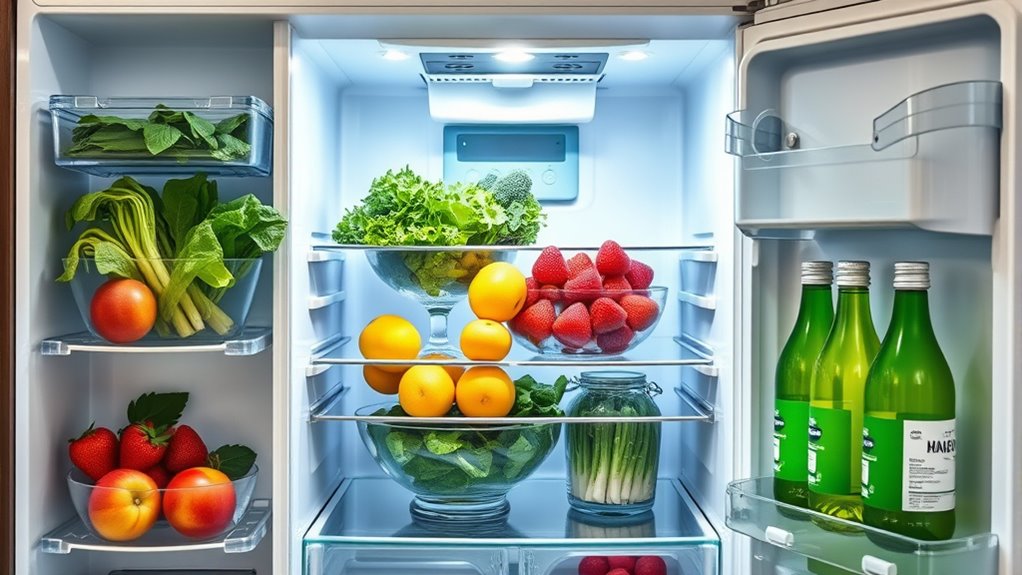

To keep your food fresh and safe, know your fridge zones. The top shelf is best for leftovers, dairy, and cooked foods, where temperatures stay steady. Middle shelves and drawers are ideal for fruits and vegetables, with humidity controls to prevent spoilage. Door shelves are best for condiments and drinks, but avoid storing perishable items like milk or eggs there. Properly organizing each zone helps prevent waste and keeps your food safe—learn more about each zone’s purpose to optimize your fridge.
Key Takeaways
- Top shelf maintains a consistent, cool temperature ideal for ready-to-eat foods, preventing bacteria growth.
- Crisper drawers with adjustable humidity levels preserve produce freshness and reduce spoilage.
- Door shelves are suitable for condiments and beverages but not for milk or eggs due to temperature fluctuations.
- Keeping the fridge between 35°F and 38°F ensures safe storage and slows bacterial growth.
- Proper organization and regular cleaning promote proper airflow, even cooling, and food safety throughout the fridge.
Have you ever wondered if your fridge is organized for maximum freshness and safety? Keeping your fridge well-arranged isn’t just about neatness; it’s about proper food storage and effective temperature control. When you understand the different zones inside your fridge, you can prevent spoilage, reduce waste, and keep your food safer to eat. The key lies in knowing which areas are best suited for specific types of foods and how to maintain the right temperature in each zone.
Most fridges have designated areas that are ideal for certain foods. The top shelf typically maintains a consistent, cool temperature, making it perfect for leftovers, dairy products, and ready-to-eat foods. Here, temperature control is essential because these items don’t require cooking before consumption, and storing them at the right temperature prevents bacteria growth. The middle shelves usually hold fruits and vegetables, provided your fridge has a crisper drawer or dedicated zone. Keeping produce in these sections helps maintain ideal humidity levels, which preserves freshness longer. Some fridges even have adjustable humidity controls, allowing you to customize conditions based on the food you’re storing.
The crisper drawers or specialized compartments are indispensable for food storage because they help regulate humidity and temperature for produce. If your fridge has these features, make sure to set them correctly—high humidity for leafy greens, lower humidity for fruits like apples and berries. Properly stored, these foods stay fresh and prevent spoilage, which is a common concern when food is stored improperly. The door shelves are the warmest part of the fridge because they’re exposed to frequent opening and closing. Use these shelves for condiments, beverages, and other non-perishable items that don’t require precise temperature control. Avoid storing milk or eggs on the door, as temperature fluctuations can compromise their safety and quality.
The temperature control system of your fridge plays an essential role in food safety. Most refrigerators are designed to operate between 35°F and 38°F (1.7°C to 3.3°C). Keeping your fridge in this range slows bacterial growth and keeps food fresh longer. Use a thermometer to monitor the actual temperature, especially if your fridge doesn’t have an electronic display. Adjust the thermostat as needed to stay within the safe zone. Regularly check and clean your fridge to guarantee proper airflow and consistent temperature control throughout all zones. Additionally, proper organization of your fridge can help prevent hot spots and ensure even cooling, which is crucial for maintaining food safety.
Frequently Asked Questions
How Often Should I Clean Each Fridge Zone?
You should clean each fridge zone at least once every three to four months to maintain ideal fridge organization and zone maintenance. Regular cleaning prevents cross-contamination and keeps your food fresh. Focus on wiping down shelves, drawers, and door seals, and discard expired items. By staying consistent, you guarantee each zone stays hygienic and organized, making it easier to find what you need and prolonging the freshness of your groceries.
Can I Store Non-Food Items in Fridge Zones?
Yes, you can store non-food items in fridge zones, but it’s best to utilize them for fridge accessories like ice packs or storage containers. Avoid non-food storage in food zones to prevent contamination and maintain safety. Keep non-food items separate from food areas, and only use designated spaces so you don’t compromise freshness or safety. Proper organization ensures your fridge stays clean and functional for both food and non-food storage.
What Temperature Should Each Zone Be Maintained At?
Think of your fridge like a well-organized library; each section needs the right temperature to keep its contents safe. For zone-specific storage, set the fridge temperature to 37°F (3°C) and the freezer to 0°F (-18°C). These temperature guidelines ensure freshness and prevent spoilage. Keep dairy and meat on the colder, lower shelves, and avoid temperature fluctuations to maintain ideal safety and quality in every zone.
Are There Specific Containers for Different Fridge Zones?
Yes, there are zone-specific containers for fridge organization. Using these containers helps you keep different foods separated and maintain ideal freshness in each zone. You should use clear, airtight containers for fresh produce, dairy, and meats, placing them in their designated areas. This prevents cross-contamination and keeps your fridge organized. Investing in zone-specific containers makes it easier to monitor expiration dates and ensures your food stays safe and fresh longer.
How Do I Prevent Cross-Contamination Between Zones?
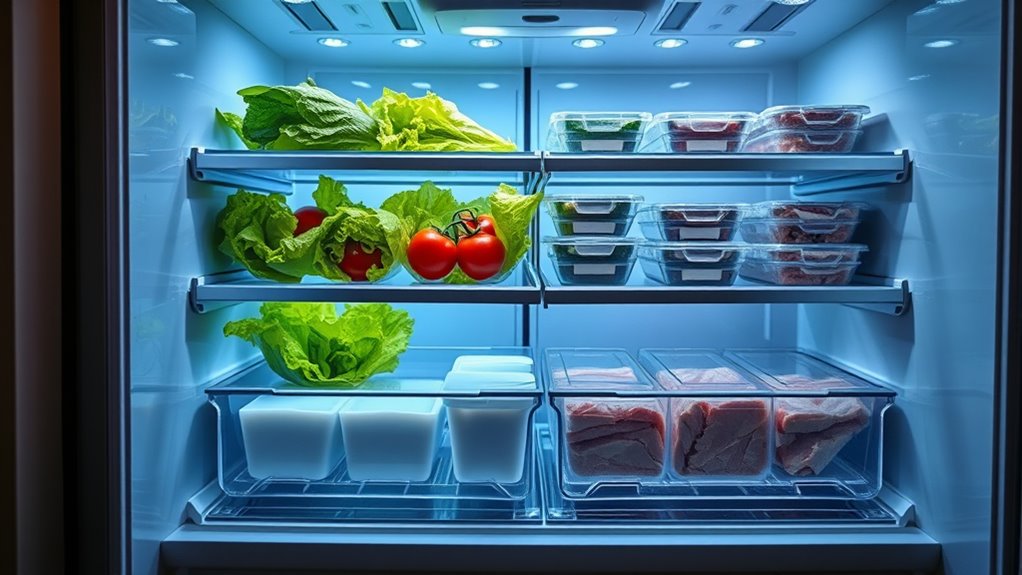
You might think cross-contamination is unlikely if you keep your fridge organized, but it’s a real risk. To prevent it, always store raw meats on the bottom shelf and cooked or ready-to-eat foods above. Use separate containers for different food types, and clean spills immediately. Proper storage organization and diligent food safety practices protect your health, ensuring no bacteria transfer between zones. Stay vigilant—your fridge’s safety depends on it.
Conclusion
Now that you know how to organize your fridge zones for maximum freshness and safety, aren’t you excited to see your leftovers stay fresher longer? Imagine opening your fridge and knowing exactly where everything belongs, reducing waste and preventing spoilage. By following these simple zones, you’re not just keeping food safe—you’re creating a well-oiled system that works for you. So, why not start today and enjoy the peace of mind that comes with perfect fridge organization?