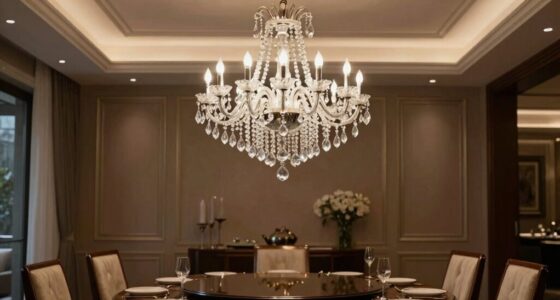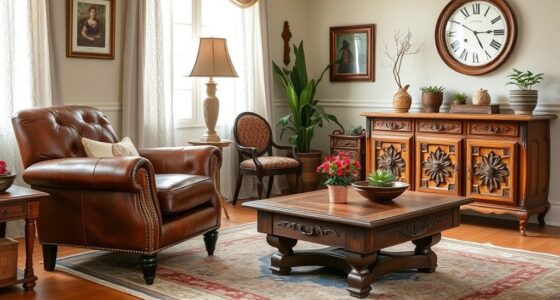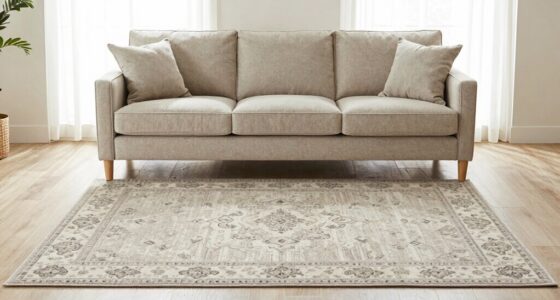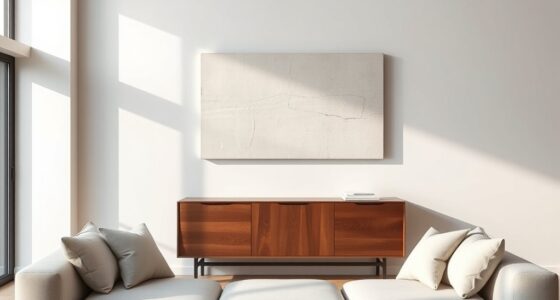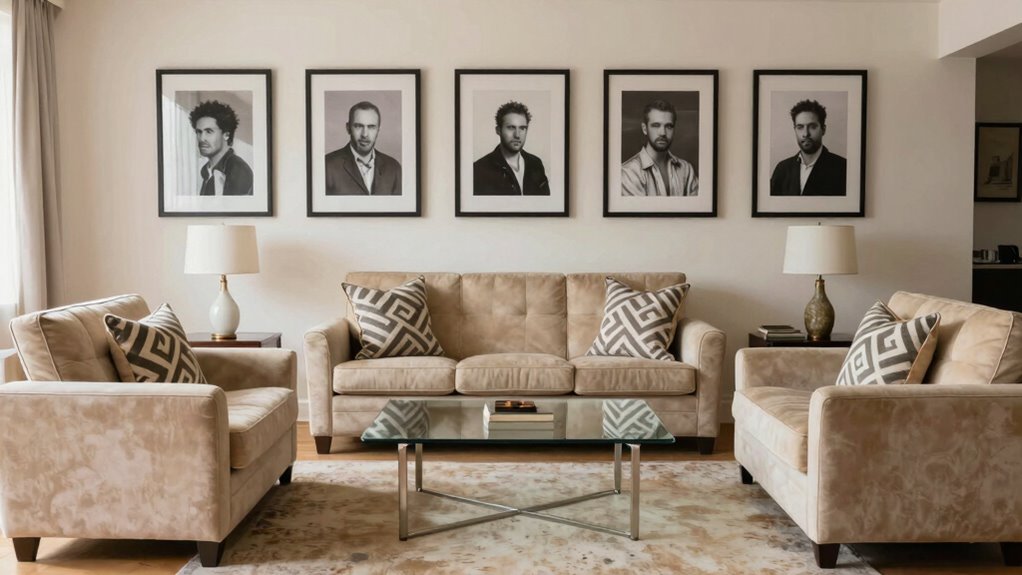

Repetition helps you create visual rhythm, guiding your eye smoothly across the space and making it feel intentional. By repeating colors, furniture arrangements, or textures, you establish a sense of harmony and balance that ties everything together. This consistency forms a cohesive story within the room, making it look curated and thoughtful. When you use repetition intentionally, your space feels more polished and inviting. Keep exploring, and you’ll discover how to master this powerful design technique.

Get your next haul delivered free with Prime
- Fast, free delivery on millions of items
- Prime Video, Amazon Music and more included
- Member-only deals all year
Key Takeaways
- Repetition creates visual rhythm, guiding the eye smoothly and making the space feel cohesive.
- Repeating colors and patterns establishes harmony, preventing clutter and mismatched elements.
- Echoed furniture arrangements reinforce order and help define zones within open-plan areas.
- Consistent textures and design elements balance the decor, maintaining clarity and unity.
- Repetition acts as a visual thread, reinforcing the overall theme and making the room feel complete.
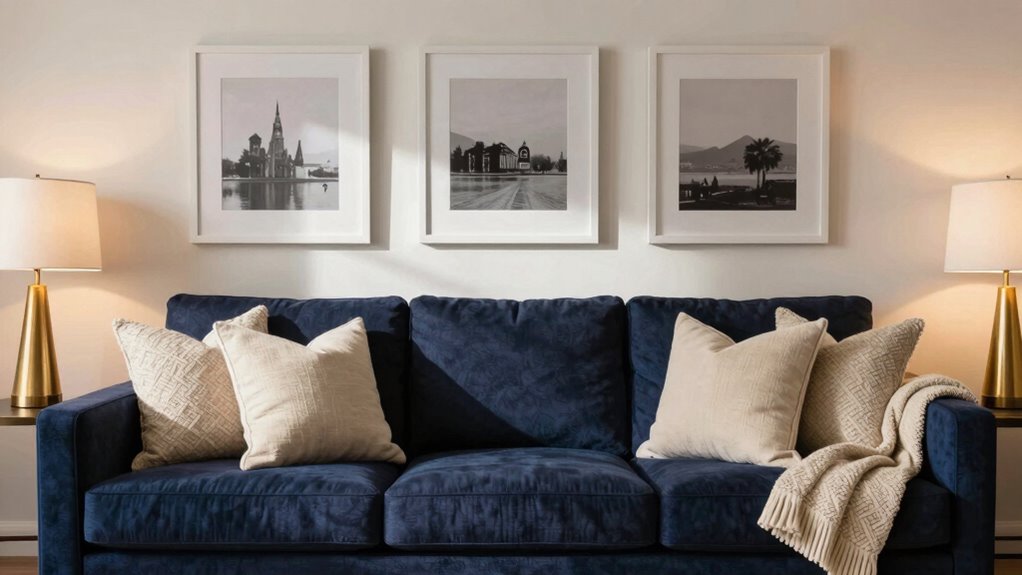
Have you ever noticed how repeating certain elements can make a room feel cohesive and balanced? It’s like the visual rhythm you find in music—when elements are echoed or repeated, your eye naturally follows, creating a sense of harmony. This is especially true when it comes to color harmony and furniture placement. Repetition helps tie a space together, making it feel intentional rather than chaotic or disjointed. When you use recurring colors or similar furniture arrangements throughout the room, you guide the eye smoothly from one area to another, giving the space a unified look.
Color harmony plays a crucial role in establishing that sense of cohesion. When you repeat specific colors in different parts of the room—say, in throw pillows, rugs, or artwork—you create a visual link that connects separate areas. Instead of randomly scattering colors, repetition ensures that your palette feels deliberate and well thought out. It also allows you to add variety without overwhelming the senses. For example, if you choose a deep blue as a primary color, repeating it in smaller accents throughout the room creates a subtle yet strong thread that binds everything together. This repetition fosters a calm, balanced atmosphere and prevents the space from feeling cluttered or mismatched.
Repeating colors throughout a room creates harmony, balance, and a calm, cohesive atmosphere.
Furniture placement also benefits from repetition. When you position furniture in a way that echoes the arrangement in other parts of the room, you reinforce a sense of order and rhythm. For instance, placing chairs around a central table in similar styles or aligning bookshelves and side tables creates a visual pattern that your eye recognizes and follows. This consistency makes the room feel more pulled together because it encourages the eye to move effortlessly through the space. You avoid jarring contrasts or awkward gaps by repeating key furniture elements or arrangements, which enhances the overall flow. Additionally, repetition in furniture can help define different zones within an open-plan space, making it feel more organized and intentional. Recognizing and applying repetition in design elements can also help balance different textures and patterns, adding depth without chaos. Incorporating visual rhythm and understanding how repetition impacts space can help you create a more harmonious environment that feels both dynamic and cohesive. When you develop a design theme, it becomes easier to maintain consistency and clarity throughout your decor choices, ensuring the overall look remains unified. Incorporating repetition not only enhances aesthetic appeal but also simplifies decision-making during the decorating process.
Repetition doesn’t mean everything has to be exactly the same, but rather that there’s a recurring theme or element. It’s about creating a dialogue between different parts of the room, where the repeated use of colors and furniture placement acts as a visual thread. When you do this intentionally, your room feels more cohesive, balanced, and inviting. It’s like telling a story with your design—each repeated element adds to the narrative, making the entire space feel unified and thoughtfully curated. In the end, repetition isn’t just about aesthetics; it’s about crafting a space that feels comfortable, harmonious, and complete.
As an affiliate, we earn on qualifying purchases.
Frequently Asked Questions
How Do I Choose Which Elements to Repeat in a Room?
You should start by choosing elements that share color consistency to create harmony, like repeating a specific hue in accessories or artwork. Then, balance these with texture variation—mix smooth and rough surfaces to add depth. Repeat key shapes or patterns to unify the space, but avoid overdoing it. Focus on a few core elements, ensuring they complement each other through color and texture, making your room feel cohesive and thoughtfully designed.
Can Repetition Be Overdone in Interior Design?
Like a well-conducted symphony, repetition can become overwhelming if overdone. Too much color contrast or material variety risks disrupting the harmony, making your space feel chaotic rather than cohesive. To prevent this, balance repetition with contrast, allowing each element to breathe. Use subtle variations instead of relentless sameness, ensuring your room remains engaging yet unified, much like a beautifully composed melody that’s pleasing without becoming monotonous.
What Are Some Common Patterns Used for Repetition?
You often see patterns like stripes, chevrons, and florals used for repetition, creating a cohesive look. When choosing these patterns, focus on color harmony to guarantee they complement each other, and use texture contrast to add interest without overwhelming the space. Repeating similar patterns across different elements, such as pillows, rugs, or curtains, helps tie the room together, making it feel more pulled together and harmonious.
How Does Repetition Affect Room Perception and Mood?
Repetition enhances your room’s perception by creating a sense of unity and visual rhythm, making the space feel more cohesive. When you use consistent colors or patterns, it strengthens color harmony, soothing your mood and making the environment inviting. Repetition guides your eye smoothly across the room, fostering calmness and balance. This technique transforms your space into a harmonious retreat, where everything feels intentionally connected and visually pleasing.
Is Repetition Suitable for Small or Large Rooms?
Repetition works well in both small and large rooms, but you should tailor it to your space. In small rooms, using consistent color harmony with subtle texture variations helps create a cohesive, cozy feel without overwhelming. For larger rooms, you can incorporate more pronounced repetition with varied textures and bold color accents to maintain interest and balance. Overall, repetition unifies the space, making it feel more pulled together regardless of size.
color-coordinated throw blankets
As an affiliate, we earn on qualifying purchases.
As an affiliate, we earn on qualifying purchases.
Conclusion
By repeating colors, patterns, or textures, you weave a unifying thread through your space, transforming scattered elements into a harmonious tapestry. Think of repetition as the steady beat of a song—guiding your eye and calming your mind. It’s the secret ingredient that turns chaos into calm, making your room feel like a well-rehearsed symphony rather than a disjointed chorus. Embrace repetition, and watch your space come alive with effortless coherence.
As an affiliate, we earn on qualifying purchases.
As an affiliate, we earn on qualifying purchases.
Halloween Picks
halloween
As an affiliate, we earn on qualifying purchases.