
When mixing metals, follow simple rules like repeating finishes and maintaining balance to create harmony. Combine cool tones like silver with warm hues such as gold or bronze, or contrast sleek, polished surfaces with textured matte finishes for visual interest. Use statement pieces thoughtfully and keep proportions in check. Experiment confidently while paying attention to color schemes and cohesion. Keep these principles in mind, and you’ll discover how to craft a stylish, unified space that truly shines.
Key Takeaways
- Repeat a particular metal or finish throughout the space to create cohesion and visual harmony.
- Mix warm and cool tones intentionally, balancing hues to enhance contrast without clashing.
- Vary finishes (matte, polished, brushed) within the same metal family for added texture and interest.
- Use statement pieces to anchor the design, ensuring scale and proportion complement the overall metal palette.
- Trust your eye and experiment, combining unexpected finishes or hues while maintaining overall balance and harmony.

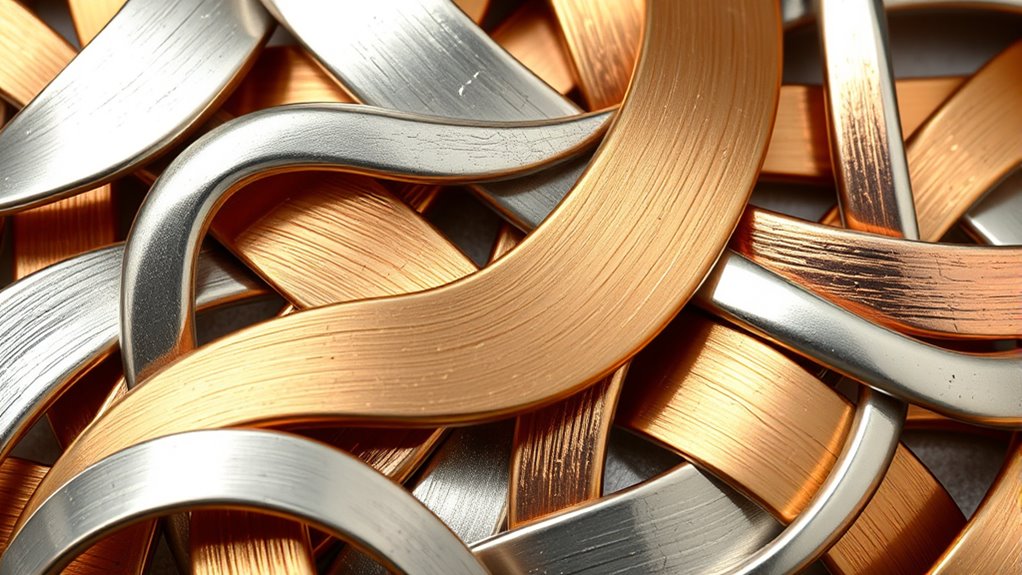
Have you ever wondered how different metals can be combined to create stunning designs? The secret lies in understanding how metal finishes and color coordination work together to produce a harmonious look. When mixing metals, your goal should be to balance the visual weight of each material so that no single finish or hue dominates the space. Start by considering the finishes—matte, polished, brushed, or antiqued—as each adds its own texture and personality to a design. For example, pairing a sleek, polished chrome with a warm, matte brass creates a striking contrast that draws the eye without overwhelming the senses. The key is to select finishes that complement or deliberately contrast to add depth and interest.
Color coordination plays a pivotal role in making mixed metals look intentional rather than accidental. Think of metals as a palette of hues; some are cool tones like silver and chrome, while others are warm like gold, bronze, or copper. When combining them, it’s often best to stick within a similar color family or create a deliberate contrast. For instance, pairing silver with blackened or darkened metals enhances the sleekness, while mixing gold with rose or copper tones can bring warmth and vibrancy. The trick is to balance these colors so they work together rather than clash. Consider the overall color scheme of your space—if your decor features cool blues and grays, integrating silver or platinum accents works beautifully. Conversely, if your palette leans toward warm neutrals or earthy tones, gold or bronze fixtures might be more fitting.
Another effective rule is to repeat a particular metal or finish throughout your space. This helps tie everything together and prevents your design from feeling disjointed. For example, if you choose brushed nickel for your faucets, do the same for cabinet hardware or light fixtures. Repetition of finishes creates a cohesive flow, making the mix feel intentional. Additionally, think about the scale and proportion of each metal. A large, shiny chandelier can serve as a statement piece, while smaller accents in coordinating finishes subtly reinforce your chosen palette. Incorporating metal harmony principles ensures the overall look remains balanced and pleasing to the eye.
Ultimately, mixing metals successfully involves a mix of thoughtful planning and a bit of experimentation. Trust your eye and don’t be afraid to combine unexpected finishes or hues—just keep the principles of metal finishes and color coordination in mind. When done right, your space will radiate a curated, sophisticated vibe that showcases your unique style. Remember, the goal isn’t perfection but a balanced, eye-catching harmony that reflects your personality and taste.
Frequently Asked Questions
Can Mixing Metals Impact Jewelry Durability?
Mixing metals can impact jewelry durability because different metals may cause metal corrosion over time, weakening the piece. When incompatible metals contact each other, they can create galvanic corrosion, reducing the structural integrity of your jewelry. To prevent this, choose metals that are compatible and avoid mixing metals that react negatively, ensuring your jewelry stays durable and maintains its appearance longer.
Are Certain Metals More Prone to Tarnishing When Combined?
Certain metals are far more prone to tarnishing when combined, almost like inviting chaos into your jewelry collection. Metals like copper, brass, and silver are especially susceptible to metal corrosion and tarnishing risks, making them shine less and tarnish faster. When mixed with harder metals like gold or platinum, these softer metals can deteriorate quickly, leading to dullness and damage. Always be mindful of these tendencies to keep your jewelry looking stunning longer.
How Do Different Metal Finishes Affect Mixing Compatibility?
You’ll find that different metal finishes markedly impact mixing compatibility. Matte, brushed, and polished finishes create unique metal finish harmony, so combining similar textures often looks cohesive. To add visual contrast techniques, mix finishes like matte with shiny for interest, but avoid clashing too much. Keep in mind that a balanced approach enhances aesthetic appeal, ensuring your metals complement rather than compete with each other.
Is There a Preferred Metal Pairing for Allergy Sufferers?
Imagine a jewelry piece that glows with gentle, inviting hues—perfect for your sensitive skin. For allergy prevention, opt for hypoallergenic metals like surgical stainless steel, titanium, or niobium. These metals form a protective barrier, preventing irritation and ensuring comfort. They’re your best bet for metal allergy prevention, offering a safe, stylish choice that keeps your skin happy and your look effortlessly elegant.
Can Mixing Metals Influence the Resale Value of Decor?
Mixing metals can positively influence your decor’s resale value if you focus on finish compatibility and cohesive design. It enhances decor appeal by adding visual interest, but be cautious of tarnishing risks that may affect jewelry durability. For allergy concerns, choose hypoallergenic metals. When done thoughtfully, mixing metals boosts the overall aesthetic, making your space more attractive to potential buyers and increasing its resale value.
Conclusion
By carefully blending different metals, you create a stunning harmony that’s hard to ignore. Remember, a little subtlety goes a long way—think of it as adding a touch of elegance rather than overwhelming your space. When you follow these simple rules, your design can effortlessly exude charm and sophistication. So, trust your instincts, embrace the mix, and let your unique style shine through—sometimes, a gentle touch makes all the difference.