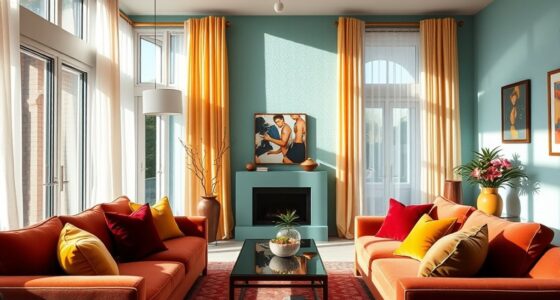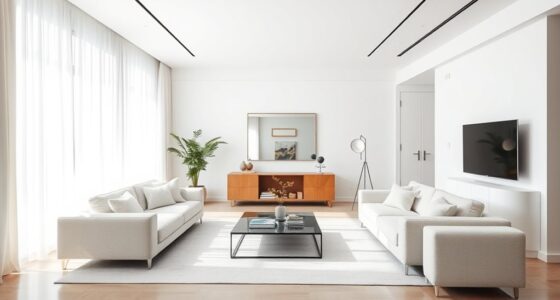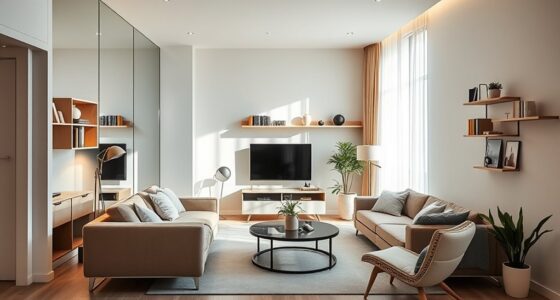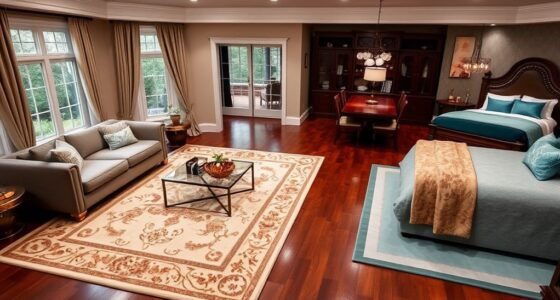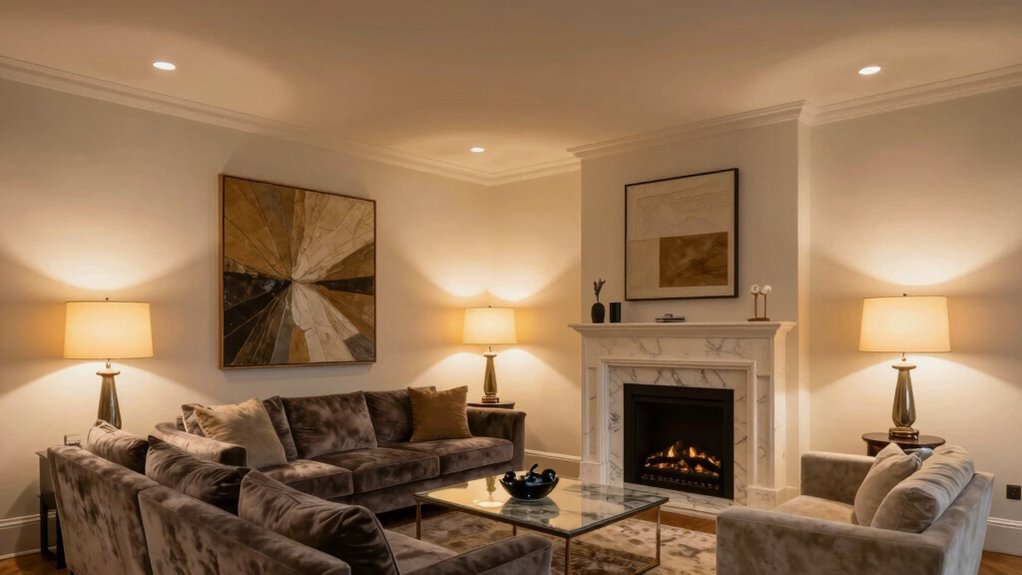

To create a designer room with layered lighting, you’ll combine ambient, task, and accent lights to achieve a balanced, inviting space. Start with ambient glow to set the overall mood, add task lighting for practicality, and use accent lighting to highlight features or artwork. Mastering how these layers work together guarantees your room feels both functional and stylish. Keep exploring these concepts; you’ll discover how to make your space truly shine.
Key Takeaways
- Combine ambient, task, and accent lighting to create a balanced, layered environment that enhances both function and aesthetics.
- Use diffused ceiling fixtures for ambient glow, task lights for specific activities, and accent lights to highlight design features.
- Understand how each layer interacts to control mood, focus, and visual interest in the space.
- Incorporate smart lighting systems for customizable, energy-efficient control over different layers.
- Thoughtful layering transforms a room into a cohesive, inviting, and professionally designed space.
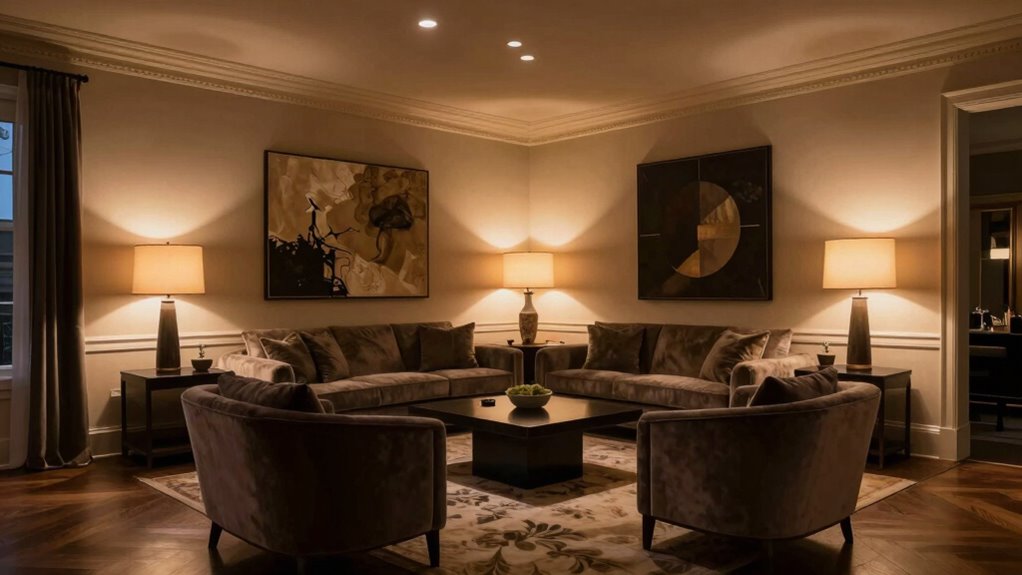
Have you ever wondered how professionals create stunning, balanced lighting in a scene? It’s not just about flipping on a few bulbs; it’s about layering different types of light to craft a warm, functional, and visually appealing space. Understanding lighting layers is key to transforming any room into a ‘designer’ space. The foundation of this approach involves combining ambient glow, task illumination, and accent lighting to achieve harmony and purpose. Incorporating smart lighting systems can further optimize this process, allowing for customizable scenes and energy efficiency.
Start with ambient glow, which serves as the room’s overall illumination. Think of it as the room’s natural brightness — it sets the mood and ensures you’re not left in darkness. This layer is usually provided by ceiling-mounted fixtures, recessed lighting, or large, diffused sources like pendant lights or wall sconces. When you get it right, ambient glow fills the space evenly, eliminating harsh shadows and creating a welcoming atmosphere. It’s the base that allows other layers to stand out without making the room feel cluttered or overly bright. You want this layer to be soft but sufficient, providing enough light to see comfortably without overpowering the scene.
Next, incorporate task illumination to address specific needs. Whether you’re reading, cooking, or working at a desk, task lighting directs focused light precisely where you need it most. It’s more intense than ambient glow and often comes from adjustable fixtures like desk lamps, under-cabinet lights, or pendant lights positioned right over work areas. When you combine task illumination with ambient glow, you ensure the room is both inviting and functional. This layer prevents eye strain and makes daily activities more efficient by spotlighting essential spots without flooding the entire room with bright light.
Finally, consider accent lighting, which adds depth and personality to your space. It highlights artwork, architectural features, or decorative objects, creating visual interest and layering depth. This can be achieved through wall-mounted fixtures, picture lights, or small spotlights. Accent lighting helps break up the uniformity of ambient glow and task illumination, giving your room a curated, professional look. When balanced correctly, these layers work in harmony, emphasizing the design elements you want to showcase while maintaining a comfortable, inviting environment.
Mastering lighting layers involves understanding how each component interacts with the others. By thoughtfully combining ambient glow, task illumination, and accent lighting, you craft a space that’s both beautiful and functional. You control the mood, focus attention where needed, and create a room that feels thoughtfully designed — just like a professional.
Frequently Asked Questions
How Do I Balance Ambient and Task Lighting Effectively?
To balance ambient and task lighting effectively, use layering techniques by combining different fixture types. Place ambient lights, like ceiling fixtures or wall sconces, evenly across the room for general illumination. Then, add task lighting where needed, such as under-cabinet lights or reading lamps, ensuring fixture placement focuses on specific areas without overpowering the space. This approach creates a harmonious, well-lit environment that’s both functional and inviting.
What Are the Latest Trends in Lighting Design?
You’ll find that 78% of designers are embracing trend predictions that favor sustainable, energy-efficient lighting. You should explore innovative fixtures like smart LEDs, statement pendants, and integrated lighting solutions that blend form and function. These trends aim to create dynamic, personalized spaces, making your rooms more functional and stylish. Staying ahead means experimenting with these cutting-edge designs, and you’ll love how they transform your space into a modern, inviting environment.
How Can I Make My Room Feel Larger With Lighting?
To make your room feel larger with lighting, use soft, warm color temperatures to create an inviting, spacious atmosphere. Incorporate layered lighting with different fixture styles—recessed lights for ambient glow, wall sconces for depth, and task lights for functionality. Avoid heavy fixtures; instead, opt for sleek, minimal designs that blend seamlessly. Proper placement and varied heights enhance the sense of openness, making your space feel bigger and brighter effortlessly.
What Budget-Friendly Lighting Options Exist for a Designer Look?
You can achieve a designer look with budget lighting by choosing affordable fixtures like stylish pendant lights, sleek table lamps, and wall sconces. Look for options with modern finishes and clean lines to elevate your space without overspending. Incorporate layered lighting using these affordable fixtures, and add dimmers for versatility. With a little shopping, you’ll create a sophisticated, well-lit room that looks expensive but stays within your budget.
How Do I Choose the Right Bulbs for Different Layers?
When choosing bulbs for different layers, consider the bulb color to create the right ambiance—warm whites for cozy, inviting spaces and cool whites for task areas. Match wattage selection to each layer’s purpose; higher wattage provides brighter light for task lighting, while lower wattage suits accent and ambient layers. Always check fixture compatibility and opt for dimmable bulbs if you want adjustable lighting to enhance your room’s design.
Conclusion
Now that you understand the three lighting layers, you’re well on your way to creating a truly designer room. Remember, lighting is the finishing touch that pulls everything together, so don’t be afraid to experiment and find what works best for you. When you strike the right balance, your space will shine in every sense of the word. After all, it’s the little things that make a big difference—so go ahead and light up your world!