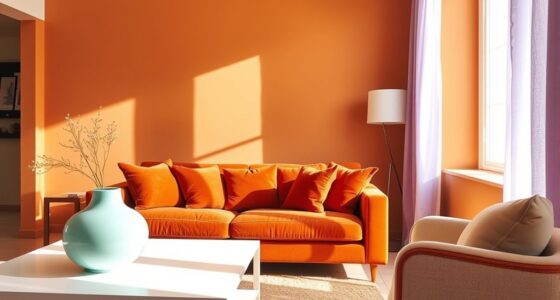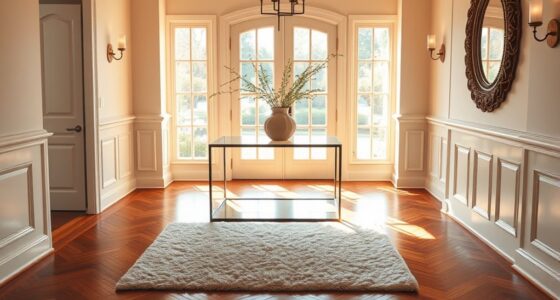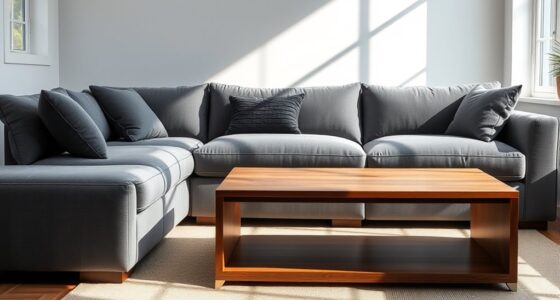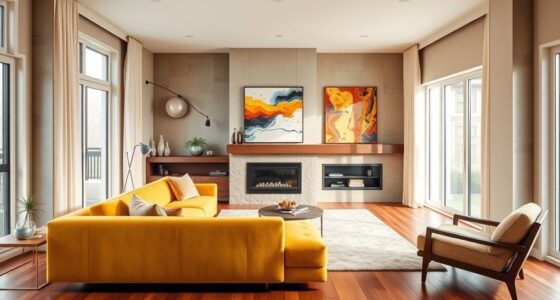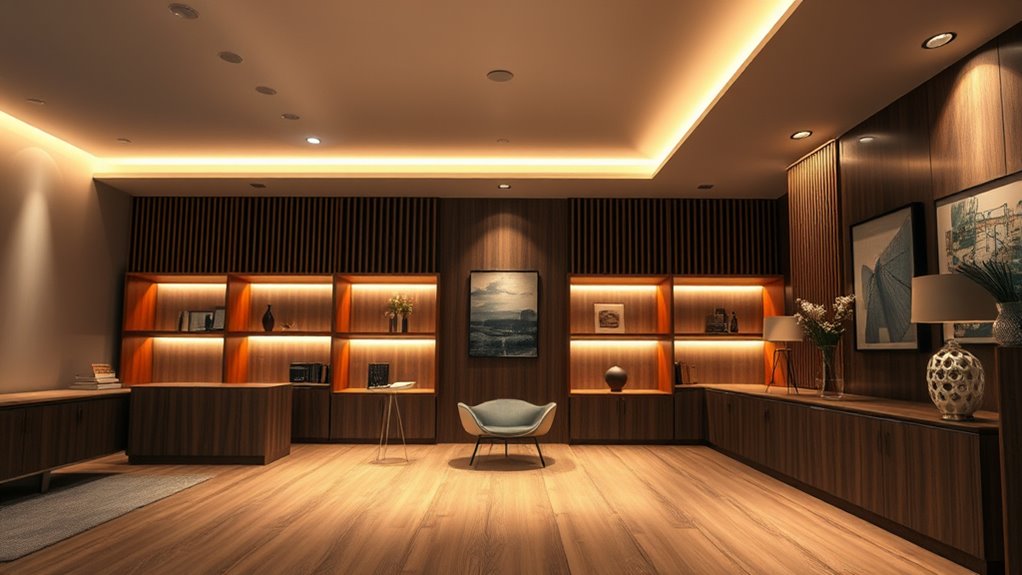

To effectively use lighting layers—ambient, task, and accent—you’ll want to start by setting a base with ambient light, which creates an overall mood. Then, add task lighting to highlight specific areas or objects, guiding attention. Finally, incorporate accent lighting to add depth, drama, and visual interest by emphasizing features or creating shadows. Mastering how these layers work together can transform your scenes, and if you continue exploring, you’ll uncover even more ways to craft compelling visuals.
Key Takeaways
- Layering ambient, task, and accent lighting creates depth, mood, and visual interest in scenes or photographs.
- Ambient lighting provides overall illumination, setting the scene’s tone and atmosphere.
- Task lighting highlights specific areas or objects, guiding focus and emphasizing details.
- Accent lighting adds drama by emphasizing features, creating contrasts, and shaping scene dynamics.
- Proper control and selection of bulbs across layers enhance flexibility and the overall visual storytelling.

Have you ever wondered how professional photographers and filmmakers create images with depth and dimension? The secret often lies in how they layer different types of lighting—ambient, task, and accent—to craft a scene that feels rich and dynamic. Understanding these layers allows you to control the mood and focus of your shot, making your visuals more compelling. A key part of this process is selecting the right bulb types and mastering lighting controls, which give you the flexibility to shape your scene exactly as you envision it.
Layering ambient, task, and accent lighting with the right bulbs creates depth and mood in visual storytelling.
Ambient lighting forms the foundation of your scene, providing overall illumination that sets the mood. Think of it as the natural or existing light present in your environment, but you can also create it artificially using various bulb types. Incandescent bulbs produce warm, inviting light, while LEDs offer energy efficiency and adjustable color temperatures. Fluorescent bulbs, on the other hand, can be harsher but are useful in some settings. When working with lighting controls, you can adjust brightness levels, color temperatures, and even the directionality of your ambient light to suit your scene’s tone. Dimmers and smart lighting systems give you precise control, allowing you to fine-tune the overall illumination without altering your setup.
Task lighting is more focused and functional. It highlights specific areas or objects, guiding the viewer’s eye and emphasizing important details. For example, a desk lamp or a focused spotlight can help you illuminate a subject’s face clearly. When choosing bulb types for task lighting, consider their color rendering index (CRI); high-CRI bulbs ensure colors appear natural and vibrant. You might opt for halogen bulbs for their bright, crisp light or LED options that offer adjustable brightness and color temperatures. Lighting controls here are essential—dimmers, barn doors, and flags help shape and direct the light precisely where you want it, preventing spill and ensuring your subject stands out clearly.
Accent lighting adds drama and visual interest by highlighting specific features or creating contrasts. It’s your tool for drawing attention or creating mood through shadows and highlights. Small, directional bulbs like MR16s or pin spots are common choices for accent lighting. Using lighting controls such as snoots or barndoors, you can focus the light tightly or diffuse it for softer effects. The choice of bulb type impacts the quality of the accent—warm or cool tones can evoke different emotions, while adjustable LED fixtures give you versatility to change the scene’s vibe on the fly. When layering these lighting types, it’s essential to balance intensity and direction, adjusting bulb types and controls to craft a harmonious, visually engaging scene.
Mastering the use of bulb types and lighting controls across these layers empowers you to sculpt your scene with precision. Each layer serves a purpose, and when combined thoughtfully, they transform a flat image into one rich with depth, dimension, and mood.
Frequently Asked Questions
How Do I Balance Different Lighting Layers in a Small Room?
To balance different lighting layers in a small room, you should use layering techniques that optimize space and avoid clutter. Start with a soft ambient light to create a warm base, then add task lighting where needed for specific activities, like reading. Finish with accent lights to highlight features or add visual interest. Adjust the brightness of each layer to prevent overpowering, ensuring a cozy, well-lit environment without sacrificing space.
Can LED Lights Be Used for All Lighting Layers Effectively?
LED lights are like a Swiss Army knife for your lighting needs, offering great versatility. You can effectively use LEDs for all lighting layers by choosing adjustable, dimmable fixtures. Their flexibility allows you to seamlessly integrate layers, creating a balanced ambiance. With the right placement and color temperature, LEDs can provide ambient, task, and accent lighting, making your small room feel warm, functional, and inviting without needing multiple light sources.
What Are the Best Color Temperatures for Ambient Lighting?
For ambient lighting, aim for a color temperature between 2700K and 3000K. This range creates a warm, inviting atmosphere perfect for mood lighting. If you prefer a cooler, more energizing feel, go for around 3500K to 4100K. The right color temperature enhances the space’s ambiance without overwhelming it. Choose warmer tones for relaxation, and cooler ones for focus, ensuring your lighting sets the perfect mood.
How Do I Control Multiple Lighting Layers With Smart Home Systems?
Did you know smart home integration can control over 50 lighting zones in one system? To manage multiple lighting layers, you should use lighting control systems that allow you to assign different scenes or zones. With smart home integration, you can adjust ambient, task, and accent lights individually or together, creating the perfect atmosphere at any moment. Simply set routines or use voice commands for seamless, centralized control.
Are There Energy-Efficient Options for Accent Lighting?
Yes, you can choose energy-efficient options for accent lighting by using LED accent bulbs. These bulbs consume less power, last longer, and produce vibrant light, making them ideal for highlighting specific areas. Smart home systems allow you to control LED accent lighting efficiently, adjusting brightness and schedules to save energy. By integrating these bulbs with your system, you create a stylish, eco-friendly ambiance while minimizing energy consumption.
Conclusion
Think of your space as a stage, where each lighting layer plays a crucial role. When you layer ambient, task, and accent lighting, you create a balanced environment that feels just right. I once added a simple table lamp to my reading nook, transforming it from dull to inviting—like turning on the spotlight in a theater. Remember, thoughtful lighting is your secret weapon for a cozy, functional, and stylish home.