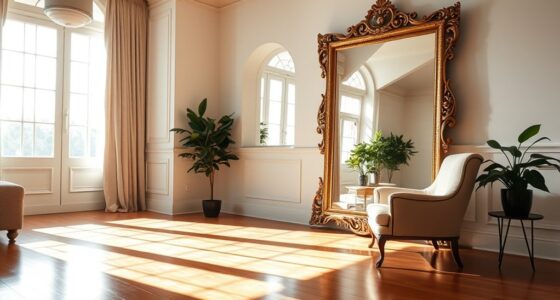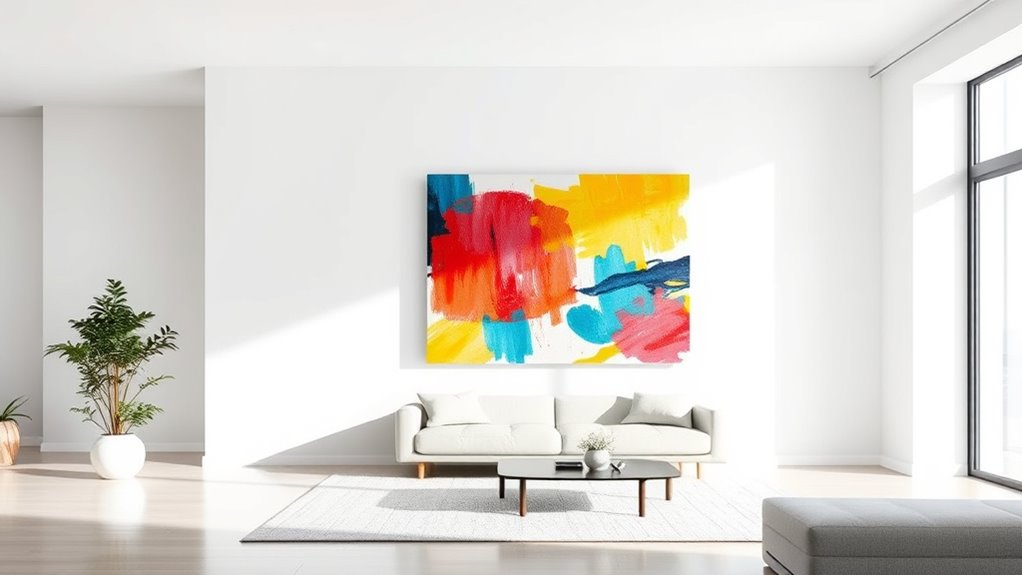

Hang your art so its center is about 57 to 60 inches above the floor, which aligns with average eye level for most people. This height creates a comfortable viewing experience and helps your artwork feel balanced on the wall. Adjust slightly based on your room’s ceiling height and furniture placement for the best results. If you want to perfect your art hanging skills, keep exploring these helpful tips for stunning wall displays.
Key Takeaways
- Hang art with its center approximately 57–60 inches above the floor for optimal eye-level viewing.
- Adjust height based on ceiling height and room proportions to maintain visual harmony.
- Place artwork 6–12 inches above furniture like sofas for cohesive styling.
- Consider wall and room proportions to prevent art from appearing disconnected or overwhelming.
- Measure carefully and experiment to find the most balanced and inviting placement.
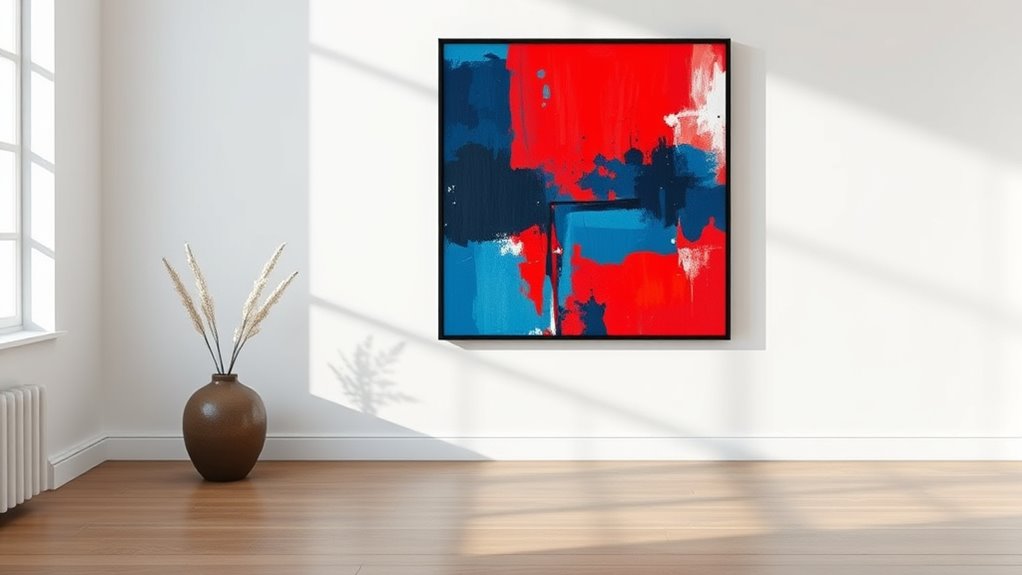
Have you ever wondered how high to hang art to make your space look balanced and inviting? When it comes to art placement, one of the most common questions is about wall height. The goal is to create a visual harmony that draws the eye naturally and makes your room feel cohesive. The key is understanding that wall height influences where you position your artwork, so it complements the space rather than overwhelms it.
A good rule of thumb is to hang art so that its center is around 57 to 60 inches above the floor. This height aligns with the average eye level, making your art easily viewable without requiring you to look up or down too much. If your ceilings are particularly high, you can consider lowering the artwork slightly to prevent it from feeling lost or floating awkwardly in the space. Conversely, in rooms with lower ceilings, hanging art slightly higher can help create the illusion of more space.
Hang art with its center at 57–60 inches for balanced, eye-level viewing.
When you’re thinking about art placement, consider the surrounding furniture and architecture. For instance, if you’re hanging a piece above a sofa, aim to position the bottom of the art about 6 to 12 inches above the back of the sofa. This spacing creates a visual connection between the furniture and the artwork, making the whole arrangement feel intentional and balanced. For smaller pieces, grouping them into a cohesive cluster at eye level often works best. Large statement pieces, meanwhile, benefit from being hung so that their center is roughly at eye level, ensuring they command attention without overwhelming the wall.
Another factor to keep in mind is the overall wall height. On taller walls, you might opt to hang art slightly higher to fill the space proportionally. Just avoid placing artwork so high that it feels disconnected from the furniture or other elements in the room. Conversely, on very low walls, hanging art too low can make the ceiling seem even lower; in such cases, raising the art a bit can help open up the space. Additionally, art placement can greatly influence the room’s overall visual appeal and harmony.
Ultimately, the best art placement considers both wall height and the specific context of your room. Measure carefully, think about how you want your space to feel, and remember that a little experimentation can go a long way. When in doubt, hang your art at eye level, and adjust as needed until it feels just right. This approach ensures your art enhances your room’s balance and invites people to linger and enjoy the space.
Frequently Asked Questions
Should Art Be Hung Higher in Rooms With High Ceilings?
You should hang art slightly higher in rooms with high ceilings, but still follow art height guidelines to create balance. Consider ceiling proportion, ensuring the art isn’t too close to the ceiling or too low on the wall. Typically, aim for the center of the artwork to be about 57-60 inches from the floor, adjusting based on ceiling height. This approach helps the art complement the space and maintain visual harmony.
How Does Furniture Placement Affect Art Hanging Height?
Imagine a cozy corner where your furniture invites the eye to rest. You should hang art at a height that creates visual balance and enhances focal point placement, usually aligning the center of the artwork with your eye level or slightly above. This guarantees your pieces complement your furniture, guiding viewers naturally through the space without overwhelming or underwhelming the room’s harmony.
Is There a Standard Height for Gallery Wall Art?
The standard height for gallery wall art is typically eye level, around 57-60 inches from the floor. When planning your art arrangement, aim for the center of the gallery wall to be at this height to create a balanced look. Keep in mind that the overall gallery wall should complement your space, so adjust based on ceiling height and furniture placement for the best visual impact.
How Do I Hang Art in a Narrow Hallway?
To hang art in a narrow hallway, focus on art placement that complements wall proportions. Keep the artwork at eye level for ideal viewing, usually around 57-60 inches from the floor. Use a single, central piece or a vertical gallery wall to maximize space without overwhelming the corridor. Make sure the spacing between pieces is consistent, and consider the width of the hallway to avoid cluttering the limited space.
What Adjustments Are Needed for Hanging Art in Different Room Types?
When hanging art in different room types, you should adjust height based on the room’s purpose and lighting. In living rooms, position art at eye level for better viewing, considering art lighting to highlight pieces. For bedrooms, hang art slightly higher to avoid head bumps. Also, match wall color choices to enhance the artwork’s impact, ensuring the art complements the room’s overall aesthetic and lighting conditions.
Conclusion
When hanging art, don’t stress about finding the perfect height—trust your eye and aim for balance. It might feel strange at first, but remember, you’re creating a space that reflects your style. If it seems a bit off, step back and tweak until it feels right. Ultimately, your artwork should feel natural and inviting. So go ahead, hang that piece, and enjoy your beautifully curated space without overthinking every inch.