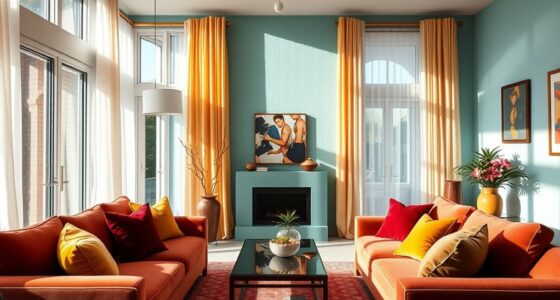
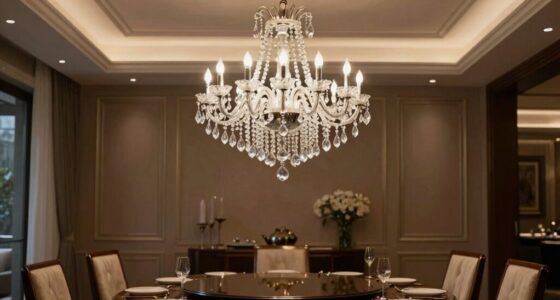
To create a focal point that pulls a room together, choose a bold element like a statement wall, eye-catching artwork, or striking furniture. Highlight architectural features or use lighting and accessories to emphasize specific areas. Make certain your focal point guides the eye smoothly through the space while balancing other design elements. When you incorporate these strategies, you’ll achieve a cohesive and inviting room that truly feels put together—stick with it to discover even more tips.

Get your next haul delivered free with Prime
- Fast, free delivery on millions of items
- Prime Video, Amazon Music and more included
- Member-only deals all year
Key Takeaways
- Choose a bold statement wall with distinctive color or texture to immediately draw attention.
- Incorporate a large, eye-catching piece of artwork that complements your room’s color scheme.
- Select a unique furniture piece, such as a striking sofa or an ornate coffee table, as the room’s centerpiece.
- Highlight architectural features like a fireplace or large window to naturally serve as focal points.
- Use strategic lighting or decorative accessories to emphasize specific areas or objects within the space.

You are trained on data up to October 2023. Incorporating a well-chosen focal point, such as a statement wall, artwork, or a statement piece of furniture, can significantly enhance the overall aesthetic and harmony of your space. Interior design principles emphasize the importance of creating visual interest and balance, helping to guide the eye and pull the room together cohesively.
Products Worth Considering

eufy Security eufyCam C37 4-Camera Kit with 360° Pan and Tilt, Auto Tracking, 2K Color Night Vision, and Solar Panels

Levoit Core 400S-P Smart Air Purifier for Large Rooms

Philips Hue Smart Light Starter Kit with Bridge and 4 White and Color A19 Bulbs
As an affiliate, we earn on qualifying purchases.
Frequently Asked Questions
How Do I Choose a Focal Point That Matches My Room’s Style?
To choose a focal point that matches your room’s style, consider your decor theme and personality. If your room has a modern vibe, a sleek fireplace or statement art piece works well. For a rustic look, a large wooden or stone feature fits perfectly. Think about colors, textures, and shapes that complement the overall aesthetic. Pick something that draws attention naturally while harmonizing with your existing decor, making your space feel cohesive.
Can Multiple Focal Points Work in One Room?
Yes, multiple focal points can work in one room, but you need to treat them like a symphony rather than a chaotic orchestra. Balance each piece so they complement rather than compete. Use different levels, textures, or colors to create visual interest without overwhelming the space. Keep the overall style cohesive, and make certain each focal point has a purpose, guiding the eye smoothly across the room.
What Are Budget-Friendly Options for Creating a Focal Point?
You can create a budget-friendly focal point by using bold wall art, such as posters or prints you love, or adding a vibrant area rug that draws attention. Repainting one wall a different color, like an accent wall, is affordable and impactful. Incorporate inexpensive statement lighting, like a unique lamp or string lights, to add visual interest. These simple, cost-effective options help your room stand out without overspending.
How Do I Balance a Bold Focal Point With Other Decor?
Think of your room as a symphony, where the bold focal point is the soloist. To balance it, keep surrounding decor simple and complementary, like gentle harmonies that enhance the main melody. Use neutral tones or subtle patterns in furniture and accessories, so your focal piece remains the star. This way, your space feels cohesive, vibrant, and inviting without overwhelming the senses.
Are There Any Common Mistakes to Avoid When Designing a Focal Point?
Yes, avoid making your focal point too busy or cluttered, which can distract rather than draw attention. Don’t ignore scale—ensure it’s proportionate to the room, or it can look out of place. Steer clear of conflicting styles or colors that clash. Also, don’t neglect lighting; proper illumination highlights your focal feature. Ultimately, don’t forget to keep the surrounding decor simple enough to let the focal point shine.
Conclusion
Think of your room as a symphony, with the focal point as the conductor’s baton. When you create a stunning centerpiece, it guides everything else into harmony, making your space feel complete and balanced. Without it, the room is like a song without a melody—disjointed and unfinished. So, pick that perfect feature and let it lead your design, turning your space into a beautifully orchestrated masterpiece everyone will admire.